In a Montessori classroom, we often speak of “following the child.” This means observing their deep, often passionate interests and using them as a gateway to understanding the world. For many children, that gateway is vehicles. The fascination with things that go is nearly universal, but it’s frequently relegated to the play rug. What if we could channel that intrinsic curiosity into a profound exploration of human history, need, and connection?

This is the thinking behind this Transport & Community Helpers printable. This resource uses vehicles as the narrative thread to weave together concrete skills, cosmic education, and the stories of humankind.
The Material: A Foundation for Discovery
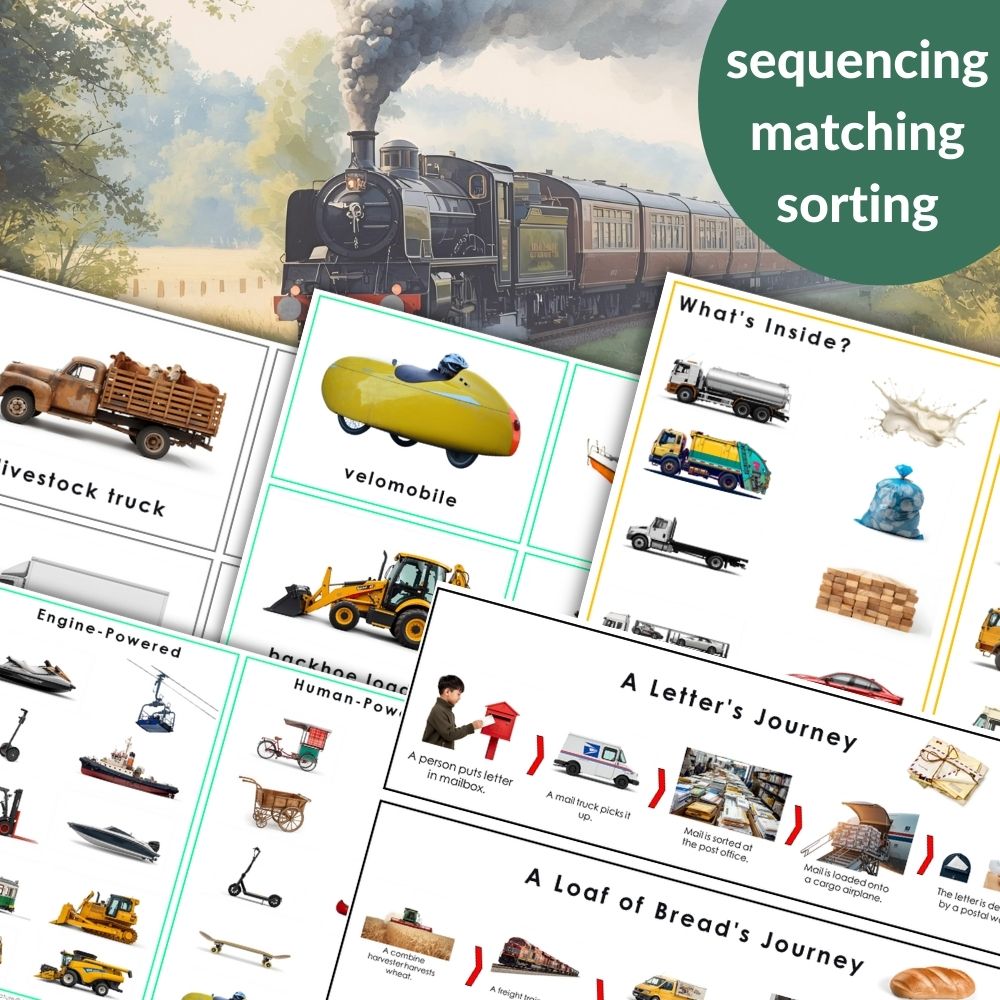
The printable contains four interlocking sets: “Who Drives This?” community helper matching, “What’s Inside?” cargo inference cards, sorting cards (People/Goods, Human/Engine Power), and sequenced journey cards for a loaf of bread and a letter.
On a practical level, these materials build vocabulary, logical reasoning, and critical thinking. The control posters empower independent work. But their true purpose emerges when we see them not as isolated activities, but as chapters in a larger story we help the children uncover.


The Spark of Need (Connecting to the Fundamental Human Needs)
Before a single vehicle was invented, there was a need. The Montessori framework of the Fundamental Human Needs—spanning Material needs (food, shelter, transport, clothing, defense) and Spiritual needs (art, religion, adornment, etc.)—gives us the perfect lens.
We don’t start with the truck. We start with the question: “How do we get what we need?”
The “What’s Inside?” cards are our first clue. A tanker truck isn’t just a vehicle; it’s the answer to a community’s need for milk. A freighter carries grain because people need food. A moving van responds to our need for shelter and a new home.
The “Who Drives This?” cards personify this response. The farmer, the captain, the mover—they are not just jobs; they are humans using their intellect and labor to meet the needs of others.
This reframes transport from a technical fascination to a human story of problem-solving. Every vehicle in the sorting set represents a human answer to a fundamental question: How do we move ourselves? How do we move what sustains us?
The March of Ingenuity (Connecting to the Great Lessons)
This is where the story gains a dimension of time and wonder, linking directly to the Montessori Great Lessons.
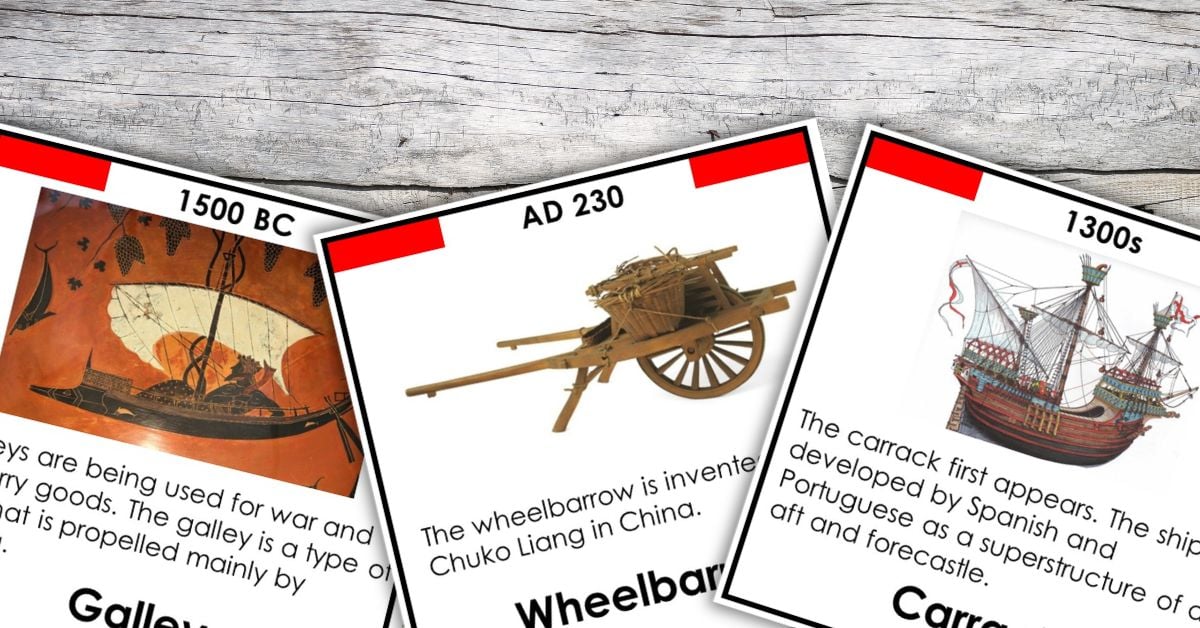
The First Invention: We can imagine early humans needing to move a heavy kill or stones for shelter. They used their own strength (human power), then ingeniously placed logs underneath to roll it—a primordial wheel. The canoe, the handcart, the bicycle on our sorting cards are descendants of this first spark of invention.
The Leap of Mind: Then came the harnessing of other powers—animal, wind, steam, and finally the internal combustion engine. The sorting activity becomes a tangible sorting of epochs. Children physically separate the rowboat from the motorboat, feeling the conceptual leap between them.
This activity lays the groundwork for the Great Lesson’s revelation: that humans are unique because of our intellect and imagination, our ability to imagine a solution (a wheel, a sail, an engine) and then create it to improve our lives.
The Web of Interdependence (Telling the Story of a Journey)
The pinnacle of this storytelling is the sequenced journey cards. The “Loaf of Bread’s Journey” is a modern tale.
When a child lays out the five cards—from combine harvester to bicycle courier, they are directing a narrative of global interdependence. They see the farmer, the train engineer, the mill worker, the baker, and the courier. They see the transformation of wheat to flour to bread. They see land, rail, road, and foot.
It answers the child’s silent question: “What is my place in the world?” The material shows them they are the beneficiary of an immense, collaborative human network. The bread on their shelf didn’t just appear; it is the culmination of thousands of years of invention (agriculture, milling, engines) and the present-day work of countless unseen hands.
Implementing the Story in Your Classroom
Begin with Need: Introduce the materials alongside a discussion or story about what people need to live. Sort the vehicle cards by the need they meet (Food Transport, Shelter Transport, etc.).
Unfold the History: Present the Human/Engine sorting mats as a “history of power” lesson. Read stories of early inventions.
Weave the Web: Use the journey sequences as a culminating, small-group project. Have children narrate the story aloud, act it out, or even draw a mural of the bread’s journey from field to city.
Inspire Their Story: The ultimate extension is to challenge older children: “Research and create your own 5-card journey. How does a wool sweater, a smartphone, or clean water come to us?”
This printable is an invitation to storytelling. It provides the vocabulary, the images, and the conceptual framework for children to tell themselves the greatest story: the story of human beings, our shared needs, our ingenious minds, and our beautiful, fragile interdependence. It takes the child’s love of what goes and shows them where we have all come from, and how we are all connected on the journey forward.
Transportation Activities: Sorting, Matching & Sequencing
This printable with Vehicles and Transportation Activities is designed for Montessori primary and lower elementary classroom (ages 5-9). This resource moves beyond basic vehicle identification to explore the interconnected systems of community, logistics, and technology that make our world function.
This printable is also available on TPT
You Might Also Enjoy
-
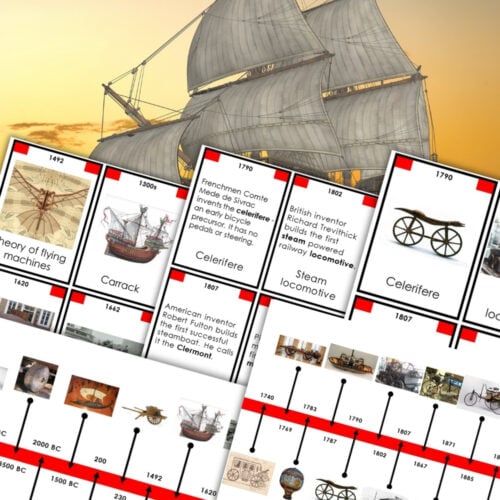
 Transportation History Timeline: 5 Part Cards$6.40
 -
Train Travel 3 Part Cards Information$3.30
-
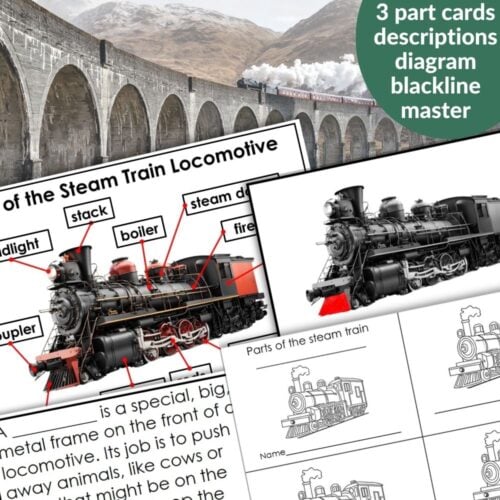
Parts of the Steam Train Locomotive 3 Part Cards Blackline Master Activities$4.30
-
Train Cars: Safari TOOB Compatible 3 Part Cards Facts$3.10
-
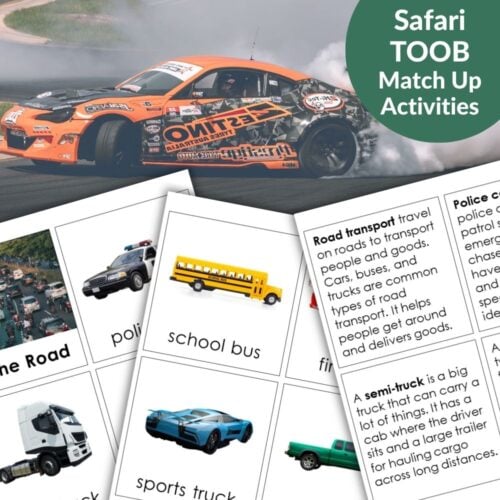
Transport: Safari TOOB Compatible 3 Part Cards Facts$3.10
-
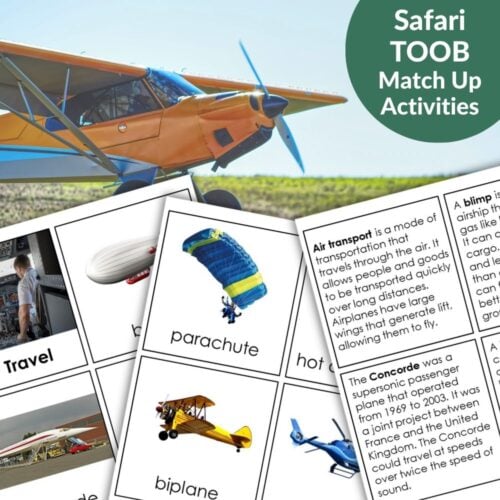
Air Transport: Safari TOOB Compatible 3 Part Cards Facts$3.10


About Anastasia | Anastasia is an early childhood teacher with over twenty years of experience in Montessori classrooms and homeschooling. With a Master’s in Information Science, she blends education and information design to create clear, organized, research-backed resources. As founder of Montessori Nature, she develops evidence-based, nature-inspired printables that support holistic child development and foster curiosity, independence, and a love of learning. Explore more in her shop and Teachers Pay Teachers store.