Food is one of those subjects that naturally sparks curiosity. That is why I created the Food History Timeline Printable—a complete set of 5‑part cards, timeline overview, and easy‑to‑assemble book that helps children explore key food milestones from hunter-gatherers to modern food innovations.
This resource is perfect for Montessori classrooms, homeschoolers, and any educator who wants to bring the story of food to life through hands‑on learning. It builds vocabulary, chronological understanding, and a deep appreciation for how human ingenuity has transformed what we eat and how we share meals. It also connects beautifully to the study of Fundamental Human Needs—specifically the human need for food, nutrition, and community.
But before I tell you more about the printable, let me take you on a journey through the history of food itself.
The Human Need for Food


In Montessori education, we talk about Fundamental Human Needs—the basic requirements that all people, across time and culture, have worked to fulfill. Food is perhaps the most fundamental of all. Without it, we cannot survive.
But food is not just about survival. It is about community. It is about culture. It is about celebration. It is about gathering around a table and sharing not just a meal, but stories, traditions, and love.
This is what food history is really about. It is not a collection of recipes and ingredients. It is the story of human ingenuity, human connection, and human creativity.
Food is how we say: I care for you. I want to share what I have. Let us sit together and enjoy this moment.
A Journey Through Food
Let me take you on a journey.
Imagine you are an early human, tens of thousands of years ago. You are a hunter-gatherer, following animal migrations, living in small groups, and searching for berries, fruits, and nuts. Food is not always easy to find, but you work together to survive. Food is survival.
Then someone discovers fire. You learn to cook food, making it easier to digest and absorb nutrients. You gather around the fire to share meals, tell stories, and build community. Food becomes connection.
You make advanced tools—spear points, bows, and fishing nets—to hunt more effectively. You learn to identify safe plants and plan seasonal food gathering. Food becomes skill.
You are a Natufian hunter-gatherer in the Middle East. You grind wild wheat and barley into flour and make the first bread. It is simple, but it is a breakthrough. Food becomes creation.
You begin to collect wild seeds and grains, storing them for later. This practice lays the groundwork for agriculture. Food becomes planning.
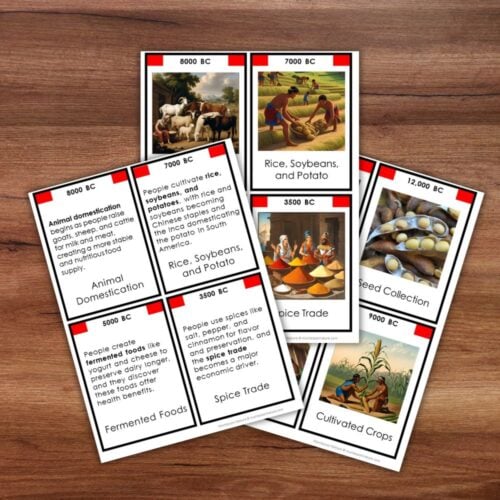
Then everything changes. The Agricultural Revolution transforms human life. Instead of wandering, you settle in villages. You farm the land and grow your own food. You cultivate wheat, barley, and corn. You domesticate animals like goats, sheep, and cattle for milk and meat. Food becomes stability.
In China, farmers cultivate rice and soybeans. In the Andes, the Incas domesticate the potato. Around the world, people discover fermentation, creating yogurt, cheese, and other preserved foods. Food becomes innovation.
The Spice Trade begins. Spices like cinnamon and pepper become valuable commodities, traded along routes like the Silk Road. People use them for flavor and preservation, and they even believe they can cure diseases. Kings and queens hold grand feasts with roasted meats, pies, and sweets. Food becomes luxury.
The ancient Egyptians enjoy bread as their staple food, along with onions, garlic, lentils, and beans. The ancient Greeks enjoy a varied diet of fruits, fish, and honey, using olive oil as a key ingredient. The ancient Romans enjoy lavish banquets with many dishes. Food becomes culture.
In the Middle Ages, Europeans rely on breads, cabbage, stews, and pies. Meats are salted or smoked for preservation, and people share meals during harvest celebrations. Food becomes community.
Pasta arrives in Italy from the Arab world. People experiment with different shapes like spaghetti and lasagna, creating dishes that become central to Italian cuisine. Food becomes art.
The Columbian Exchange brings potatoes, tomatoes, and corn from the Americas to Europe. Chocolate travels from Mexico to Europe, first as medicine, then as a favorite drink of the wealthy. Coffee becomes popular, and coffee houses spring up in London and Paris as gathering places. Food becomes exploration.
The Industrial Revolution transforms food production. Machines enter farming and food processing. Bakeries and restaurants become more popular. Mass production makes food more affordable and accessible. Food becomes efficiency.
Nicolas Appert invents canned foods, sealing food in heated containers to keep it fresh. This makes storage and transport much easier for soldiers and sailors. Food becomes preservation.
The first soda fountain invents fizzy drinks and root beer floats. Eliza Leslie publishes the first American cookbook. Daniel Peter invents the first milk chocolate bar. The first culinary school, Le Cordon Bleu, opens in Paris. Food becomes profession.
In the 20th century, fast food restaurants appear. White Castle becomes one of the first fast-food chains. Percy Spencer invents the microwave oven, cooking food faster. Processed foods become common, helping families save time. Food becomes convenience.
The organic food movement encourages people to grow and eat food without synthetic chemicals. GMOs are introduced, creating crops that resist pests and grow more food. Food becomes innovation.
In the 21st century, the farm-to-table movement encourages restaurants to use locally sourced food. Meal kit delivery services bring pre-portioned ingredients and recipes to your door. Global flavors are celebrated, and the focus on reducing food waste is increasing. Food becomes sustainability.
Food history is a story of survival, community, innovation, and love. It is a story that begins with foraging for berries and continues with meal kits delivered to our doors. It is a story of human beings, reaching out across time, saying: Come, let us eat together.
Why This Matters for Children
Children love food. They ask endless questions about what they eat, where it comes from, and why it tastes the way it does. They are natural explorers, drawn to the sights, smells, and tastes of different foods.
But somewhere along the way, many children stop asking questions. They see food as just something on their plate. They forget that every bite has a story.
Food history can change that.
When children learn that the first bread was made by grinding wild grasses, they appreciate the effort behind every loaf. When they discover that spices traveled across the world along the Silk Road, they understand the power of trade. When they see how food has evolved from hunting to farming to meal kits, they realize that progress is built on curiosity and creativity.
Food history gives children a sense of wonder about what they eat.
How to Use Food History as Inspiration
Here is a step-by-step guide to using food history as a foundation for exploration in your classroom or homeschool.
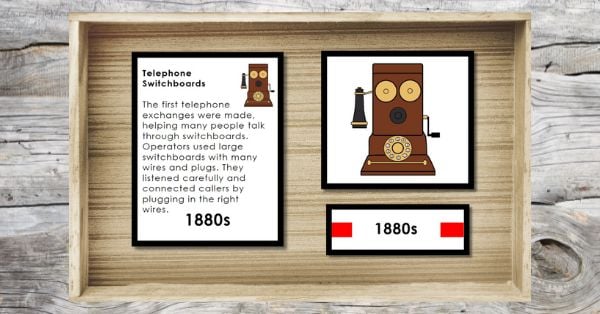
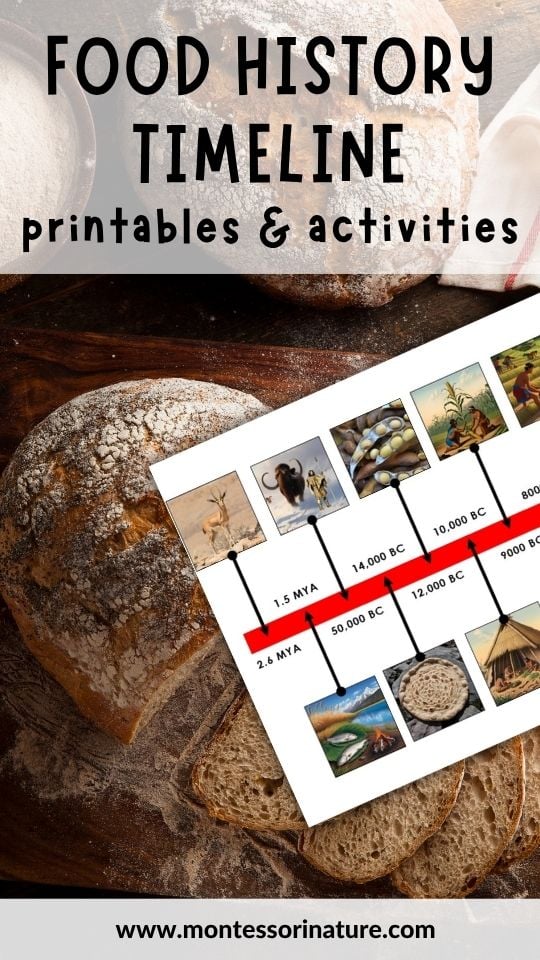
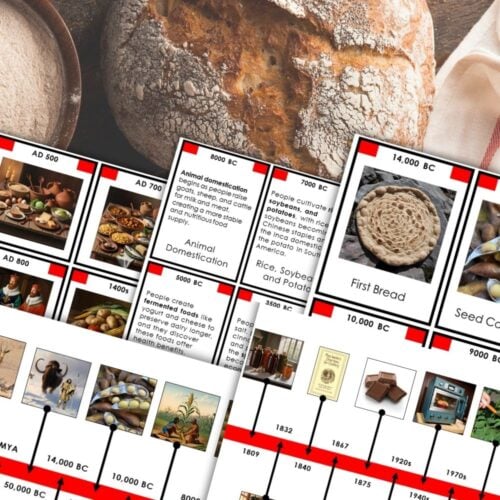
The Food History Timeline Printable includes 5‑part cards for 33 key food milestones, a timeline overview, and an easy-to-assemble book. You can use it to introduce each milestone and provide a visual reference for all your activities.
Step 1: Explore the Timeline Together
Begin by introducing the timeline of food history. Lay out the cards in chronological order—from Hunter-Gatherers to Food Technology Innovations. Talk about the progression of food and how each invention built upon the one before it.
Ask questions like:
- What problem did this invention solve?
- How did this invention change how people ate?
- What would life be like without this invention?
Display the cards on a wall or bulletin board as a visual reference throughout your study.
Step 2: Focus on One Milestone at a Time
Choose one food milestone to explore in depth. Read the definition card together. Look at the representative illustration. Discuss the key characteristics and significance.
Hands-On Activities by Age
Ages 3–6 (Early Childhood)
Sensory & Simple Exploration
- Go on a nature walk to collect berries, nuts, or leaves
- Roast marshmallows or vegetables over a fire (supervised)
- Mix flour and water to make simple dough
- Taste different types of bread and compare them
- Smell and sort spices by color or scent
- Taste potatoes, tomatoes, or corn
- Taste dark or milk chocolate
- Visit a bakery and watch bread being made
- Look at canned foods and open one to taste
- Make a root beer float
- Visit a farmers’ market
- Watch food being heated in a microwave
Creative & Pretend Play
- Draw hunter-gatherer meals or ancient feasts
- Pretend to run a coffee house
- Play fast-food drive-through
- Build a farm with blocks or play food
- Create a pretend farmers’ market
Ages 6–9 (Lower Elementary)
Research & Hands-On Projects
Research early human migration and diet
- Cook a simple meal over a fire or stove
- Bake bread from scratch
- Create a model of an early farming village
- Create a map of spice trade routes
- Make hot chocolate from scratch
- Visit a local bakery or food factory
- Try a simple canning or preserving project
- Cook a simple meal in a microwave
- Visit a farmers’ market or organic farm
- Plan a farm-to-table meal
Writing & Presentations
- Write a diary entry as a hunter-gatherer child
- Create a poster of ancient foods
- Write a report on the history of bread
- Write a report on a specific spice
- Write a report on the Columbian Exchange
- Write a report on chocolate’s journey
- Compare fast food from different countries
- Debate the pros and cons of GMOs
Ages 9–12 (Upper Elementary)
In-Depth Research
- Write a research paper on hunter-gatherer societies
- Research early farming and the Agricultural Revolution
- Research ancient Egyptian, Greek, or Roman food
- Research the Silk Road and spice trade
- Research the Columbian Exchange
- Research the Industrial Revolution and food production
- Research GMOs, organic food, or meal kits
- Write a persuasive essay on a food topic
Advanced Projects
- Create a detailed timeline of early human food
- Create a detailed map of trade routes
- Create a display of Old World vs. New World foods
- Try a preserving project (canning, pickling, drying)
- Create a presentation on a modern food innovation
- Create a feast from a specific ancient culture
- Create a model of a Neolithic village
All Ages (Shared Activities)
- Timeline Building: Arrange the 5‑part cards in chronological order
- Matching Work: Match picture cards to label cards and self-correct with control cards
- Cloze Practice: Complete cloze cards and self-correct with definition cards
- Compare and Contrast: Compare two food milestones (e.g., hunter-gatherers vs. agriculture)
- Personal Food History: Draw or write about favorite foods, family recipes, and meals
- Interview: Interview grandparents about how food has changed during their lives
Step 3: Compare and Contrast
Ask children to compare two food milestones side by side. For example:
How is hunter-gatherer food different from farm food?
What makes ancient Roman food different from Middle Ages food?
How has food preservation changed from salting to canning?
How does fast food compare to farm-to-table food?
Use the 5‑part cards to guide the conversation. The definition cards provide key characteristics, major milestones, and significance for each milestone.
Step 4: Create a Personal Food History
Invite children to create their own food history timeline—but with their own experiences. Have them draw or write about their favorite foods, family recipes, and meals they have shared. They can also interview grandparents about how food has changed during their lives.
This is a powerful way for children to see themselves as part of the story. They are not just observers of food history—they are participants in it.
Connecting to Community and Culture
Food is not just about ingredients. It is about what people value.
Hunter-gatherers were survival and community.
Cooking with fire was connection and innovation.
The Agricultural Revolution was stability and growth.
Ancient food cultures were tradition and celebration.
The Spice Trade was exploration and luxury.
The Columbian Exchange was connection and change.
The Industrial Revolution was efficiency and accessibility.
Fast food was convenience and speed.
The Organic Food Movement was health and sustainability.
GMOs were innovation and challenge.
The Farm-to-Table Movement is community and sustainability.
When children understand this, they begin to see food everywhere—in their kitchens, in restaurants, in the stories their families tell. They understand that food is not separate from life. It is life.
Food history shows us that eating is not a luxury. It is a fundamental human need. It is how we survive. It is how we connect. It is how we share who we are.
When you share food history with your students, you are doing more than teaching facts. You are giving them a foundation for curiosity. You are showing them that they, too, belong to the great story of food.
And who knows? One day, they might be the ones creating the next food innovation.

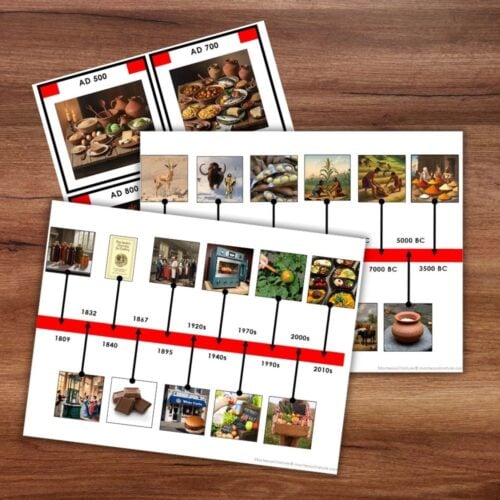
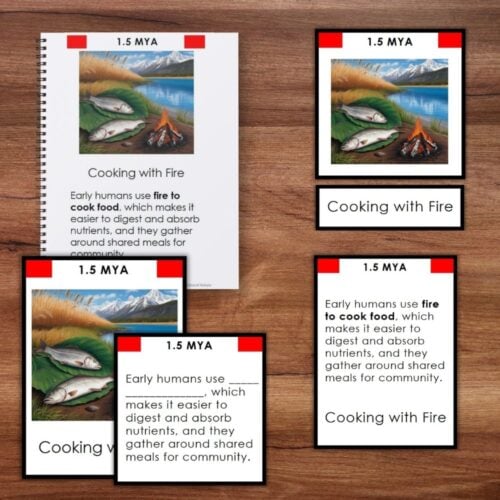
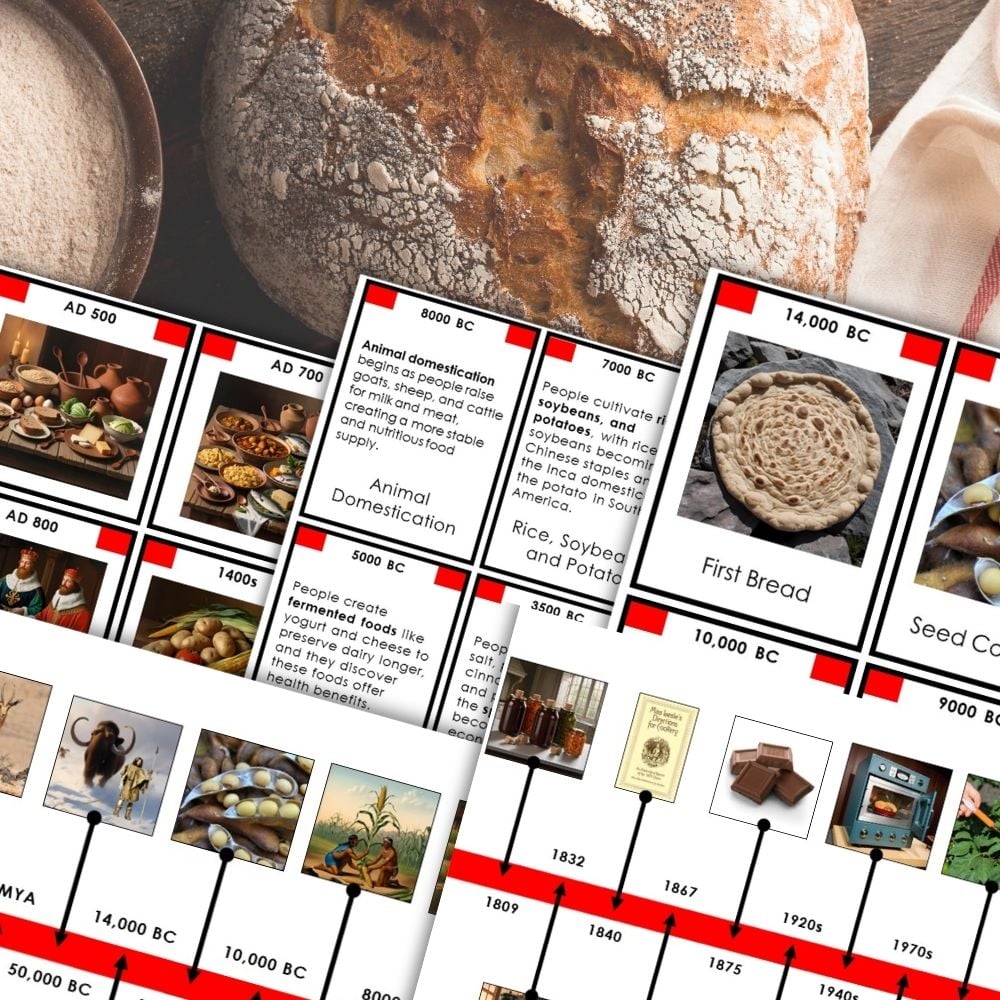


Food History Timeline: 5 Part Cards
This Montessori-inspired Timeline of Food History Printable Card Set for the classroom or homeschool can be a helpful addition to history, science, and cultural studies curriculum. This resource is designed to support hands-on, inquiry-based learning for students exploring the evolution of food – from hunter-gatherers to modern food innovations.
This printable is also available on TPT
You Might Also Enjoy
About Anastasia | Anastasia is an early childhood teacher with over twenty years of experience in Montessori classrooms and homeschooling. With a Master’s in Information Science, she blends education and information design to create clear, organized, research-backed resources. As founder of Montessori Nature, she develops evidence-based, nature-inspired printables that support holistic child development and foster curiosity, independence, and a love of learning. Explore more in her shop and Teachers Pay Teachers store.