Exploring the history of communication technology is a vital part of understanding how advancements have shaped our society. This engaging and interactive timeline printable helps elementary students learn about the history of the telegraph and telephone.
The development of the telegraph and telephone marks pivotal moments in human history, transforming the way people connect across distances. The telegraph, invented in the early 19th century, revolutionized communication by enabling instant transmission of messages through electrical signals over long distances. Samuel Morse’s innovation in the 1830s laid the groundwork for modern electronic communication, occurring in a period marked by rapid technological progress and expanding global interconnectedness.
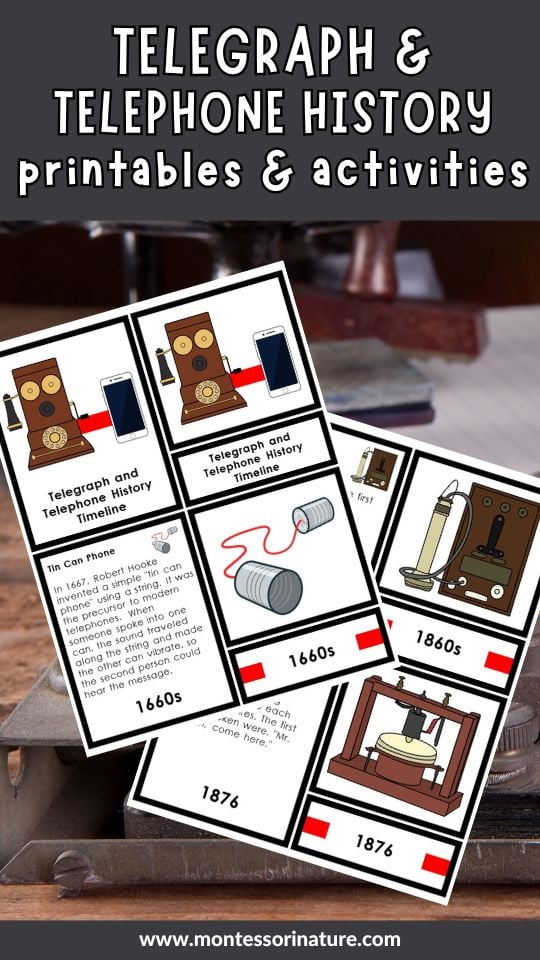
The telephone, invented by Alexander Graham Bell in 1876, further advanced this field by allowing real-time voice communication, profoundly impacting social interactions and business practices. These inventions emerged within a broader social and historical context characterized by industrialization, urbanization, and the increasing need for faster communication to coordinate economic and social activities. Exploring these technological milestones helps us understand how human beings have continually sought ways to fulfill their fundamental need for connection, information sharing, and community.
To support young learners in understanding this important part of history, we offer a printable: “Timeline of Communication Innovations”. This engaging and interactive resource is designed specifically for elementary students to learn about the evolution of the telegraph and telephone within both a social and technological context.

science Activities
Here are some hands-on science activities for children to explore the history and science of the telegraph and telephone:
Create a Morse Code Bracelet or Keychain
- Materials: Beads or small objects, string, and a chart of Morse code.
- Activity: Children craft bracelets or keychains representing Morse code signals, helping them memorize and understand the language of early telegraph communication.
Design and Make a “Talking” String Phone
- Materials: Two paper cups or plastic cups, string (about 10-20 feet), and tape.
- Activity: Kids connect the cups with the string to create a simple voice transmission device. They can experiment with different string lengths and observe how sound travels through the string, mimicking early voice communication devices.
Create a Timeline Poster or Flipbook
- Materials: Poster board, markers, Telegraph and Telephone history cards.
- Activity: Students assemble a visual timeline of communication inventions, reinforcing chronological order and understanding of technological development.
Design Your Own Communication Device
- Materials: Recyclable materials like cardboard, aluminum foil, straws, rubber bands, etc.
- Activity: Encourage children to invent their own communication device, fostering creativity and understanding of the basic principles of transmitting sound or signals.
Explore Electricity and Circuits
- Objective: Understand how electrical signals transmit information.
- Experiment: Build simple circuits with batteries, wires, and bulbs or buzzers ( affiliate link) to see how electrical current flows. Discuss how early telegraph systems used electrical signals to send messages.
Investigate Sound Transmission
- Objective: Learn how sound travels and how it can be transmitted.
- Experiment: Use the string phone to demonstrate sound vibration transmission. Then, explore how sound waves travel through different materials by placing various objects (paper, fabric, plastic) between the cups and observing changes.
Compare Sound and Electrical Signals
- Objective: Understand differences between transmitting sound directly versus through electrical signals.
- Experiment: Have children record a message on a device, then simulate how electrical signals carry that message over distances, comparing it with face-to-face communication.
Study the Properties of Conductors and Insulators
- Objective: Understand what materials conduct electricity.
- Experiment: Test different household items (metal, plastic, wood) to see which conduct electricity when connected to a simple circuit (affiliate link). Discuss why metals are used in telegraph wires.
Explore the Physics of Voice Transmission
- Objective: Understand how sound waves are converted into electrical signals and back into sound.
- Experiment: Use a microphone or a simple piezoelectric element to convert sound into electrical signals and vice versa, demonstrating the science behind telephones.
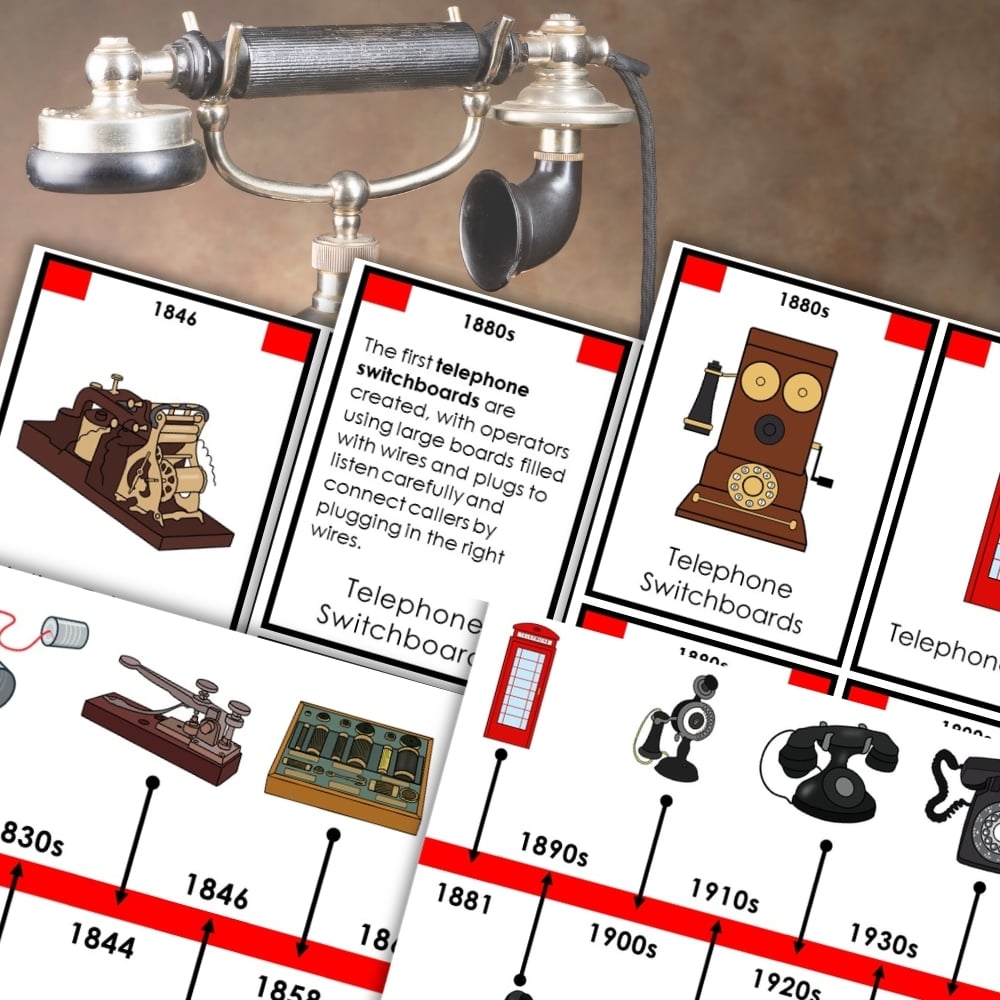
Telegraph and Phone History Timeline: 5 Part Cards
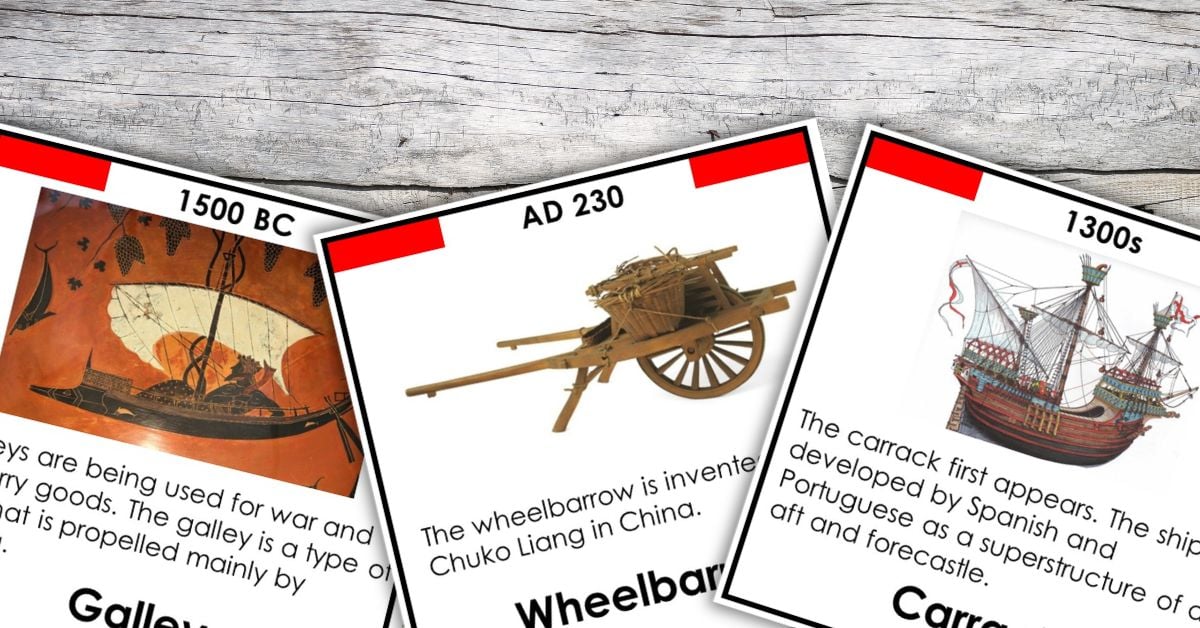
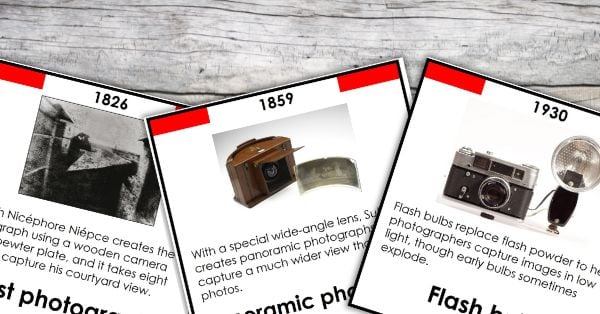
This Montessori-inspired Timeline of Telegraph and Telephone History Printable Card Set for the classroom or homeschool can be a helpful addition to history, science, and technology curriculum. This resource is designed to support hands-on, inquiry-based learning for students exploring the evolution of communication – from the tin can phone to smartphones.
This printable is also available on TPT
You Might Enjoy

About Anastasia | Anastasia is an early childhood teacher with over twenty years of experience in Montessori classrooms and homeschooling. With a Master’s in Information Science, she blends education and information design to create clear, organized, research-backed resources. As founder of Montessori Nature, she develops evidence-based, nature-inspired printables that support holistic child development and foster curiosity, independence, and a love of learning. Explore more in her shop and Teachers Pay Teachers store.