Have you ever watched a child in winter, their nose pressed against a frosty windowpane, wondering where all the buzzing bees and chattering squirrels have gone? That moment of wonder is a tiny spark—a spark that, in a Montessori-aligned classroom, can be gently fanned into a flame of cosmic understanding.

It begins with a simple, hands-on material: a set of cards showing a bear in its den, a frog in the mud, and a bat in a cave. But this work is never just about matching pictures. It is a child’s first step on a grand journey of discovery, tracing a thread that connects a sleepy groundhog to the very origins of our planet.
The Spark of Curiosity: Touching the Story of Life (Ages 4-9)
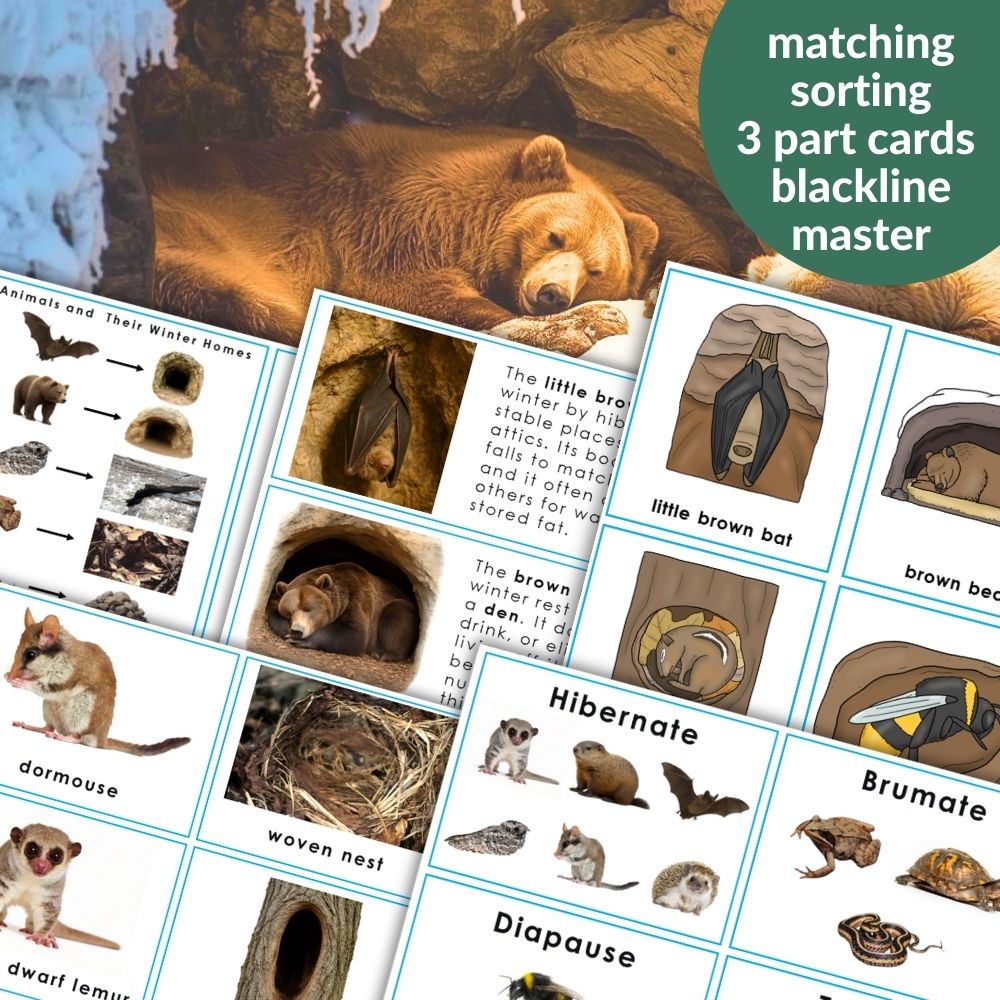
In our classrooms, we begin with the concrete, and this work beautifully meets children at different stages. For our youngest learners (ages 4-5), the journey starts with the senses and simple order. They engage in basic matching: placing the large, clear picture of the bear on top of the picture of the den. The work is in the hand and the eye—developing visual discrimination, building vocabulary through conversation (“This is the bear’s winter den”), and experiencing the satisfaction of a perfect match. The student book, with its simple cut, color, and glue steps, is a fine motor activity and allows them to create their own reference book of discoveries.

This concrete play is a direct, tangible encounter with ideas from the Great Story of the Coming of Life. We tell the children that long ago, the Earth changed, grew cold, and life had to find new ways to continue. The sleeping bear or the frozen frog they hold in card form is living proof of that ancient story—a story of adaptation they can touch.
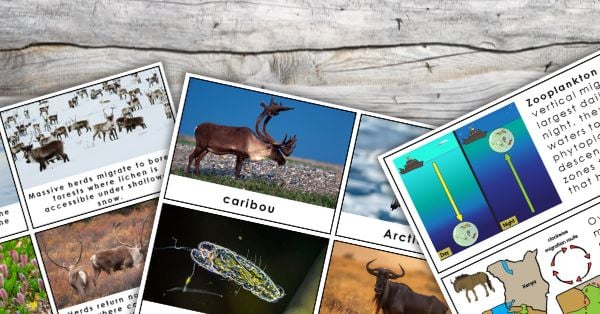
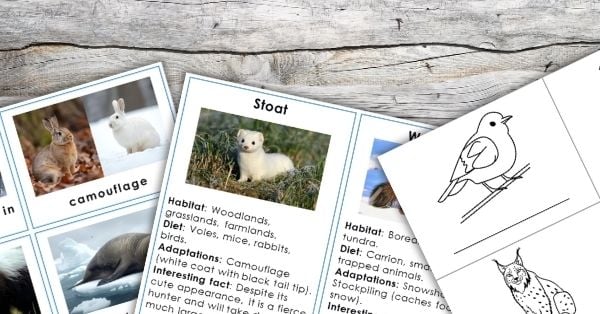
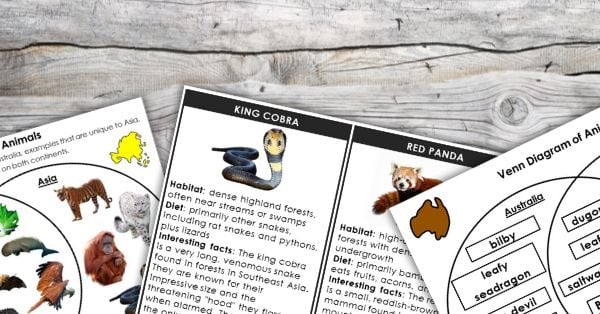
Then the work deepens. They move from matching to classification and research. They sort animals not just by picture, but by the scientific strategy they use: Hibernate, Brumate, Torpor, Diapause. They read the information cards, fill out the Hibernation Science Journal, and use the True/False cards to test their knowledge. They are moving from “what” to “how” and “why.”
Weaving the Web: From One Animal to the Whole World
Whether four or nine, the magic unfolds as children begin to see connections. The activity naturally expands. Where does the bear sleep? In a den. What is that den part of? A mountainside, a forest. Who else lives there? The chipmunk storing nuts, the snake in the rocks.
The single card becomes a node in a vast web. The child sees that the bear’s winter sleep is connected to the fallen log that shelters insects, the geology of the cave, and the climate. This is Cosmic Education: helping every child see that every element of our world, from the smallest snail to the grand tilt of the Earth, is related. The younger child feels this connection through care and story; the older child analyzes it through research and reason.
From Cards to Creation: Hands-On Science for All Ages
This understanding is grounded in shared, hands-on experience that can be leveled for all.
- For Ages 4-5: A “Build a Den” sensory bin lets them become engineers of care. Using natural materials—moss, stones, wool “snow”—they create a cozy, sheltered space for a toy bear, thinking about protection and warmth through touch and imagination.
- For Ages 6-9: This same activity becomes an insulation experiment. They might test different den materials (leaves vs. cotton) with thermometers or discuss how location affects shelter. They use the “Blubber Glove” experiment (shortening in a bag) to physically feel how fat protects animals from cold, then journal about its biological purpose.
The Gift We Give: A Sense of Place and Responsibility
Where does this journey lead? For the four-year-old, it leads to a sense of wonder and gentle respect for the sleeping animals. For the nine-year-old, it builds into an understanding of ecosystems and stewardship.
The child who has followed this thread—from a simple matching card to a complex food web—begins to see themselves as a conscious, caring part of a connected world. They learn that their actions, like protecting a quiet winter habitat, matter. This is the ultimate goal: to give children a framework for understanding their world and a deep, abiding sense of their role within its delicate, beautiful balance. All sparked by a simple card and a question about where the animals go in winter.
Animal Winter Behavior: Hibernation
This Hibernation printable explores the essential winter behaviors of animals, focusing on the survival strategies of winter animals, with a primary emphasis on hibernation and its related scientific concepts. It is designed for Montessori Lower Elementary (Grades 1-3, ages 6-9) and advanced Primary/Kindergarten (ages 4-6) students.
This printable is also available on TPT
You Might Also Enjoy

About Anastasia | Anastasia is an early childhood teacher with over twenty years of experience in Montessori classrooms and homeschooling. With a Master’s in Information Science, she blends education and information design to create clear, organized, research-backed resources. As founder of Montessori Nature, she develops evidence-based, nature-inspired printables that support holistic child development and foster curiosity, independence, and a love of learning. Explore more in her shop and Teachers Pay Teachers store.