If you’ve ever watched a child, utterly still, track a V of geese across an autumn sky, you’ve seen it. That silent, profound wonder. It’s a question mark written in the clouds: Where are they going, and why?
In our classrooms, we don’t just answer that question with a fact. We follow it as a thread—a thread that, when gently pulled, unravels to reveal the entire tapestry of life on Earth. It leads us from a simple matching card to the epic saga of survival, directly to the heart of the Great Lessons and Cosmic Education.

The Spark: From Concrete Matching to the Great River of Life
For our youngest explorers (ages 4-5), the journey begins in the hands. We might present a simple, beautiful card of a caribou. Not with a lecture, but with a story.
“Long, long ago, the world changed. It grew cold in one place and warm in another. And life, wonderful life, had to find a way to move with it.”

This is our invitation to the Great Lesson of the Coming of Life. We then offer the materials: not as a test, but as a discovery.
For the 4-5 year old, the work is sensorial and orderly. They match the animal to a tactile pin-punching card, using a push pin to trace its migratory route through the paper. They feel the journey. They work with 3-part cards, absorbing the vocabulary. They create their own student booklet, cutting and pasting animals next simple maps. The story is absorbed through the hand.
The “why” is planted as a seed: The caribou moves because the seasons change. It is looking for what it needs to live.
Deepening the Current: Cause, Effect, and Cosmic Interconnection
For the 6-9 year old, the reasoning mind awakens. They need to know the why behind the what. This is where the work transforms.
Now, we present the Cause and Effect cards. “The Arctic is plunged into 24-hour darkness (Cause).” The child searches, thinks, and connects it to: “The Arctic tern flies to the Antarctic for summer (Effect).” Suddenly, migration isn’t just movement; it’s a logical, life-saving response. The included control chart allows them to be their own teacher, verifying their reasoning with dignity.
We bring out the challenge cards with the animal’s name blanked out. The child must now read the description of a journey and deduce which animal it belongs to, matching it to a detailed migration map. This is high-level, detective-style work that feeds their growing intellect.
And here, we connect back to the Great Story: “Over millions and millions of years, the tern’s ancestors who undertook this journey survived. Those who didn’t… well, they didn’t become the tern’s ancestors. This behavior is a gift from the deep past, written into the very being of the bird today.” We talk about evolution not as a theory in a book, but as the slow, patient sculptor of the behavior they are holding in their hands.
Hands-On, Hearts-On: Activities that Root the Knowledge
This learning must flow into creative, hands-on expression. Here are ways to extend the work across ages:
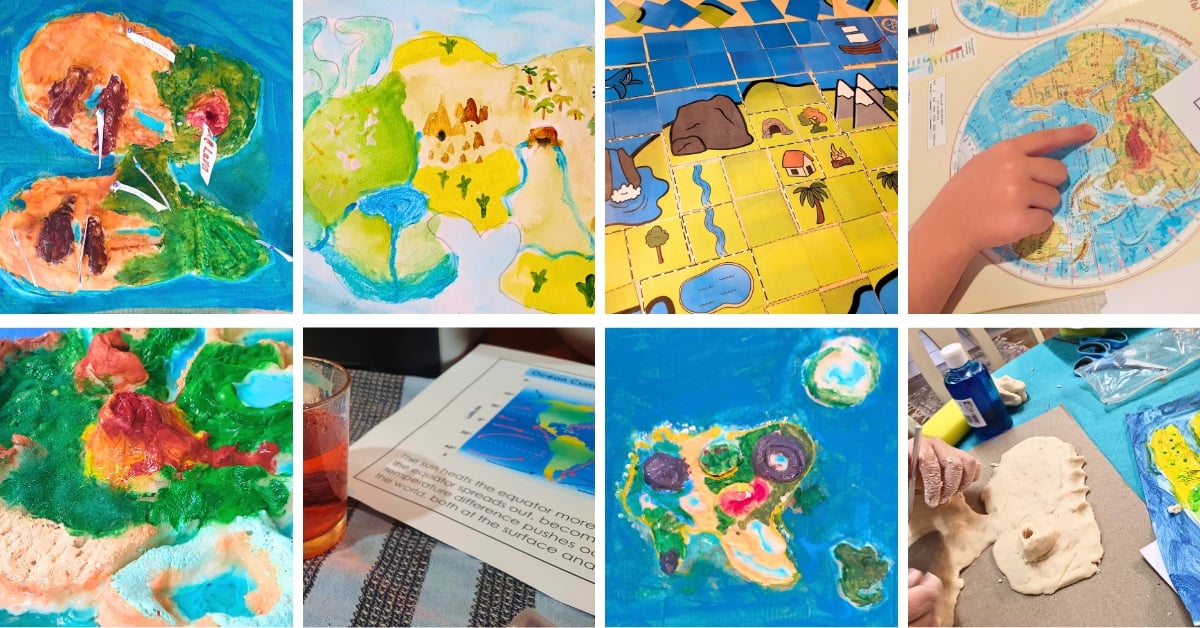
Create a Migration Wall Map: Use the printable map cards as guides. Let children draw or paint a large world map on butcher paper. They can then draw the migratory paths of different animals in colored yarn, creating a stunning visual of Earth’s interconnected animal highways.
The “Blubber Glove” Experiment (for Insulation): While studying arctic animals or seabirds, ask, “How do they stay warm on such long, cold journeys?” Simulate blubber with shortening in a bag. Let a child plunge one hand in ice water, then the hand protected by the “blubber.” The connection becomes physical.
Drama & Storytelling: Act out a migration. Children can become a herd of wildebeest facing a carpet-river full of “crocodile” cushions. They can be salmon leaping up a “waterfall” of pillows. They don’t just learn about the journey; they feel its challenges.
The Ultimate Goal: Fostering the Cosmic Citizen
Where does this winding migratory path lead our children? To gratitude and responsibility.
The child who has traced the tern’s pole-to-pole flight understands the fragility of both polar ice caps. The child who has followed the monarch’s path to a specific Mexican forest understands why deforestation there is a global concern.
They see that the caribou’s trail is connected to the health of the tundra, which is connected to the global climate, which is connected to us. This is Cosmic Education—not as a unit to be covered, but as a lens through which to see the world. They move from seeing an animal on a card to understanding their own role as a conscious, caring part of a vast, interdependent system.
The new Animal Migrations printable was created to support you in guiding this profound discovery. It provides the structured and self-correcting materials that give concrete form to these cosmic ideas, freeing you to do what you do best: tell the stories, ask the questions, and nurture the wonder.
So next time you and the children see those geese overhead, you’ll know. You’re not just looking at birds heading south. You’re witnessing a living story of time, adaptation, and interconnectedness—a story waiting to be discovered, right in your classroom.

Animal Behavior: Migration
Unlock the epic journeys of nature with this comprehensive, hands-on migration unit. Designed for Montessori-aligned and play-based classrooms, this printable transforms the abstract concept of animal migration into a tangible, multi-sensory learning experience for children aged 4-9 (Kindergarten – Grade 3).
This printable is also available on TPT
You Might Also Enjoy


About Anastasia | Anastasia is an early childhood teacher with over twenty years of experience in Montessori classrooms and homeschooling. With a Master’s in Information Science, she blends education and information design to create clear, organized, research-backed resources. As founder of Montessori Nature, she develops evidence-based, nature-inspired printables that support holistic child development and foster curiosity, independence, and a love of learning. Explore more in her shop and Teachers Pay Teachers store.