There is a passage in Maria Montessori’s Citizen of the World that feels more urgent today than ever. It’s a passage about the deepest purpose of education—not grades, not test scores, not college admissions, but something far more profound.
She writes:
We must take man himself, take him with patience and confidence, across all the planes of education. We must put everything before him, the school, culture, religion, the world itself. We must help him to develop within himself that which will make him capable of understanding. It is not merely words, it is a labour of education. This will be a preparation for peace – for peace cannot exist without justice and without men endowed with a strong personality and a strong conscience.
Let these words sink in.

Montessori isn’t describing a curriculum. She’s describing a mission. A sacred responsibility to take the whole human being—patiently, confidently—across all the planes of education. Not just the early years. Not just academics. Everything. School. Culture. Religion. The world itself.
And why? For what purpose?
This will be a preparation for peace.
Not surface-level peace. Not the absence of conflict. But a deep, durable peace rooted in justice. Rooted in human beings who have developed within themselves “a strong personality and a strong conscience.”
In a world that often feels fractured and loud, this vision is both a challenge and a promise. The challenge: peace isn’t something we wait for. It’s something we educate for. The promise: it’s possible. One child, one classroom, one family at a time.
So what does this look like in practice? How do we take children across all the planes of education? How do we nurture strong personalities and strong consciences?
1. Take the Long View: This Is a Journey Across All the Planes
Montessori speaks of “all the planes of education”—infancy, childhood, adolescence, maturity. This work isn’t finished in a semester or a school year. It’s a lifelong journey.
Actionable step this week:
Release the pressure to see immediate results. Stop measuring success by tomorrow’s quiz or this week’s behavior chart. Instead, ask yourself:
- What kind of adult am I hoping this child will become?
- What am I doing today that serves that long-term vision?
- Where am I focused on short-term compliance instead of lasting character?
Write down your long-term hopes for the children in your life. Keep it somewhere visible. Let it guide your daily choices.
2. Move Patiently, Not Perfectly
Montessori says we must take the child “with patience and confidence.” Not hurry. Not pressure. Not pushing toward arbitrary milestones. Patience. And confidence—trust that the child is on their own timetable.
Actionable step this week:
Identify one area where you’ve been rushing a child—academics, social skills, physical development—and consciously slow down. Breathe. Wait. Trust.
Instead of “You should know this by now,” try: “You’re learning this in your own time. I trust you.”
Patience isn’t passivity. It’s active trust in the child’s inner timeline.
3. Put Everything Before Them—Not Just What’s on the Test
Montessori’s list is striking: “the school, culture, religion, the world itself.” Not just reading and math. Everything that makes us human.
Actionable step this week:
Look at your child’s exposure to the world. Are they seeing only what’s familiar? Or are you putting before them:
- Art, music, poetry, stories from different cultures?
- Questions about meaning, beauty, justice, and belonging?
- The natural world in all its wonder?
- People who look, speak, worship, and live differently than they do?
This week, introduce one new “world” experience. A book from another country. A conversation about a different tradition. A walk in an unfamiliar neighborhood. A question without a simple answer.
We can’t prepare children for peace if we never show them the world.
4. Develop the Capacity for Understanding—Not Just Memorization
Montessori writes about helping the child “develop within himself that which will make him capable of understanding.” This is different from memorizing facts. It’s about building the inner structures of empathy, critical thinking, and perspective-taking.
Actionable step this week:
Instead of asking questions that test recall (“What did we learn about? What’s the capital of X?”), ask questions that invite understanding:
- “Why do you think she felt that way?”
- “What might someone from another country think about this?”
- “Can you see both sides of this argument?”
- “What would you do if you were in that situation?”
Understanding isn’t something we pour into children. It’s something they build, with our guidance.
5. Remember: This Is Labour, Not Lecture
Montessori calls this “a labour of education.” Not a lecture. Not a worksheet. Not a one-time conversation. Labour. Daily, patient, often invisible work.
Actionable step this week:
Acknowledge the labour. You’re doing it. Every time you model kindness instead of snapping. Every time you answer a difficult question honestly. Every time you apologize and repair a mistake.
This week, give yourself credit for the labour. And when you’re tired, remember: this is how peace is built. Not in grand gestures, but in thousands of small, faithful acts.
6. Cultivate Strong Personality—Not Just Obedience
Montessori connects peace to “men endowed with a strong personality and a strong conscience.” Not compliant, agreeable, easy-to-manage children. Strong. Rooted. Capable of standing alone when necessary.
Actionable step this week:
Look for opportunities to strengthen personality, not just enforce obedience:
- When a child disagrees respectfully, thank them.
- When they advocate for themselves, honor it.
- When they resist an unjust demand, listen.
- When they make a choice you wouldn’t make, trust them (within safe limits).
A strong personality is not defiance. It’s the capacity to think, choose, and act from inner conviction. That’s exactly the kind of person peace requires.
7. Nurture Strong Conscience—Not Just Rule-Following
Conscience is different from compliance. Compliance follows rules to avoid punishment or gain reward. Conscience asks: “What is right?” even when no one is watching.
Actionable step this week:
Instead of focusing on caught/not caught, focus on inner reflection:
- “What does your heart tell you about this?”
- “If no one ever found out, would it still be wrong?”
- “How would you feel if someone did that to you?”
- “What kind of person do you want to be?”
And model it. Let children see you making choices based on conscience, not convenience. Let them hear you wondering aloud about right and wrong.
8. See Every Interaction as a Preparation for Peace
Montessori’s vision is breathtaking: all of education, all of life with children, is preparation for peace. Not just peace in the world, but peace in the human heart. Peace in families. Peace in communities.
Actionable step this week:
Reframe your daily interactions through this lens. When you:
- Help two children resolve a conflict → preparation for peace.
- Model apology and forgiveness → preparation for peace.
- Teach a child to listen before speaking → preparation for peace.
- Nurture empathy for someone different → preparation for peace.
- Strengthen a child’s conscience → preparation for peace.
Nothing you do with children is too small. Everything matters. Everything is preparation.
A Simple Challenge for This Week
Choose one of these steps—just one—and try it.
- Take the long view; release short-term pressure.
- Move patiently, not perfectly.
- Put something new from the world before a child.
- Ask a question that invites understanding, not recall.
- Acknowledge the labour of education.
- Strengthen personality, not just obedience.
- Nurture conscience, not just compliance.
- See every interaction as preparation for peace.
Then notice what shifts. In the children. In you.
Montessori wasn’t describing an idealistic dream. She was describing the only realistic path to a peaceful world.
Peace cannot be imposed. It cannot be legislated. It cannot be achieved through force or fear.
Peace can only be built by human beings who have been educated for it. Human beings with strong personalities—capable of standing for what’s right. Human beings with strong consciences—able to distinguish justice from convenience. Human beings who have been taken, patiently and confidently, across all the planes of education.
That’s our work. Every day. In the small moments. At the breakfast table, in the classroom, on the playground, at the dinner table.
We are not just raising children. We are preparing peace.
And there is no more important work in the world.
You Might Enjoy
-
 Peace Activities & Play-Doh Continent Mats$6.30
 -
Compassion and Peace Preschool and Kindergarten Pack$8.10
-
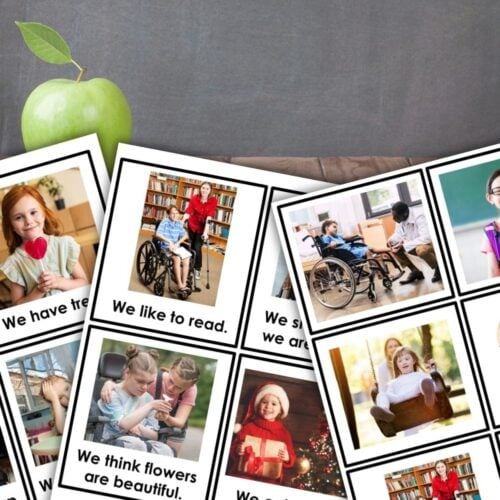
Diversity Picture Cards Student Booklet: Social Emotional Learning$3.10
-
Social Emotional Learning: How I Feel Emotion Sort Worksheets$3.50
-
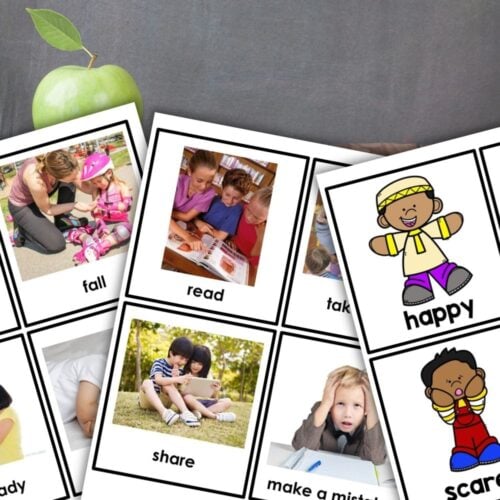
Character Building Cards: Social-Emotional Learning$3.30
-
Social Emotional Learning: Task Cards$2.30




About Anastasia | Anastasia is an early childhood teacher with over twenty years of experience in Montessori classrooms and homeschooling. With a Master’s in Information Science, she blends education and information design to create clear, organized, research-backed resources. As founder of Montessori Nature, she develops evidence-based, nature-inspired printables that support holistic child development and foster curiosity, independence, and a love of learning. Explore more in her shop and Teachers Pay Teachers store.