How everyday tasks become the foundation of ability, confidence, and social grace
There is a passage in The Discovery of the Child that has quietly guided my parenting and teaching for years. It’s about something so simple we might overlook it, and yet so profound it changes everything.
Montessori writes:
Repetition is the secret to perfection, and this is why the exercises are connected with the common activities of daily life. If a child does not set a table for a group of people who are really going to eat, if he does not have real brushes for cleaning, and real carpets to sweep whenever they are used, if he does not himself have to wash and dry dishes and glasses he will never attain any real ability. And if he does not live a social life based on proper education, he will never attain that graceful naturalness which is so attractive in our children.
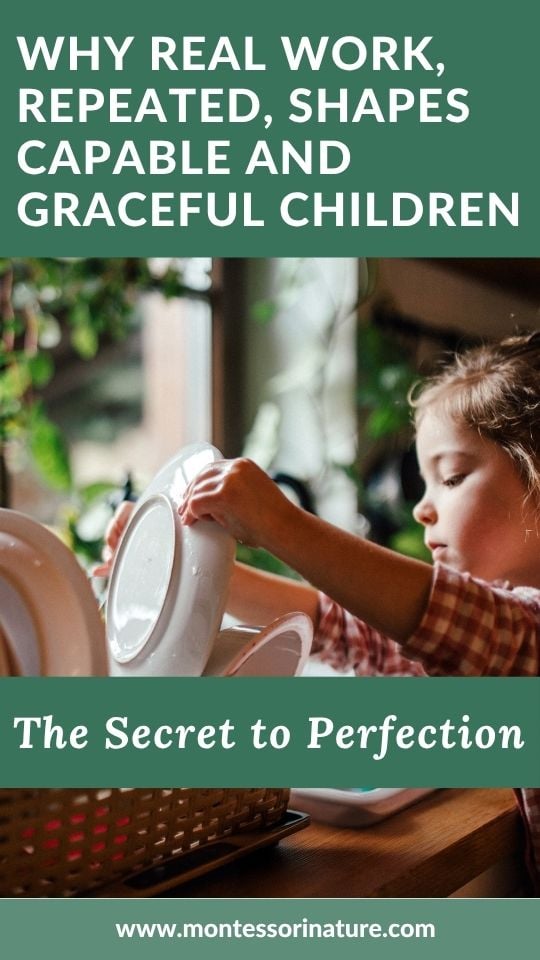

I love this quote because it’s so wonderfully practical. Montessori isn’t talking about abstract concepts or expensive materials. She’s talking about tables. Brushes. Dishes. Carpets. The stuff of everyday life.
And she’s making a bold claim: real ability comes from doing real work, repeatedly, in a real context. Not pretend work. Not occasional work. Not work that’s cleaned up by someone else before the child sees the consequences.
Real work. Repeated. In service of real people.
And from this, something beautiful emerges: “graceful naturalness.” The ease of a child who knows how to move in the world, how to contribute, how to belong.
So what does this look like in practice? How do we create opportunities for children to develop this real ability and graceful naturalness?
Here are some steps I’ve been gathering.
1. Give Children Real Work, Not Pretend Work
Montessori is clear: real brushes, real carpets, real dishes. Children know the difference between pretend work and the real thing. Pretend work may entertain, but it doesn’t build real ability.
Actionable step this week:
Look around your home or classroom. Where are you offering pretend versions of real work? A plastic broom that doesn’t sweep? Toy dishes that don’t need washing? A play kitchen with no real food?
Consider replacing one pretend item with its real counterpart. A small, child-sized broom that actually sweeps. Real glasses that a child can wash and dry. A small pitcher they can use to pour their own drink.
Real tools send a powerful message: I trust you. This matters. You are capable.
2. Invite Repetition—Don’t Rush It
Montessori calls repetition “the secret to perfection.” Not doing something once or twice. Doing it again and again until it becomes part of the child’s being.
Actionable step this week:
Notice when a child wants to repeat an activity—setting the table, sweeping, folding napkins—and resist the urge to say “you’ve already done that” or “let’s try something new.”
Create conditions for repetition. Leave the work out. Keep materials accessible. Allow time for the child to return to the same activity day after day, week after week.
Repetition isn’t boredom. It’s mastery unfolding.
3. Connect Work to Real People, Real Meals
Montessori emphasizes that the child needs to set a table “for a group of people who are really going to eat.” The work has a real purpose. It serves real people. This is what gives it meaning.
Actionable step this week:
Look for ways to connect a child’s work to genuine contribution:
- Instead of setting up a “pretend snack,” invite the child to set the table for family dinner.
- Instead of practicing pouring with dry beans, let them pour their own water at mealtime.
- Instead of a classroom job chart that rotates randomly, let children take genuine responsibility for spaces they use every day.
When children see that their work matters to others, something shifts. They’re not just doing an activity. They’re participating in life.
4. Trust the Child With Fragile Things
One of the most striking elements of Montessori’s approach is her trust in children with real, breakable materials. Glasses that can break. Dishes that can chip. This trust is itself a form of respect.
Actionable step this week:
Consider: have I been protecting my child from breakable things because I’m afraid of the mess or the loss? What might change if I trusted them with something real?
This week, try offering one real glass instead of plastic. A small ceramic bowl. A real plate. Show the child how to carry it carefully. And if it breaks? That’s okay. Clean it up together. The lesson in care is worth far more than the object.
5. Embrace the Mess—It’s Part of the Learning
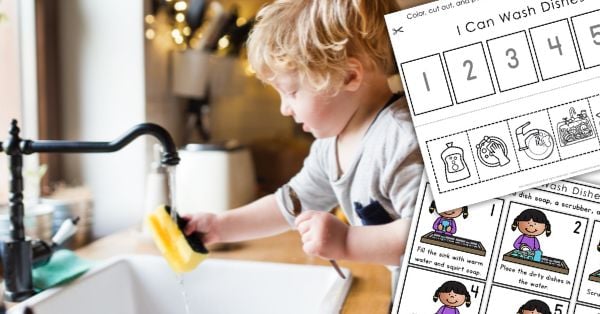
Montessori describes children who “wash and dry dishes and glasses.” Real washing means water. Real drying means towels that get wet. Real work sometimes makes a mess.
Actionable step this week:
When a child wants to help with a messy task—washing dishes, watering plants, sweeping up crumbs—resist the urge to take over or to clean up after them.
Instead, slow down. Allow time. Show them how to clean up spills. Let them experience the full cycle of work: preparation, action, and restoration.
The mess is not a failure. It’s the visible evidence of learning.
6. Create a “Social Life Based on Proper Education”
Montessori says that without “a social life based on proper education,” children won’t attain “graceful naturalness.” What does this mean? It means the work isn’t isolated. It happens in community, with real relationships, real collaboration, real belonging.
Actionable step this week:
Look for ways to build social connection into everyday work:
- Instead of one child setting the table, two children work together—one placing plates, the other folding napkins.
- Instead of a teacher or parent doing all the clean-up, children work alongside each other to restore the space.
- Instead of work being done in isolation, create opportunities for children to observe, assist, and learn from each other.
Graceful naturalness emerges when children learn to move respectfully in a community of real people.
7. Model the Grace You Wish to See
Montessori’s phrase “graceful naturalness” is striking. It suggests ease, beauty, and authenticity in movement and interaction. Children absorb this from watching adults who move with intention and care.
Actionable step this week:
Pay attention to how you move through daily tasks:
- Do you set the table with attention and care, or hurriedly toss things down?
- Do you sweep slowly and thoroughly, or rush through it?
- Do you handle breakable things gently, or with impatience?
Children are watching. Your graceful naturalness becomes their template. Slow down. Move with intention. Let them see what it looks like to do real work with care.
8. Trust That Perfection Is a Process, Not a Product
Montessori calls repetition “the secret to perfection,” but she doesn’t mean flawless outcomes. She means the slow, patient unfolding of ability over time. A child who sets the table every day may still occasionally put the fork on the wrong side. That’s okay.
Actionable step this week:
Release the expectation of perfect results. Instead, celebrate the process:
- “You remembered the napkins today!”
- “I noticed you carried the glass so carefully.”
- “You kept trying even when that was tricky.”
Perfection isn’t about getting it right. It’s about becoming someone who can contribute with confidence and grace.
A Simple Challenge for This Week
Choose one of these steps—just one—and try it.
- Replace one pretend tool with a real one.
- Allow repetition without rushing.
- Connect work to real people and real meals.
- Trust a child with something breakable.
- Embrace the mess as part of learning.
- Build social connection into everyday tasks.
- Model graceful movement and intention.
- Celebrate process, not just outcomes.
Then notice what shifts. In the children. In you.
Montessori’s vision of “real ability” and “graceful naturalness” isn’t reserved for special classrooms or extraordinary children. It’s available to all of us, in the ordinary moments of daily life.
The table that needs setting. The carpet that needs sweeping. The dishes that need washing. These aren’t chores to be rushed through or assigned out of convenience. They’re opportunities. Chances for children to develop real ability, to experience belonging, to practice the repetition that leads to mastery.
And when we slow down enough to let this happen, something beautiful emerges. Not perfect children. Not flawless execution. But children who move through the world with quiet confidence, genuine capability, and a grace that comes from knowing they belong.
That’s the secret. And it’s been waiting for us all along, in the simple work of everyday life.
You Might Enjoy
-
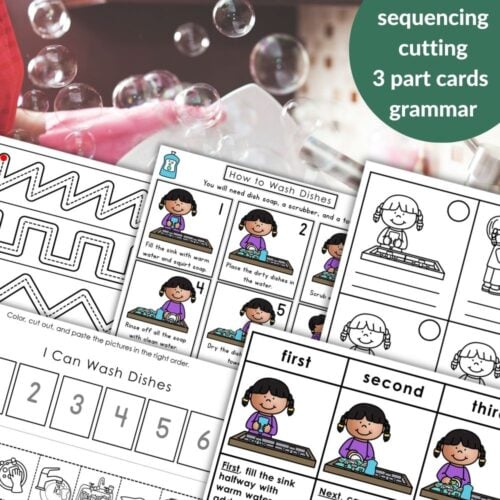
 How to Wash Dishes Practical Life Daily Chores Sequencing Cards$3.60
 -
How to Set the Table Practical Life Daily Routine Sequencing Cards$4.05
-
How to Wrap a Gift Practical Life Christmas Birthday Sequencing Cards$4.05
-
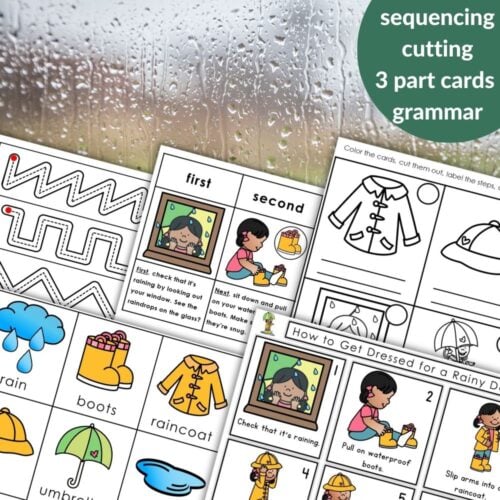
How to Get Dressed for a Rainy Day$3.10
-
Editable Chore Chart: Practical Life Daily Routine Child Planner$4.90



About Anastasia | Anastasia is an early childhood teacher with over twenty years of experience in Montessori classrooms and homeschooling. With a Master’s in Information Science, she blends education and information design to create clear, organized, research-backed resources. As founder of Montessori Nature, she develops evidence-based, nature-inspired printables that support holistic child development and foster curiosity, independence, and a love of learning. Explore more in her shop and Teachers Pay Teachers store.