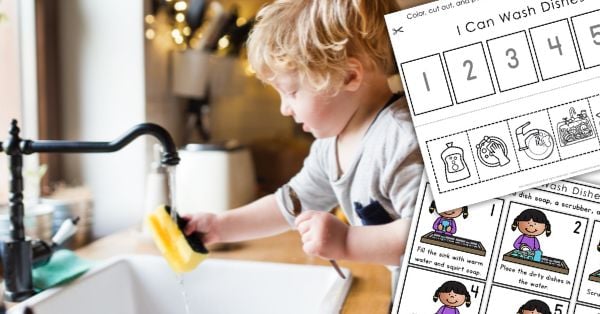
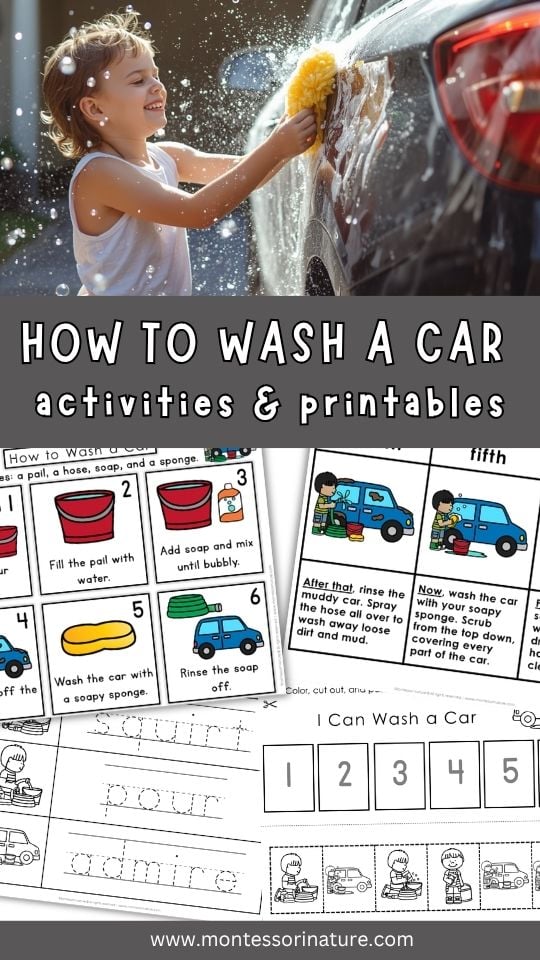
There is something about water, soap, and a sunny afternoon that brings a certain kind of peace. The rhythm of dipping a sponge, squeezing out the water, and wiping it across a surface is almost meditative. For a child, it is pure magic. For the adult beside them, it is a chance to slow down, to talk, to laugh, and to teach something real.
Washing a car by hand is not the fastest way to get the job done. That is precisely why it is worth doing with a child. The speed of modern life leaves little room for the kind of unhurried togetherness that builds strong relationships. A car wash, done slowly and joyfully, offers that room.
Why Washing a Car Matters for a Child
At first glance, washing a car seems like a simple chore. But for a child, it is a rich learning experience wrapped in suds and sunshine.


A child learns to follow a sequence. You cannot put the soap on before the car is wet. You cannot dry the windows before they are rinsed. Each step depends on the one before it. This logical order builds the kind of thinking that supports math, reading, and planning.
A child learns to care for their environment. The family car is shared. It takes everyone places. Keeping it clean is a way of saying thank you to the people who drive it. This is the heart of practical life education—learning to contribute to the community, starting with the small world of the family.
A child learns that their hands can do real work. Not pretend work. Not work that will be redone later. Real, helpful, meaningful work that makes a visible difference. That feeling—the pride of looking at a clean car and knowing “I did that”—is irreplaceable.
Setting Up for Success
Before the first drop of water falls, take a moment to prepare. Gather everything you will need.
You will want:
Two buckets. One for soapy water. One for clean rinse water.
A soft sponge or wash mitt.
A hose with a spray nozzle or a large pitcher for pouring water.
Car wash soap. (Dish soap can strip wax, so use something gentle.)
A few soft cloths for drying.
An old towel to kneel on.
A step stool if the child cannot reach the car sides easily.
A shady spot. Working in direct sunlight dries the soap too quickly and leaves spots.
Invite the child to help gather the supplies. Naming each item as you collect it builds vocabulary. Let the child carry what they can manage. A small bucket with a little water is heavy enough to feel important but light enough to be manageable.
The Dance of the Car Wash
There is no single right way to wash a car. But a gentle sequence helps everyone stay focused and happy.
Start with the wheels. This is often the dirtiest part, and children love the dramatic before-and-after difference. Show the child how to dip the sponge, scrub the tire, and rinse. The wheel does not need to be perfect. It needs to be touched by the child’s own effort.
Next, wet the whole car. Use the hose on a gentle spray, or let the child pour water from a pitcher. This is the most playful part. A little water on bare feet is part of the experience.
Then comes the soap. Squirt a small amount into the bucket and let the child swirl the water to make bubbles. Show them how to dip the sponge and wipe in straight lines or gentle circles. Work side by side. You take one panel of the car, they take another. Talk about what you notice. “This sponge is getting heavy with water.” “The soap is making rainbow bubbles.” These small observations keep the child present and engaged.
Rinse together. The soap must come completely off, or the car will look streaky. Let the child use the hose or pour clean water while you follow behind with a drying cloth. The teamwork feels good.
Finally, dry. Wipe the car with soft cloths until it shines. The child can take the lower parts where the water drips. You take the windows and roof.
When the car gleams, stand back together. Look at what you have done. Say something simple. “We washed the whole car. It looks beautiful. Thank you for helping.”
The Real Gift: Connection
A car wash takes time. That is the point. While the child dips and scrubs and rinses, you are together without screens, without rushing, without an agenda. You are just two people, side by side, doing something useful.
In those quiet moments, children talk. They tell you about something that happened at school. They ask a question that has been on their mind. They sing a song or make a silly joke. The car wash creates a container for connection that does not feel forced or performant. It is just the two of you, with soapy sponges, talking about nothing and everything.
Other Simple Ways to Connect Through Everyday Work
Washing a car is one of many ordinary tasks that become extraordinary when shared with a child. Here are a few others that invite the same kind of unhurried togetherness.
- Washing windows. A spray bottle with water and a little vinegar, a soft cloth, and a child who loves to make circles on the glass. The window does not need to be streak-free. It needs to be touched by small hands.
- Sweeping the porch. A child-sized broom makes all the difference. Sweep side by side, gathering leaves into a pile. The child learns that order can be restored from chaos, and that their effort matters.
- Watering plants. A small watering can, a gentle reminder about how much water each plant needs, and the quiet ritual of caring for living things. The plant grows because the child remembers to water it.
- Folding laundry. Give the child the washcloths and hand towels. Show them how to make a flat square. The stack may be crooked. It is perfect anyway.
- Making the bed together. Each person takes one side of the duvet. Pull it smooth. Arrange the pillows. The room feels calmer, and the child learns that the first task of the day can be done with help.
- These small acts of shared work teach children that they belong to a family that works together. They learn that their hands can help. They learn that adults value their contribution. And they learn that love is often shown not in grand gestures but in the ordinary rhythm of daily chores.
Supporting the Learning with a Simple Printable
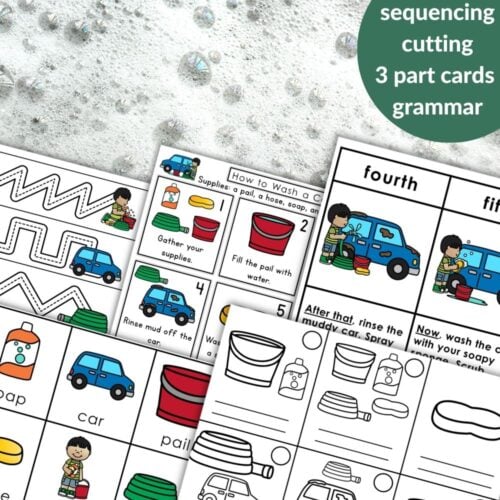
For families and classrooms that want to extend the car washing experience beyond the driveway, a structured visual guide can help children internalize the sequence and build related skills. Our “How to Wash a Car” printable breaks down the process into clear, illustrated steps that a child can follow with growing independence.
The sequence cards show each stage of the car wash. A child can arrange the cards in order, talking through what comes first, next, and last. This simple activity builds the kind of procedural thinking that helps with everything from reading comprehension to math problem solving.
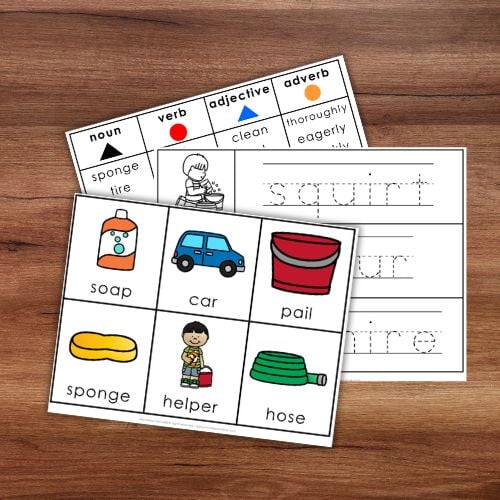
The vocabulary cards introduce words through picture matching. A child learns the names of the tools they hold, building the precise language that supports confident communication.
The cutting and tracing strips develop fine motor control. The hands that learn to cut along a curved line and trace the word “rinse” are the same hands that will learn to write. The connection between the driveway and the classroom is closer than it seems.
The parts of speech sorting activity invites older children to categorize car wash words into nouns, verbs, and adjectives. This connects a practical outdoor chore to grammar learning in a way that feels natural rather than forced.
The blackline versions let a child color and personalize their own materials, creating a sense of ownership over the learning. The self-checking features allow them to verify their work independently, building the quiet confidence that comes from knowing they are right.
The Summer Afternoon That Lasts
The car will get dirty again. That is part of its life. But the afternoon you spent washing it with a child stays clean in the memory.
The child will not remember whether the windows were streaky or the tires gleamed. They will remember the feel of the hose in their hands, the way the bubbles caught the light, the sound of your voice saying “Good job” as they wiped a sponge across the door. They will remember that you trusted them with real work, and that you did it together.
That is the heart of it. The car is just the excuse. The real work is building a relationship where a child knows they are seen, trusted, and valued. A car wash, done slowly and joyfully, is one beautiful way to do that.
So on the next warm afternoon, fill two buckets. Squirt a little soap. Hand a child a sponge. And spend an hour together, doing nothing more important than making something clean. It will be time well spent.

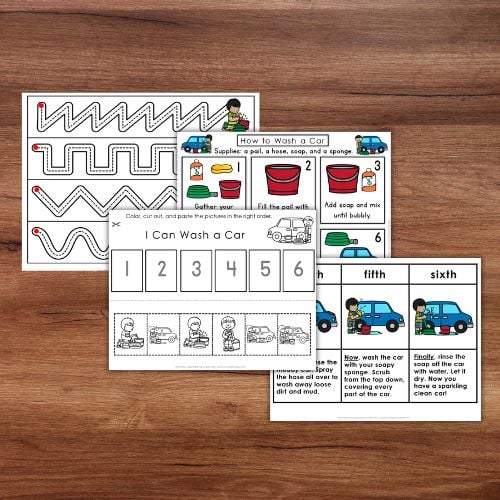
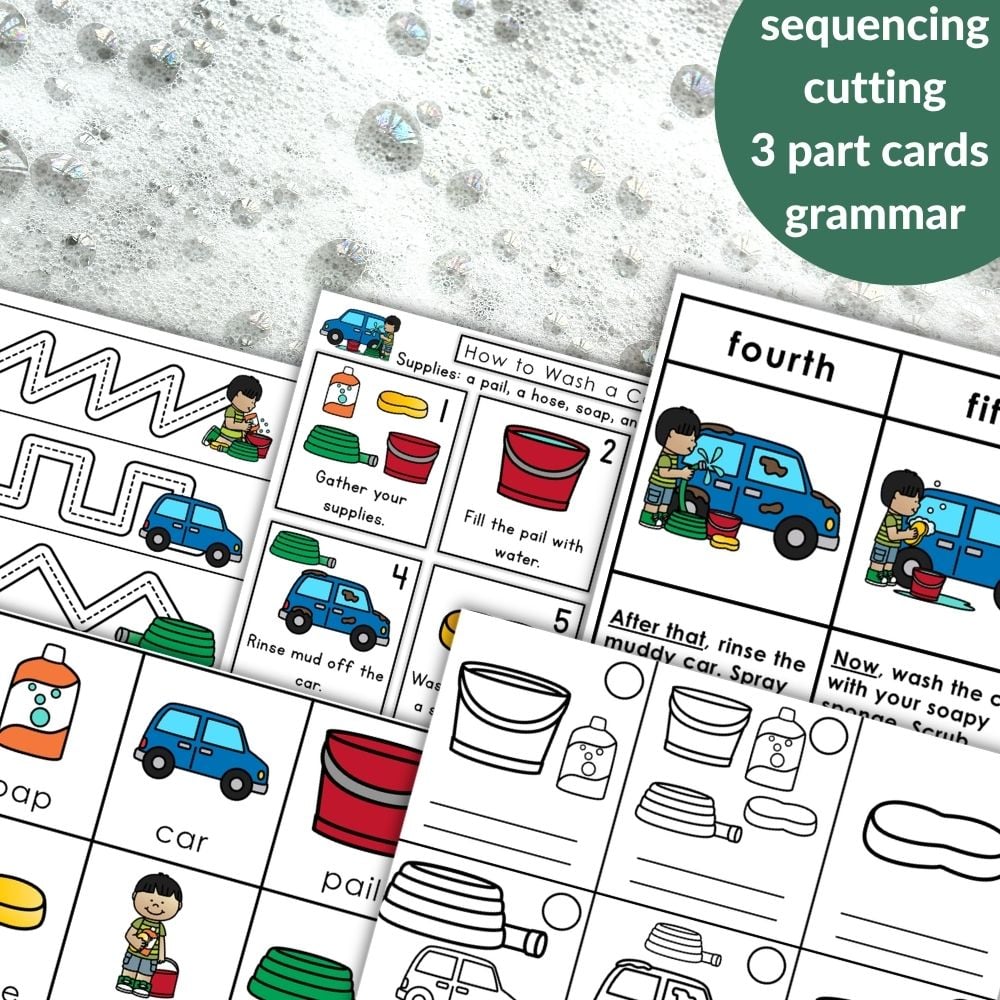
How to Wash a Car Spring and Summer Chores Sequencing Cards
Ready for a fun Spring or Summer activity that gets children learning while they help out? This How to Wash a Car printable provides structured, hands-on activities for teaching car washing routine, sequencing, and responsibility. Designed for Kindergarten through Grade 3, the materials break down the car washing process into clear, child-friendly steps while building fine motor skills and vocabulary. Perfect for Montessori Practical Life (care of environment), outdoor learning, and life skills instruction.
This printable is also available on TPT
You Might Also Enjoy

About Anastasia | Anastasia is an early childhood teacher with over twenty years of experience in Montessori classrooms and homeschooling. With a Master’s in Information Science, she blends education and information design to create clear, organized, research-backed resources. As founder of Montessori Nature, she develops evidence-based, nature-inspired printables that support holistic child development and foster curiosity, independence, and a love of learning. Explore more in her shop and Teachers Pay Teachers store.