There is something about taco night that brings people together. Maybe it is the assembly-line nature of the meal, where everyone builds their own creation according to their preferences. Maybe it is the vibrant colors of the toppings—deep red tomatoes, pale green avocado, bright white onions, dark green cilantro. Or maybe it is simply that tacos, in their infinite variety, offer something for everyone. For children, taco night is not just a meal; it is an event, a hands-on experience that engages all the senses and invites them to participate in something real and meaningful.
Before we ever step into the kitchen, we tell the children a story. It is a story that stretches back more than a thousand years, across continents and cultures, connecting ancient foodways to the tacos they will soon assemble with their own hands.
The Long History of a Humble Food
People have been eating corn tortillas filled with bits of meat, beans, or vegetables for more than a millennium. The indigenous peoples of what is now Mexico developed a process called nixtamalization, using an alkaline solution to transform corn into a more nutritious and pliable dough. These filled tortillas were known as antojitos, little snacks that sustained people through long days of work.

The word “taco” itself has a fascinating history. In eighteenth-century Mexico, silver miners used the word to describe the thin sheets of paper wrapped around gunpowder that they used to excavate ore. These paper-wrapped explosives resembled the rolled tortillas the miners packed for their lunches, and the name stuck. When the mining operations wound down, workers brought their rolled tacos to the streets of Mexico City and later to the American Southwest.
As Mexican immigrants came north to work in mines and on railroads, they brought their food traditions with them. The first written mention of tacos in an American newspaper appeared in 1905, describing them as an affordable working-class food sold by street vendors . The first taco restaurant, El Cholo, opened in Los Angeles in 1923. By the 1960s, entrepreneurs like Glenn Bell had adapted the taco for American tastes, creating the crispy U-shaped shells that would become ubiquitous through his chain, Taco Bell.
Today, tacos have become a global phenomenon. In Sweden, families enjoy Tacofredag on Fridays, topping their tacos with pineapple, cucumber, nuts, and yogurt sauce. In Mexico, regional specialties range from cochinita pibil in the Yucatán to tacos al pastor, which were inspired by Lebanese immigrants who brought their shawarma traditions and adapted them using local ingredients. The taco, it turns out, has always been a food of cultures, ingredients, and ideas.
Making Tacos from Scratch
When children make tacos from scratch, they participate in this long history. The process is simple enough for young hands to manage but rich enough to teach real skills.
The most time-efficient approach is to prepare components in stages. The meat filling can be made a day ahead and reheated. The taco shells can be warmed in the oven while the children prepare the vegetables and toppings.
For the filling, heat olive oil in a large pan and sauté finely chopped onion until translucent. Add ground beef or turkey, breaking it up with a spoon as it browns. Season with garlic powder, cumin, and paprika—spices that fill the kitchen with warm, earthy aromas. A spoonful of tomato paste adds depth and richness.
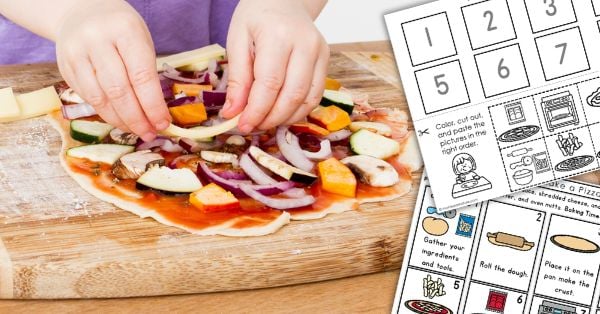
While the filling simmers, children can prepare the toppings. They can dice tomatoes, shred lettuce, slice avocado, and chop cilantro. These tasks require concentration and care, developing the fine motor control that will later support handwriting. A small child-safe knife and close supervision allow even young children to participate meaningfully.
The taco shells themselves offer opportunities for discussion. Some families prefer soft corn tortillas, which are closer to the original Mexican street taco. Others enjoy crispy U-shaped shells, the American innovation that made tacos a fast-food staple. Both have their place, and children can compare the textures and flavors.
When everything is ready, the assembly begins. A layer of meat goes in first, then cheese, then lettuce and tomatoes, then a drizzle of yogurt or sour cream and a splash of taco sauce. Each child builds their own, making choices about what goes in and how much. This autonomy is part of the magic.
Even the cheese can be adjusted. Reduced-fat cheddar works well, or families can use less cheese overall and pile on more vegetables. The beauty of tacos is their flexibility—each person can customize their own according to their needs and preferences.
Bringing It All Together with a Printable Resource
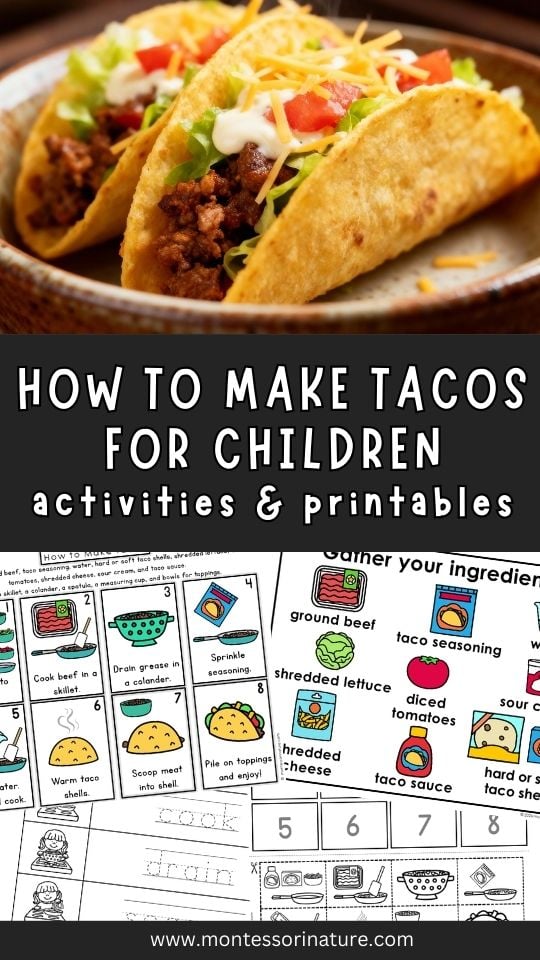
For families and classrooms wanting to extend the learning beyond the kitchen, a printable resource can help children internalize the taco-making process while building literacy and fine motor skills. The How to Make Tacos printable provides step-by-step recipe cards, sequencing activities, vocabulary building, and parts of speech practice—all centered around this beloved food.
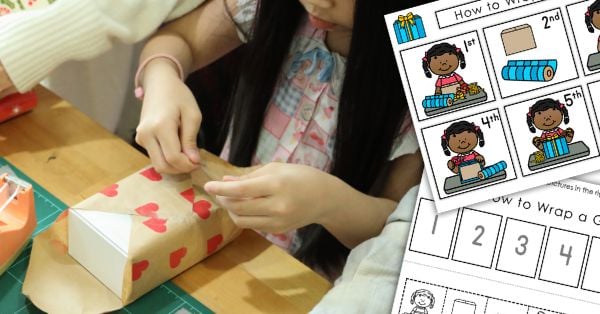
The sequence cards show each stage of taco preparation. Children arrange them in order, discussing what comes first, next, and last. This simple activity builds procedural knowledge that transfers to other multi-step tasks.
The vocabulary cards introduce words like tortilla, filling, topping, and sauce, giving children precise language for their kitchen work. The tracing strips let them practice writing these words, reinforcing letter formation while connecting to a meaningful context.
For older children, the parts of speech sorting activity invites them to categorize taco-related words into nouns, verbs, and adjectives. Crunchy describes the shell. Fill is what we do with the meat. Grammar becomes tangible when it connects to real experience.
The blackline versions allow children to color and assemble their own recipe booklets, creating personalized keepsakes they can take home and share with their families. This extends the learning beyond the classroom or kitchen, inviting families to continue the tradition together.
Perfect for Celebrations and Cultural Learning
This resource shines during cultural celebrations throughout the year. During Hispanic Heritage Month from September 15 to October 15, it provides a hands-on way to explore Mexican cuisine as part of heritage studies. For Cinco de Mayo, it offers themed classroom activities that go beyond simplistic stereotypes to engage with real food traditions. Mexican Independence Day on September 16 and Día de los Muertos provide additional opportunities to connect cooking with cultural learning.
Beyond heritage months, the taco activity fits naturally into Food Around the World units, helping children understand how food reflects geography, history, and cultural exchange. The story of tacos—from indigenous corn cultivation to Spanish influence to Lebanese immigration to American adaptation—illustrates how cultures meet and merge through food.
The Meaning of Making Food Together
When children make tacos together, they learn more than how to follow a recipe. They learn that their hands are capable of real work. They learn that food has history and meaning. They learn that cooking for others is an act of care.
The child who carefully spoons filling into each shell, who arranges toppings in rainbow stripes, who presents their creation to a waiting friend—that child is practicing something essential. They are learning to contribute, to create, to take pride in their work.
Taco night may seem like a simple thing. But in the hands of a child, with the support of patient adults and the structure of clear materials, it becomes something more. It becomes a tradition, a memory, a foundation for confidence and capability that will last long after the last taco has been eaten.
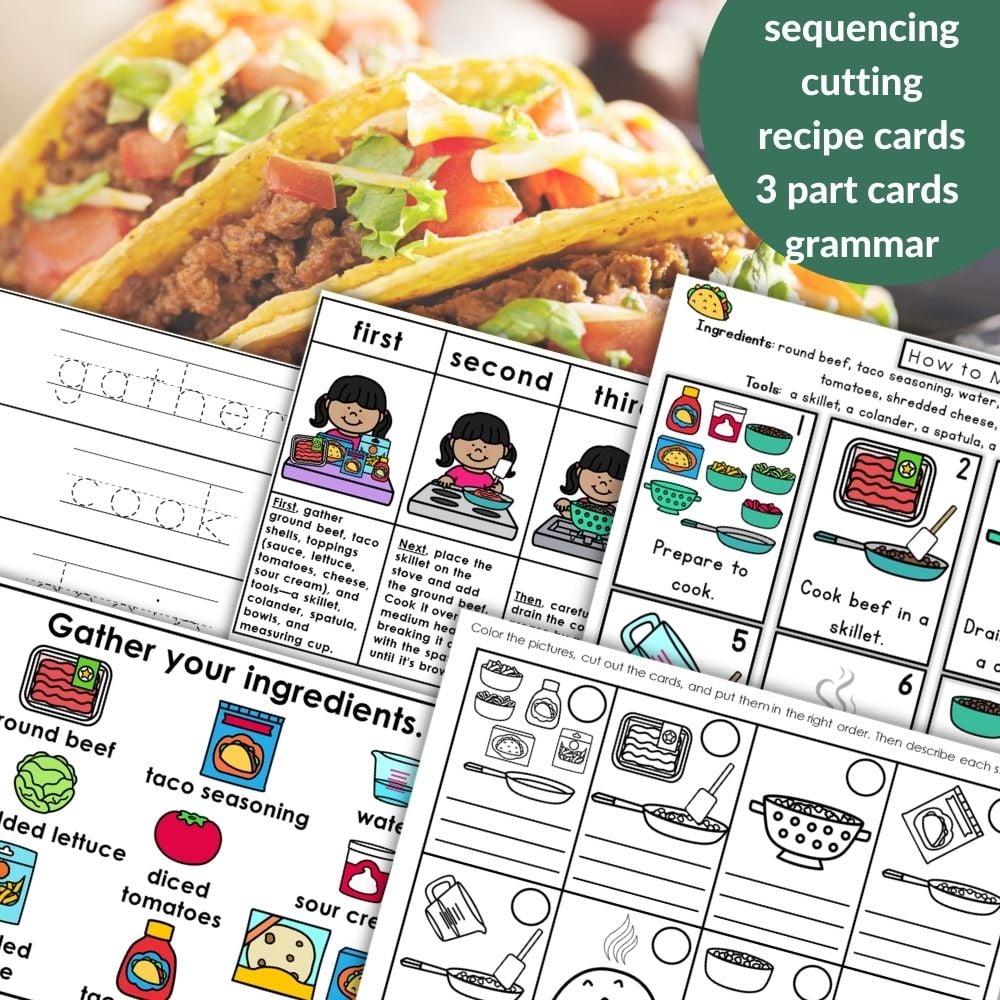
How to Make Tacos Recipe Sequencing Cards
This How to Make Tacos printable teaches children how to make tacos while building foundational sequencing, vocabulary, and fine motor skills. Perfect for Hispanic Heritage Month, Cinco de Mayo, and Food Around the World units, use it year after year as a hands-on supplement to cooking activities, cultural celebrations, or practical life routines. Whether exploring Mexican cuisine during heritage months or simply enjoying a fun cooking day, these activities help children build confidence and capability in the kitchen while developing essential academic skills.
You Might Also Enjoy
-
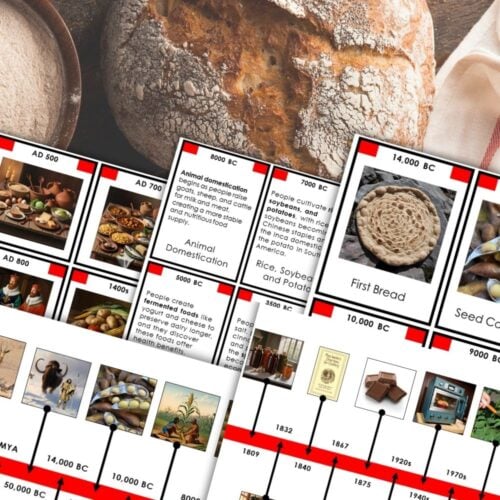
 Food History Timeline: 5 Part Cards$7.10
 -
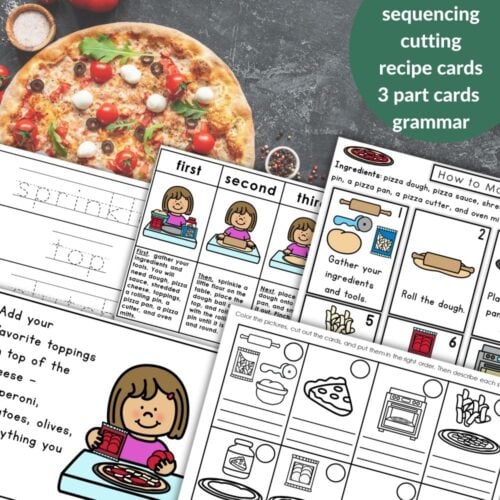
How to Make a Pizza Practical Life Recipe Sequencing Cards$4.60
-
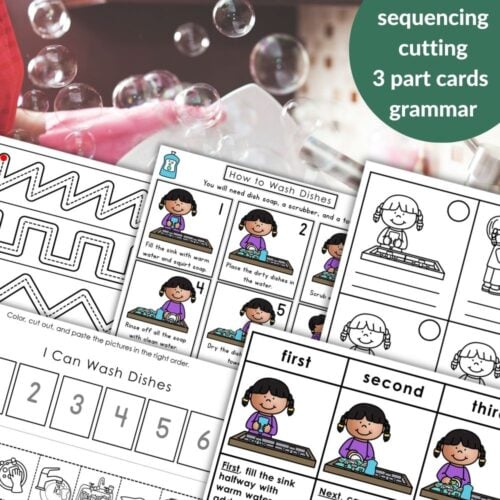
How to Wash Dishes Practical Life Daily Chores Sequencing Cards$3.60
-
How to Set the Table Practical Life Daily Routine Sequencing Cards$4.05
-
Food Pack I am a Chef Preschool and Kindergarten$8.10
-
Food and Nutrition Hands On Activity Pack$6.50

About Anastasia | Anastasia is an early childhood teacher with over twenty years of experience in Montessori classrooms and homeschooling. With a Master’s in Information Science, she blends education and information design to create clear, organized, research-backed resources. As founder of Montessori Nature, she develops evidence-based, nature-inspired printables that support holistic child development and foster curiosity, independence, and a love of learning. Explore more in her shop and Teachers Pay Teachers store.