Empowering young learners with practical life skills, independence, and a sense of responsibility starts with transforming daily chores into engaging, educational experiences. For educators integrating Montessori principles and parents seeking effective printable activities for home routines, our “How to Wash Dishes” printable activity pack is designed as the ultimate hands-on learning tool. This sequencing activity breaks down the essential task of dishwashing into clear, step-by-step visual guides, making it a perfect resource for building fine motor skills, executive function, and vocabulary in Kindergarten through Grade 3 students, whether in classroom job systems, homeschool settings, or family chore routines.

The clatter of dinner plates usually signaled the end of family time and the start of a parental chore. In our home, it became the opening cue for a different kind of gathering. I’ll never forget the Wednesday evening my five-year-old dragged his stool to the sink, looked at the stacked dishes, and asked, “Is it my turn to be the Kitchen Captain?”
This wasn’t a title I invented. It emerged from our struggle to move from simply assigning chores to creating a culture of contribution. We weren’t just teaching him to wash dishes; we were inviting him to understand a cycle of care—that the cup he used for his morning milk would be clean and ready for his sister’s afternoon water, and that his work had a direct impact on the well-being of our family. The journey from reluctance to proud ownership wasn’t magical; it was built on actionable, respectful steps that any family or classroom can adopt.
Preparing for Success, Not Struggle

The first mistake is to bring a child into an adult-sized task without adaptation. To a young child, a sink full of towering, greasy plates is an overwhelming cliff face, not a conquerable hill. The first step is to engineer the environment for independence.
We started with a prepared space: a sturdy step stool, a small plastic tub placed inside the big sink filled with warm, bubbly water, and a second tub with clean rinse water. His tools were his own—a petite scrub brush with a good grip and a small, colorful sponge. An apron hung on a low hook. This preparation communicated respect. It said, “This is not just my domain you are entering; this is now your workspace.” Before he touched a single dirty spoon, we sat at the table with our “How to Wash Dishes” printable pack. We laid out the Dishwashing Sequence Cards—vibrant illustrations showing the six key steps. We talked about the story they told: from turning on the tap to drying the last dish. This “dry run” with the sequencing cards built a mental map, replacing anxiety with anticipation. He already knew the procedure before he ever felt the soap suds.
Mastering the Sequence of Care
With the space prepared and the sequence understood, we began with a single, simple mission. “Today, Captain, your mission is to conquer all the spoons,” I’d say. We focused on the sacred triad: Wash, Rinse, Dry.
- The Wash: “We scrub every part—the bowl of the spoon, the front, the back, the handle—until we don’t feel any sticky spots.” I’d demonstrate slowly, then hand him one spoon. The 3-Part Vocabulary Cards from the printable pack gave us the precise language: this was the scrub brush, this was the soapy water.
- The Rinse: “We wash off all the soap bubbles so the next person gets clean food, not soapy food.” We’d hold the spoon under the clear rinse water until it “squeaked” clean.
- The Dry & The Pause: This is the step that transforms a chore into an act of mindfulness. As he placed the clean spoon in the drying rack, I would say, “And now it’s ready. Ready for Mama’s coffee tomorrow.” This simple phrase was the anchor. It connected his physical action to its social purpose: I am preparing this for someone I love.
He would methodically work through the spoons, then the forks, each completed item a small victory. The printable Sequencing Booklet, his “I Can Wash Dishes” mini-book, waited on the counter.
Building Lasting Responsibility
As his confidence grew, so did his role. We introduced the concept of inspection. After he’d dried a bowl, I’d ask, “Captain, is it ready for the next user? Let’s check for any secret food spots.” He’d hold it up to the light, running a finger along the rim, learning quality control. We began to talk about the why: “We scrub off the invisible germs so our family stays healthy.” We discussed caring for materials: “When we wash the wooden salad bowl right away, it lasts for years.”
The printable resources grew with him. The Parts of Speech Sorting activity, where he’d categorize plate (noun), scrub (verb), and shiny (adjective), connected his kitchen work to his cognitive development, showing him that language lives in action. The Cutting Practice Strips with utensil shapes strengthened the very hand muscles he used for scrubbing.
The real transformation became evident during a busy weekend breakfast. As I rushed to clear the table, I turned to find my child had already pulled his stool to the sink, run the water, and was carefully sorting the utensils from the plates. He didn’t need to be asked. He saw a need, knew his capability, and understood his responsibility in our home’s ecosystem. He was no longer just helping; he was stewarding our shared space.
Teaching a child to wash dishes is never just about cleanliness. It is a lesson in executive function—planning and executing a multi-step task. It is a lesson in cause and effect—dirty becomes clean. It is a profound lesson in empathy and contribution—my work makes life better for others. Our printable activity pack is the scaffold that supports this immense learning, providing the structure, language, and reinforcement that turns a daily chore into a daily practice in capability and care. By giving children the tools and the trust to truly own this task, we don’t just get cleaner dishes. We raise children who understand that even the smallest, most soapy act of responsibility is a building block of a happy, healthy home.
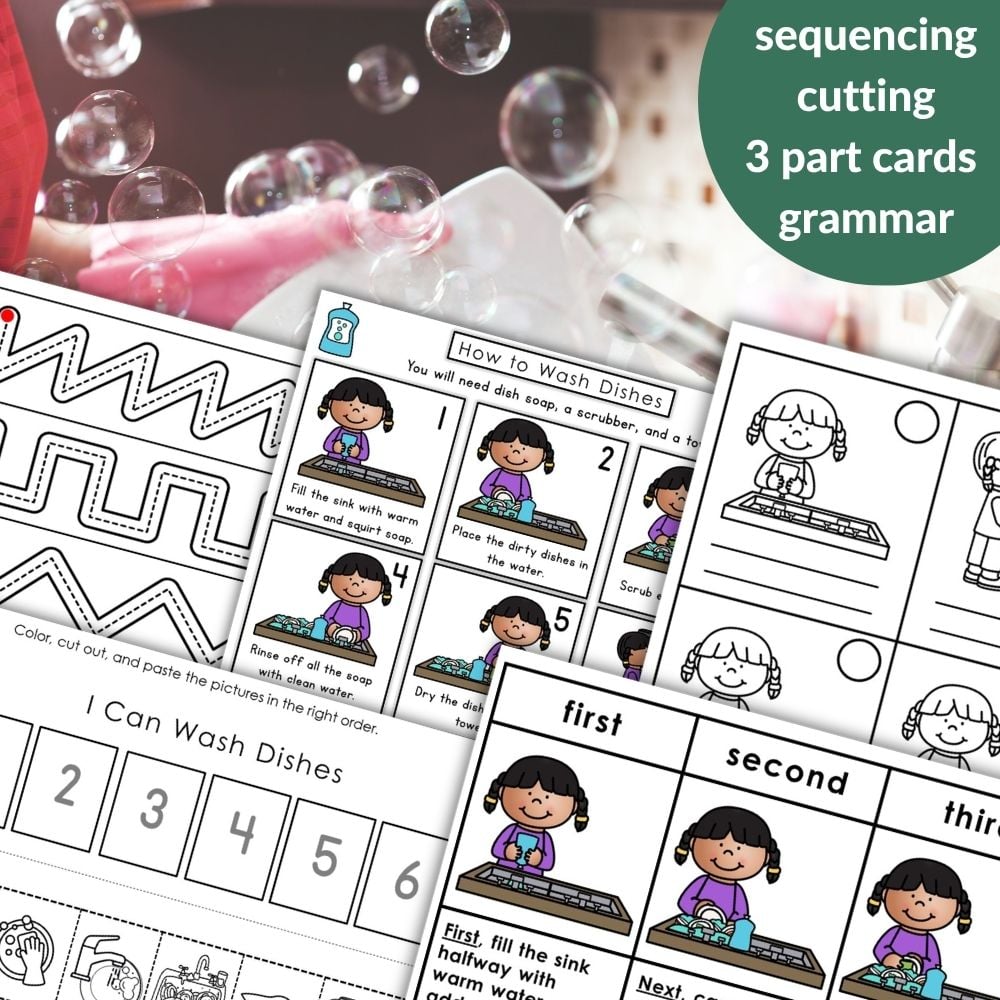
How to Wash Dishes Practical Life Daily Chores Sequencing Cards
Transform a daily chore into an engaging learning opportunity with this How to Wash Dishes printable activity pack! Designed specifically for young learners in Kindergarten through Grade 3, this resource breaks down the essential life skill of dishwashing into clear, manageable steps. Perfect for building independence, responsibility, and sequential thinking, this hands-on kit is ideal for classrooms, homeschools, and families.
This printable is also available on TPT
You Might Also Enjoy

About Anastasia | Anastasia is an early childhood teacher with over twenty years of experience in Montessori classrooms and homeschooling. With a Master’s in Information Science, she blends education and information design to create clear, organized, research-backed resources. As founder of Montessori Nature, she develops evidence-based, nature-inspired printables that support holistic child development and foster curiosity, independence, and a love of learning. Explore more in her shop and Teachers Pay Teachers store.