There is something about pizza that speaks to children in a language they instinctively understand. Perhaps it is the round shape, like a full moon on a plate. Perhaps it is the infinite possibility of toppings, the way a plain circle of dough becomes a canvas for creativity. Or perhaps it is simply that pizza, in its simplest form, is a food of gathering—something meant to be shared, sliced, and enjoyed in the company of others.

Before we ever touch the dough, we tell the children a story
A Very Old Food
Long before there were restaurants or delivery boxes, people living near the Bay of Naples in Italy were making flatbreads and cooking them in hot ovens. These were simple meals for working families, topped with olive oil, herbs, and sometimes cheese. Travelers and traders passing through the port city would stop to eat these flatbreads, and the word for them—pizza—began to spread.


The story goes that in 1889, a baker named Raffaele Esposito was asked to create a special pizza for the Queen of Italy, Margherita. He wanted to honor her and his country, so he chose toppings in the colors of the Italian flag: green basil, white mozzarella, and red tomato sauce. The queen loved it, and the Margherita pizza was born.
Children listen to this story with wide eyes. They are surprised to learn that pizza did not begin in a box from a delivery driver but in the hands of bakers who tended wood-fired ovens and fed their communities. They begin to understand that when they make pizza themselves, they are participating in a tradition that stretches back more than a hundred years.
Making Pizza Together
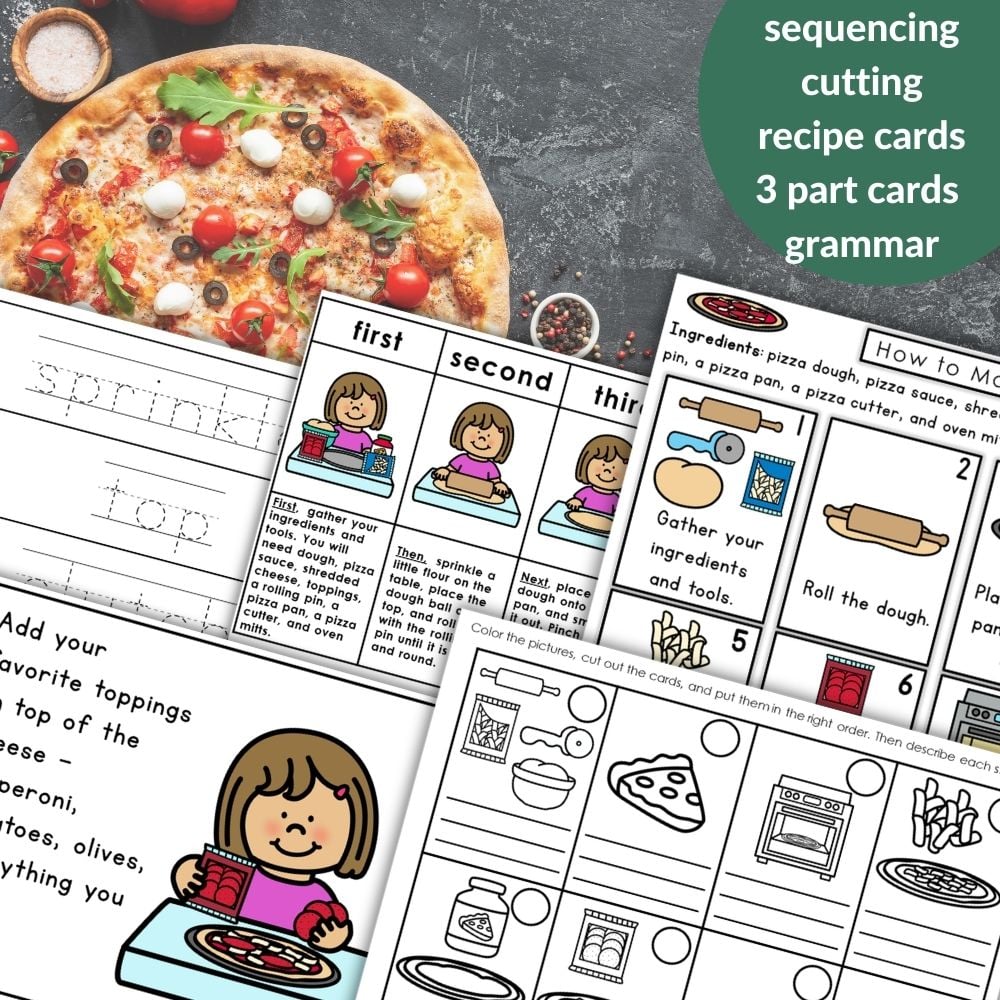
The real work begins at the table. On a low shelf sits a basket containing the sequence cards, each one illustrating a step in the pizza-making process. A child takes them out one by one and arranges them in order.
- First, the dough is rolled flat.
- Then the sauce is spread in even circles.
- Next comes the cheese, scattered like snow.
- Toppings are placed with care.
- The pizza slides into the oven.
- It bakes until golden.
- Finally, it is sliced and served.
There is no rush. The children study each card, turning them over in their hands, discussing where each one belongs. This quiet ordering is its own kind of cooking—the mind preparing itself for what the hands will soon do.
When the real ingredients appear, the children are ready. They have already walked through the sequence in their thoughts. They know what comes next. They wash their hands, tie their aprons, and take their places at the table.
The dough is soft and cool beneath their palms. Some children press firmly, rolling from the center outward. Others are more tentative, using only their fingertips to coax the dough into a circle. There is no right way, only the child’s way, and each pizza takes the shape of the hands that made it.
Sauce is ladled and spread. Cheese is sprinkled, some in careful pinches, others in generous handfuls. Toppings appear—sliced mushrooms, bell peppers, olives, small cubes of pineapple for those who appreciate such things. The oven is hot, and an adult slides each pizza onto the stone.
Then comes the waiting. This is perhaps the hardest part for young children. The pizzas are in the oven, and the room fills with the smell of baking dough and melting cheese. The children sit on the rug, some fidgeting, others perfectly still, all of them watching the oven window.
Small Changes for Different Needs
Not every family or classroom follows the same recipe, and pizza is wonderfully adaptable. Whole wheat crusts offer more fiber and a nuttier flavor. Cauliflower crusts, now widely available, provide a gluten-free option that children can still roll and shape with their hands. Low-moisture mozzarella melts beautifully without making the pizza soggy. For families reducing dairy, there are plant-based cheeses that brown nicely under the broiler.
The sauce itself can be as simple as crushed tomatoes with a pinch of salt and oregano. Vegetables can be pre-sautéed to bring out their sweetness and reduce moisture. Even the smallest children can help wash basil leaves or tear fresh herbs. The process remains the same, even when the ingredients shift to meet different dietary needs and preferences.
Reasons to Make Pizza
In classrooms, pizza making often arrives with a celebration. It might be the last day before winter break, and the children have been counting down for weeks. It might be the culmination of a food study, when the class has explored where ingredients come from and how they travel from farm to table. It might be a birthday, and the birthday child has requested that everyone make pizzas together.
At home, the occasions are equally varied. Friday nights have a natural rhythm that suits homemade pizza. Sleepover guests can each design their own small pizza, a quiet activity that settles the excitement of the evening. Grandparents visiting from out of town might be invited into the kitchen to share their own pizza-making memories. Rainy weekend afternoons, when going outside is not possible, become perfect for flour-dusted countertops and the slow pleasure of working with dough.
Some families have established their own pizza traditions. One child is the official sauce spreader, another the cheese sprinkler. A parent rolls the dough. Everyone gathers around the island, and the kitchen becomes a small, warm workshop. These are not elaborate productions. They are simple, repeatable rituals that children come to anticipate and remember.
Taking the Learning Home
One of the quiet joys of this work is watching children carry it home with them. They have practiced the sequence at school, traced the words, and assembled their own recipe booklets with hand-colored illustrations. They have become experts, and experts have something to teach.
A child arrives home and announces that they know how to make pizza. They pull out their booklet, the pages slightly crumpled from being carried in their backpack. They show their family the steps. They explain that first you roll the dough, then you add the sauce, then the cheese. Their hands gesture in the air, shaping an invisible pizza. They are confident, capable, proud.
Perhaps a Friday soon after, the family makes pizza together. The child directs the operation, referencing their booklet, reminding everyone what comes next. The pizza that emerges from the oven is unevenly sauced and generously cheesed, with one side slightly thicker than the other. It is perfect.
A Resource for the Work
The “How to Make a Pizza” printable grew out of many such days in classrooms and kitchens. It is not a script to follow rigidly but a collection of tools that can be adapted to different settings, different children, and different occasions.
The sequence cards offer children a way to internalize the order of the process before they ever handle ingredients. The vocabulary cards give them the precise language of the kitchen—rolling pin, ladle, peel—words that name the tools of their work. The cutting and tracing strips strengthen the small muscles they will use to spread sauce and grip utensils. The recipe booklet becomes their personal guide, something they have made themselves and can share with others.
Some teachers use the materials on practical life shelves, inviting children to practice sequencing independently. Others integrate them into literacy centers, using the vocabulary cards and parts of speech sorting to build language skills. Homeschooling parents might spread the activities across a week, one day for sequencing, another for cutting practice, another for making the real pizza together.
The blackline versions allow children to color and customize their materials, making each booklet uniquely theirs. The self-checking poster lets them verify their own work, building confidence without constant adult intervention. The multiple activity formats mean that the same resource can meet children where they are—some matching pictures, others tracing words, others writing their own procedural texts.
What Remains
The pizza will be eaten. The crumbs will be swept from the table. The dishes will be washed and dried and returned to their shelves. The classroom or kitchen will be restored to its quiet order.
But something remains.
It remains in the child who now knows that they can follow a sequence from beginning to end, that their hands are capable of real and meaningful work. It remains in the vocabulary they carry with them, precise words for the tools and actions of the kitchen. It remains in the booklet they colored and assembled, tucked into a backpack or onto a nightstand, ready to be consulted for the next pizza night.
And it remains in the memory of flour dusted on small hands, of cheese scattered across a baking sheet, of a warm slice shared with friends or family around a table. These are not extravagant memories. They are ordinary moments, repeated in classrooms and homes everywhere. But they are the kind of ordinary moments that children carry with them, long after the last crumb is gone.
Perhaps this Friday, or the next rainy afternoon, or the next family gathering, you will find yourself standing at a counter with a child beside you. There will be flour on the surface and dough beneath your palms. The oven will be preheating. And the child will know, without being told, what comes next.
How to Make a Pizza Practical Life Recipe Sequencing Cards
This How to Make a Pizza printable provides structured, hands-on activities for teaching sequencing, life skills, and vocabulary development. Designed for preschool through early elementary students, the materials break down the pizza-making process into clear, manageable steps while integrating fine motor practice and parts of speech reinforcement. Ideal for cooking units, food-themed centers, and practical life instruction.
This printable is also available on TPT
You Might Also Enjoy
-
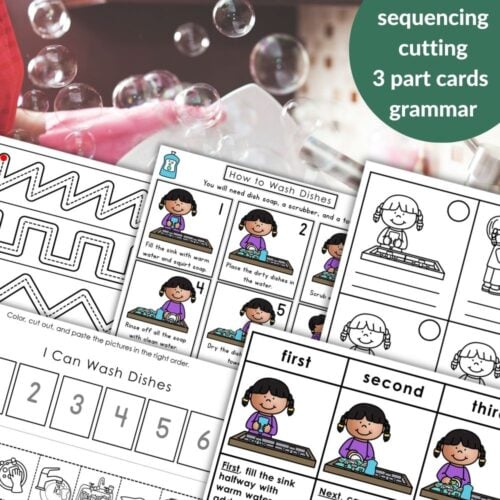
 How to Wash Dishes Practical Life Daily Chores Sequencing Cards$3.60
 -
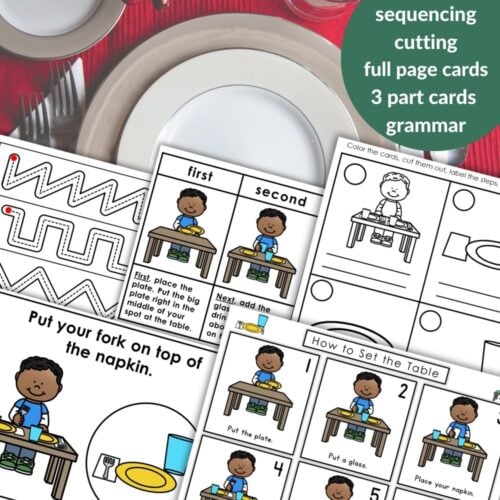
How to Set the Table Practical Life Daily Routine Sequencing Cards$4.05
-
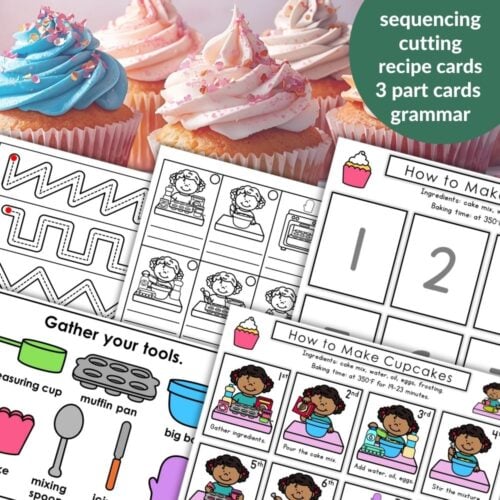
How to Make Cupcakes Practical Life Kitchen Recipe Sequecing Cards$4.60
-
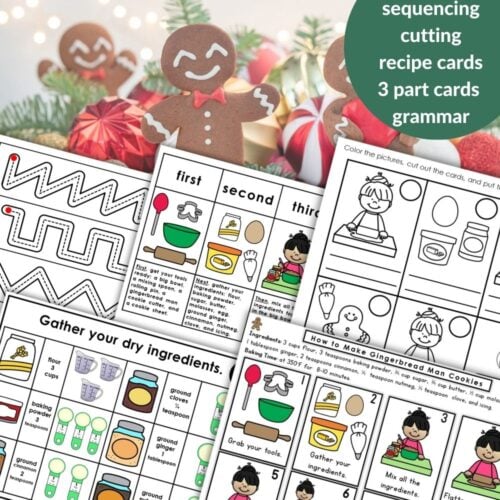
How to Make Gingerbread Man Cookies Christmas Recipe$4.60
-
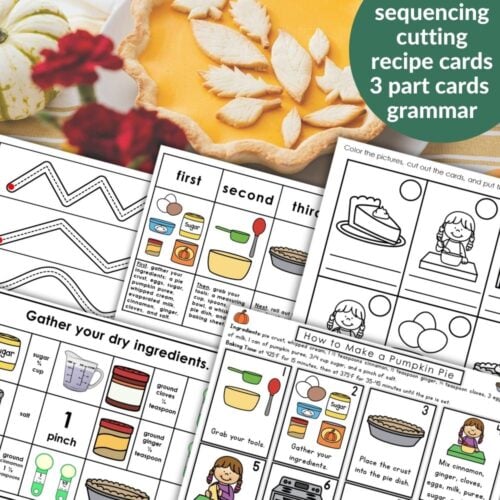
How to Make a Pumpkin Pie Recipe Sequencing Cards Blackline Master$4.60
-
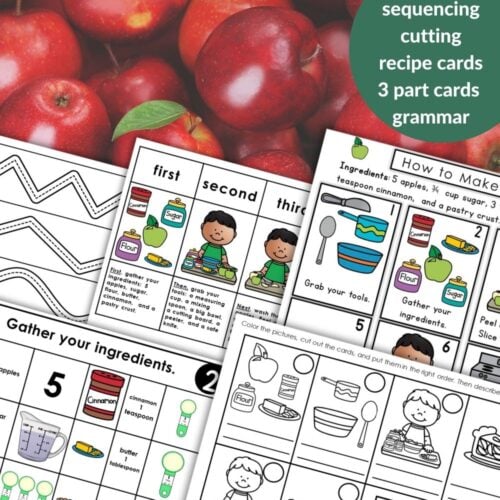
How to Make an Apple Pie Recipe Sequencing Cards$4.60
About Anastasia | Anastasia is an early childhood teacher with over twenty years of experience in Montessori classrooms and homeschooling. With a Master’s in Information Science, she blends education and information design to create clear, organized, research-backed resources. As founder of Montessori Nature, she develops evidence-based, nature-inspired printables that support holistic child development and foster curiosity, independence, and a love of learning. Explore more in her shop and Teachers Pay Teachers store.