In a world of instant messages and fleeting notifications, the Montessori classroom stands as a sanctuary for deliberate, meaningful, and deeply human work. For children aged 5 to 9, in the heart of tranisitoning from the first to the second plane of development, the drive for social connection and understanding the rhythms of community is paramount. While digital literacy has its place, there is an irreplaceable magic in the tangible, slow, and thoughtful process of handwritten correspondence.

This is where a simple, structured resource, like a How to Write a Letter printable, transforms from a literacy activity into a tool for cultivating grace, courtesy, and genuine interpersonal connection.
The Montessori “Secret”: It’s About More Than Words on a Page
From a Montessori perspective, the value of letter writing extends far beyond handwriting practice. It is a complete Practical Life and Grace & Courtesy exercise wrapped in one. The child is not just learning to write; they are learning to connect.

The process itself is a meditation on consideration for others. When a child sits down to write to a cousin, they must pause and step outside of themselves. They must consider: What does my cousin like? What did we do together that was fun? What would make them smile? This act of holding another person in one’s mind is the foundational stone of empathy. It moves communication from broadcasting (“look what I did”) to dialogue (“I was thinking of you”).
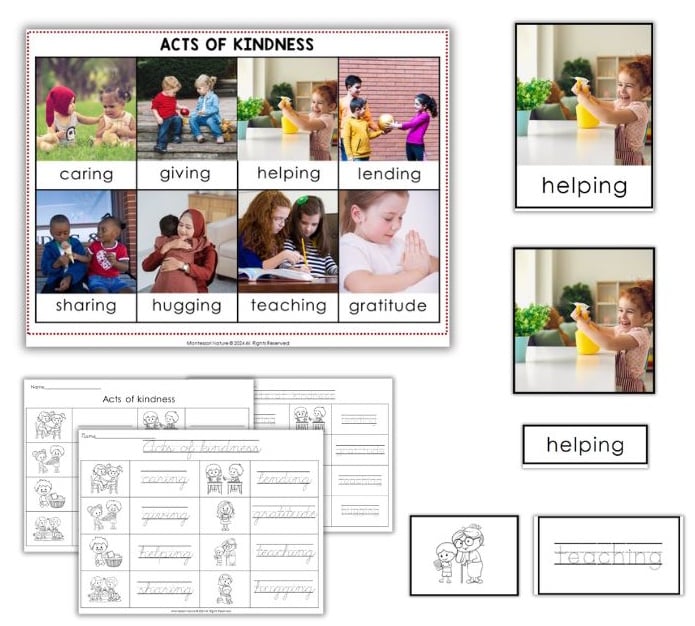
Furthermore, it teaches the essential social grace of gratitude. A thank-you note for a gift or for someone’s hospitality is more than a polite obligation. It is a concrete lesson in acknowledging the energy, time, and care of another person. It completes a cycle of generosity, teaching the child that relationships are built on reciprocal appreciation.
Making it Manageable: Structure is the Gateway to Independence
For a young child, the idea of “writing a letter” can be overwhelming. Where to start? What comes next?
The How to Write a Letter printable provides a clear, visual roadmap that breaks this complex social task into manageable, independent steps. A child can follow the sequencing cards: 1. Gather your paper and pen. 2. Write the date. 3. Write a greeting. 4. Share your news. 5. Ask a question. 6. Write a closing. 7. Sign your name. 8. Address the envelope.
The included vocabulary cards (envelope, stamp, stationery) build the precise language they need, while the cutting and tracing strips refine the fine motor skills required for the task. The self-checking poster allows them to work autonomously, building confidence with each completed step.
Why It’s More Relevant Than Ever in a Digital Age
In our fast-paced digital world, the deliberate nature of snail mail is its greatest strength. It is anti-instantaneous. It requires patience—both in the writing and in the waiting for a reply. This slowness is a gift. It teaches delayed gratification and the value of anticipation. It creates a tangible object—a cherished keepsake that can be held, saved, and revisited in a way a text message cannot.
For the 5-to-9-year-old, who is concretely building their understanding of the world, a physical letter makes the abstract concept of “connection to someone far away” wonderfully real. They can picture their letter traveling, imagine their friend opening the mailbox, and feel the weight of the paper they touched now in another’s hands.
Recommendations for Making it Easy and Approachable
The goal is to make letter-writing a joyful habit, not a chore. Here’s how:
- Create a “Writing Station”: Dedicate a small shelf or basket with all the needed materials: the printable guides, blank cards and envelopes, a variety of pens and stamps, and a list of addresses. When everything is inviting and in one place, the child can initiate the work spontaneously.
- Start Small and Celebrate: Begin with thank-you notes or short greetings to a local grandparent. A few sincere sentences are a perfect success. Celebrate the act of mailing it together—a trip to the post office or the mailbox can be a special event.
- Establish Simple Routines: Tie letter-writing to existing rhythms. Perhaps it’s a “Friday Letter” activity or a monthly check-in with a pen pal. Consistency reduces the mental effort required to start.
- Personalize Liberally: Encourage drawing in the margins, using colorful paper, or including a pressed flower or sticker. The printable’s blackline booklets are meant to be colored, making the guide itself a personal project.
- Focus on the Relationship, Not Perfection: Praise the thoughtfulness of the message over perfect spelling or penmanship. The message is the gift; the words are just the wrapping.
By providing the structured tools, we offer children more than a language arts lesson. We give them an instrument for building bridges. We honor the Montessori principles of independence, order, and respect for the social community by empowering them to initiate and sustain the gentle, powerful art of human connection, one stamped envelope at a time.

How to Write and Mail a Letter Sequencing Cards Blackline Master
This How to Mail a Letter resource provides a structured, visual guide to the complete process of creating and sending mail in the USA for young learners. The printable set focuses on two key skills: the procedure of posting a letter and the structure of writing one.
This printable is also available on TPT
You Might Also Enjoy

About Anastasia | Anastasia is an early childhood teacher with over twenty years of experience in Montessori classrooms and homeschooling. With a Master’s in Information Science, she blends education and information design to create clear, organized, research-backed resources. As founder of Montessori Nature, she develops evidence-based, nature-inspired printables that support holistic child development and foster curiosity, independence, and a love of learning. Explore more in her shop and Teachers Pay Teachers store.