There is a special kind of magic that happens when a child sleeps outside for the first time. It doesn’t matter that the tent is only a few steps from the back door. It doesn’t matter that the bathroom is just inside. What matters is the feeling of being under the night sky, of hearing unfamiliar sounds in the darkness, of falling asleep in a small canvas shelter that they helped to pitch themselves.
Backyard camping offers children something increasingly rare in modern life: a chance to practice independence in a safe, contained environment. The stakes are low. Help is never far away. But for the child lying in their sleeping bag, watching moonlight filter through the tent fabric, the experience feels genuinely adventurous. They are doing something real, something that requires planning and preparation and a certain amount of courage.
Why Backyard Camping Works for Young Children
For preschool and early elementary children, a backyard campout hits the sweet spot between adventure and security. They experience the thrill of sleeping somewhere new without the anxiety of being far from home. They practice outdoor skills without the pressure of a backcountry trip. They learn to problem-solve—how to arrange sleeping pads, what to do when they need a middle-of-the-night bathroom break, how to zip the tent closed against curious insects—all within calling distance of a parent who is just inside the house.

The backyard setting also allows children to take the lead in a way that might not be possible on a more ambitious camping trip. Adults can step back and let the children plan, organize, and execute the experience. Mistakes become learning opportunities rather than safety concerns. A tent pitched slightly crooked can be fixed. Forgotten items can be retrieved from the house. The child learns that they are capable of managing an overnight adventure, and that confidence carries forward into other areas of life.
Helping Children Plan Their Own Adventure
The planning phase is where much of the learning happens. When children are invited to think through what they will need, what they will do, and how they will manage the night, they develop executive function skills that serve them well beyond the camping context.
A simple approach is to gather the children a few days before the planned campout and ask open-ended questions. What will we need to sleep comfortably outside? What should we do when it gets dark? What if someone needs to use the bathroom in the middle of the night? What if we hear a strange noise?
The children’s answers will guide the planning. They will think of flashlights and sleeping bags, pillows and stuffed animals. They will remember that they might get hungry and suggest snacks. They will wonder about bugs and discuss strategies for keeping them away from the tent. Each question they answer builds their sense of ownership over the experience.
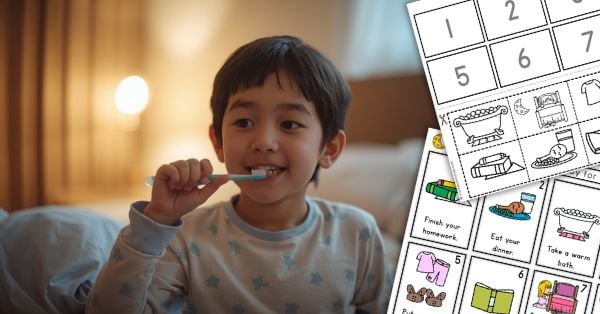
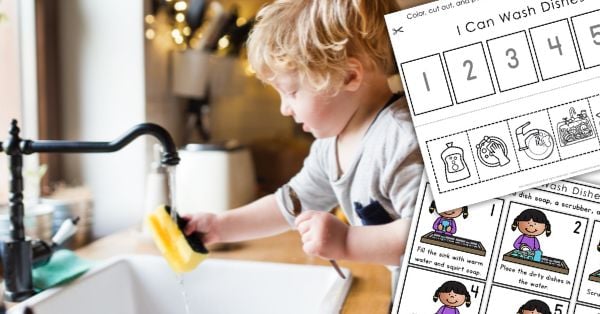
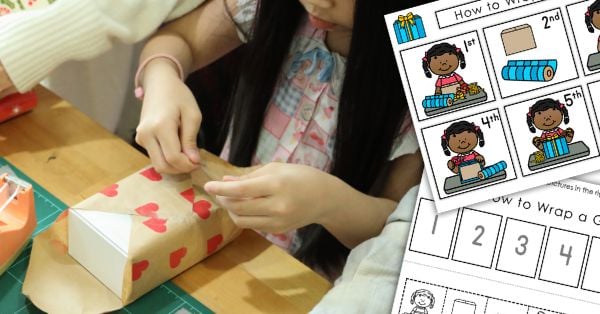
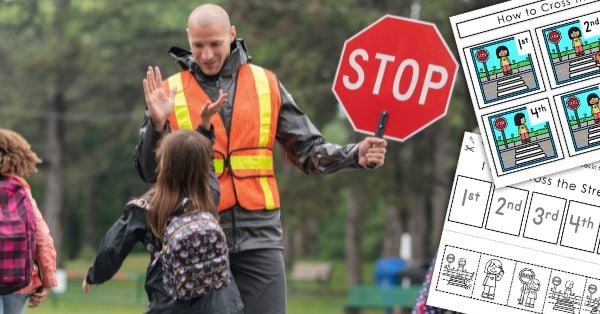
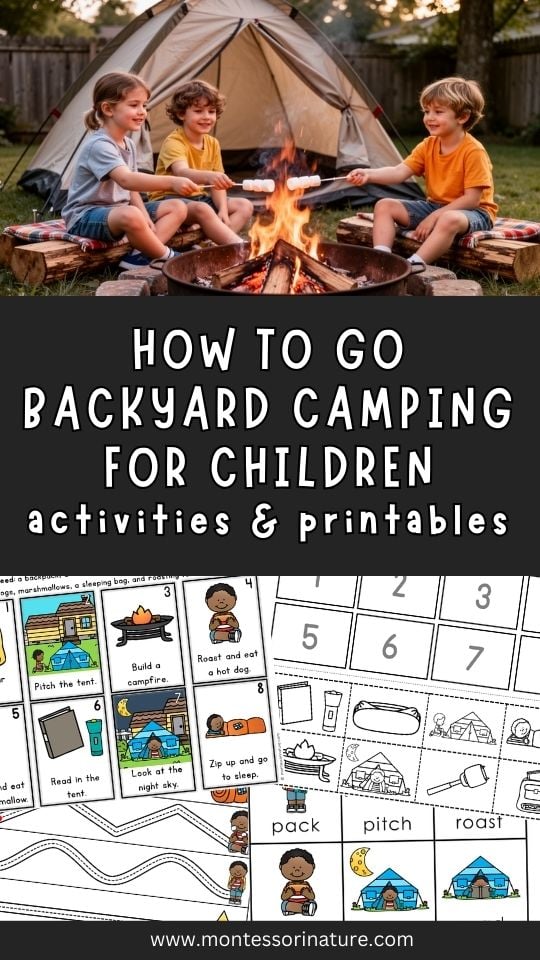
Using a set of sequencing cards can help children organize their thoughts. Pictures showing each step give them a visual framework for the experience. They can arrange the cards in order, discuss what comes next, and refer back to them as they prepare. This process transforms the abstract idea of “camping” into a concrete, manageable sequence of actions.
Choosing the Right Spot and Setting Up
Let the children choose where the tent will go. They will consider flat ground, distance from the house, proximity to trees, and the view of the stars. They may change their minds several times, dragging the tent bag from one spot to another before settling on the perfect location. This indecision is part of the learning. They are evaluating options, weighing pros and cons, making a choice.
Pitching the tent should be a children’s operation with adult assistance available but not dominant. Younger children can lay out the ground tarp and sort the poles. Older children can thread poles through sleeves and stake down corners. Everyone can help with the sleeping bags and pads. The tent may not be perfectly taut or perfectly square, but it will be theirs.
Activities That Let Children Explore
Once the tent is up and the sleeping arrangements are sorted, the evening unfolds at a child’s pace. The best activities are those that children can initiate and direct themselves.
A simple scavenger hunt sends them exploring the yard with a small bag or basket. They might look for three different kinds of leaves, a smooth stone, a feather, something that makes a sound, something that smells interesting. The items themselves matter less than the process of observing closely and making discoveries.
Stargazing requires nothing more than a blanket to lie on and patience to watch the sky darken. Children will notice the first stars appearing, the movement of clouds, the occasional satellite crossing overhead. They will ask questions about what they see, and the answers can wait until morning. For now, it is enough to look.
Flashlight games need no equipment beyond the flashlights themselves. Children can practice making shadow animals on the tent walls, send signals to each other across the yard, or simply shine their lights at interesting objects and discuss what they reveal.
Storytelling around a pretend campfire—a few sticks arranged in a circle, perhaps with a battery-powered lantern in the center—gives children space to be creative. They might tell true stories about their day or invent tales of imaginary adventures. The stories often grow more elaborate as darkness deepens and imaginations warm up.
Food That Works for Everyone
No camping experience is complete without food cooked over a fire, even if that fire is a backyard grill or fire pit. Hot dogs and marshmallows are traditional for good reason—children love them, and the cooking process is simple enough for young hands to manage with supervision.
Marshmallows can be found in versions sweetened with honey, maple syrup, or fruit juice rather than corn syrup. Some brands offer marshmallows made with natural ingredients and no artificial colors. For a different treat entirely, children can roast fruit kebabs—chunks of pineapple, banana, and apple threaded onto skewers and warmed over the fire until soft and caramelized.
Let the children prepare their own food. They can thread skewers, hold roasting sticks, and decide when their hot dog or marshmallow is perfectly cooked. The results may be unevenly browned and occasionally dropped into the fire, but the pride of self-sufficiency makes every bite taste better.
Managing the Night
As bedtime approaches, children will naturally cycle through excitement, worry, and back to excitement again. A final trip to the bathroom, one last look at the stars, a story read by flashlight inside the tent—these rituals ease the transition from adventure to sleep.
Adults should be nearby but not inside the tent unless invited. The children need to know that help is available if they need it, but they also need the space to manage their own experience. They will talk and giggle and shush each other. They will rearrange sleeping bags and argue about whether the tent flap should be open or closed. Eventually, they will settle.
Some children sleep straight through until morning. Others wake in the night, momentarily disoriented by the unfamiliar darkness. A quiet word from just outside the tent, a reminder that the house is right there and everything is fine, usually sends them back to sleep. They learn that they can handle waking up in the dark, that the world is still safe even when it looks different.
What Children Gain
In the morning, unzipping the tent to a new day feels like a small triumph. The children emerge rumpled and sleepy, with grass in their hair and dew on their shoes. They have done it. They have slept outside, managed their own needs, and woken up to birdsong and sunlight.
The confidence from this experience seeps into other areas. Children who have planned and executed a backyard campout know that they are capable of managing multi-step projects. They have practiced problem-solving in real time. They have learned that they can handle a little discomfort, a little uncertainty, a little adventure.
And they have done it largely on their own, with adults nearby but not directing. This is the gift of letting children lead. They discover their own competence, not because someone told them they were capable, but because they proved it to themselves.
Bringing the Planning Home
A printable resource can help children organize their thinking and build anticipation for the campout. Sequencing cards let them walk through the steps beforehand, discussing what they will need and what they will do. Vocabulary cards introduce words like tent, roasting, flashlight, giving children language for their experience. The camping guide booklet becomes a personal keepsake, something they can color and assemble and refer back to as they prepare.
These materials are not about turning camping into schoolwork. They are about giving children a framework for their own planning, a way to think through the experience before they live it. The real learning happens outside, under the stars, in a tent they pitched themselves. But the preparation helps them arrive at that moment ready and confident and eager for the adventure ahead.
Perhaps this weekend, or the next, you will find yourself in the backyard with a child who has planned everything. The tent will be up, the sleeping bags arranged, the snacks ready. As darkness falls and the first stars appear, you will sit nearby, available but not intrusive, watching your child discover that they are capable of wonderful things.
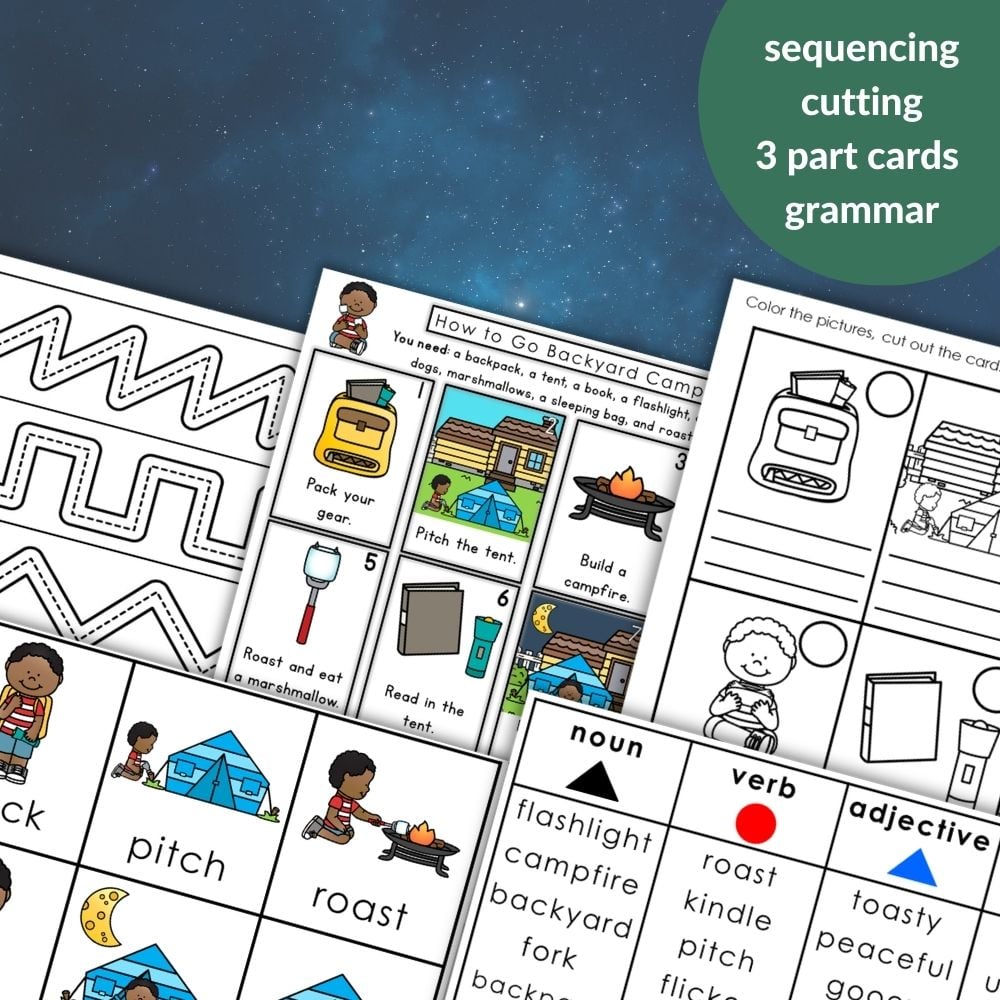
How to Go Backyard Camping Outdoor Life Skills Sequencing Cards
This How to Go Backyard Camping printable resource provides structured, hands-on activities for teaching sequencing, outdoor life skills, and vocabulary development. Designed for preschool through early elementary students, the materials break down the backyard camping experience into clear, manageable steps while integrating fine motor practice and language reinforcement.
You Might Also Enjoy
-
 Outdoor Nature STEM Activity: I Can Name It Identifiers$10.10
 -
How to Wash Your Hands Hygiene$3.10
-
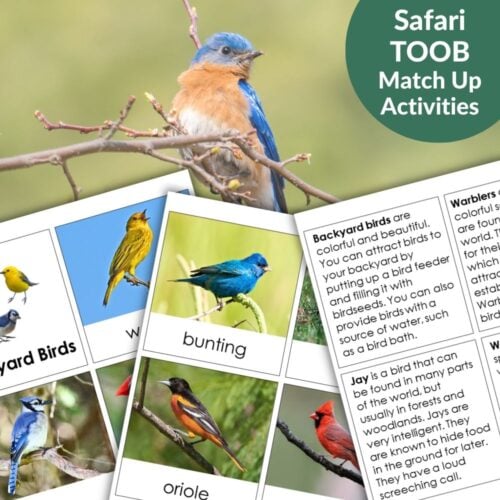
Backyard Birds: Safari TOOB Compatible 3 Part Cards Facts$3.10
-
2D Shapes in Nature Match Up Picture 3 Part Cards Coloring Tracing Worksheets$2.60
-
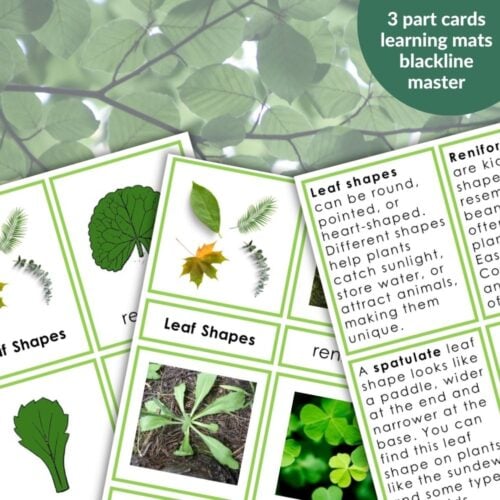
Leaf Shapes 3 Part Cards Information Worksheets$4.10
-
Types of Clouds: 3 Part Cards Cloud Identifier Weather Report$4.90


About Anastasia | Anastasia is an early childhood teacher with over twenty years of experience in Montessori classrooms and homeschooling. With a Master’s in Information Science, she blends education and information design to create clear, organized, research-backed resources. As founder of Montessori Nature, she develops evidence-based, nature-inspired printables that support holistic child development and foster curiosity, independence, and a love of learning. Explore more in her shop and Teachers Pay Teachers store.