How to help children (and ourselves) stay connected to true inner strength
There’s a Montessori quote that stops me every time I read it. It’s not about materials or practical life or sensitive periods. It’s about something deeper—something we don’t talk about enough.

She wrote:
“The enormous majority of citizens are honest without any regard whatever to the threats of the law. The real punishment of normal man is the loss of the consciousness of that individual power and greatness which are the sources of his inner life. A man whom we would consider crowned by happiness and fortune may be suffering from this form of punishment. Far too often man does not see the real punishment which threatens him. And it is just here that education may help.”

Let that sink in.
Montessori is saying that most of us don’t need laws to be good. We’re honest naturally—not because we’re afraid of getting caught, but because something inside us knows what’s right.
But here’s the part that haunts me: the real punishment, she says, isn’t prison or fines or what the world does to us. The real punishment is losing touch with our own inner power and greatness. Not knowing who we are. Not feeling our own worth. Being disconnected from the source of our inner life.
And here’s the hardest part: a person can look like they have everything—happiness, fortune, success—and still be suffering this punishment. Quietly. Invisibly. Sometimes without even knowing it themselves.
Montessori believed that education could help. That we could raise children who never lose that connection in the first place. That we could help adults find their way back.
So what does that look like, practically? How do we nurture this “consciousness of individual power and greatness” in the children we love and guide?
Here are some steps I’ve been gathering.
- Notice When a Child Is Connected—and Protect It
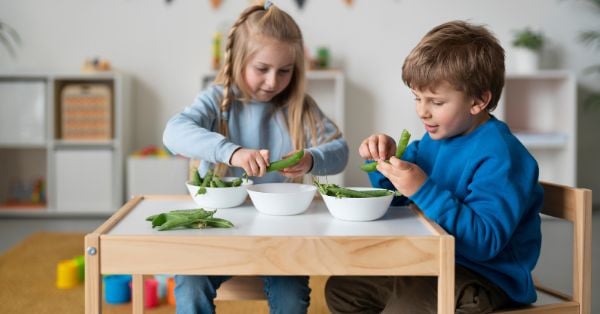
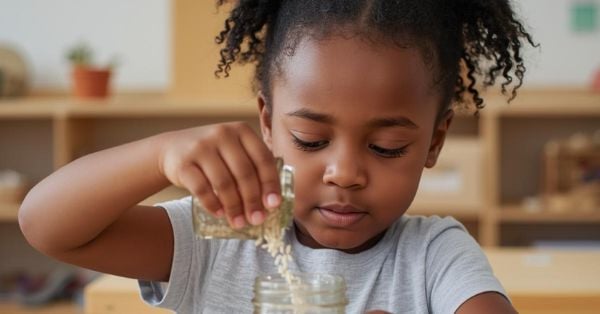
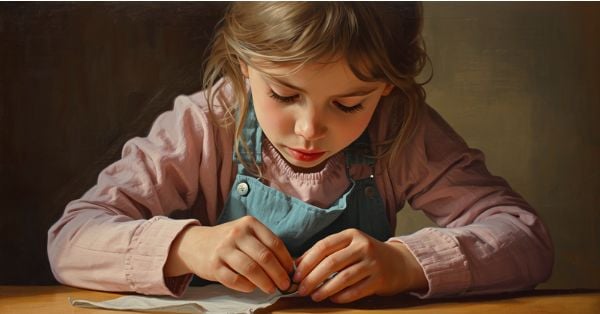
Montessori observed that children in deep concentration exhibit something almost sacred: a complete absorption, a sense of peace, a quiet joy. This, I believe, is what she means by being in touch with “the sources of inner life.”
Actionable step this week:
Watch for moments when a child is truly absorbed—not just busy, but deeply engaged. Then protect that moment. Don’t interrupt. Don’t praise. Don’t redirect. Just let it be.
These moments are not just cute. They’re foundational. They’re the child building the muscle of inner connection.
- Separate the Deed from the Doer
When a child makes a mistake—and they will—Montessori reminds us that punishment isn’t the answer. But neither is empty praise. What children need is to understand themselves.
Actionable step this week:
When a child does something wrong, resist the urge to label them (“You’re so careless,” “Why are you always like this?”). Instead, name the action and invite reflection:
“I noticed the blocks were left on the floor. What needs to happen now?”
“It looks like you’re feeling frustrated. Would you like to try again, or take a break first?”
This preserves their sense of themselves as capable and good, even when they stumble.
- Name the Inner Experience, Not Just the Outer Behavior
We spend so much time commenting on what children do. “Good job!” “Nice work!” “Look at that tower!” But Montessori invites us to go deeper—to notice and name the inner experience.
Actionable step this week:
Try swapping external praise for observations that reflect inner experience:
Instead of “Great drawing!” try “You worked on that for a long time. You really concentrated.”
Instead of “You’re so smart!” try “You figured that out all by yourself. How did that feel?”
Instead of “Good job sharing!” try “You noticed your friend was waiting. That was thoughtful.”
This helps children build language for their inner world. It teaches them to notice their own feelings, efforts, and choices—not just perform for approval.
- Create Space for Stillness and Silence 🌿
Montessori classrooms often include a “peace corner” or a place for quiet reflection. This isn’t a time-out space for misbehavior. It’s an invitation to turn inward.
Actionable step this week:
Create a small, inviting space—at home or in the classroom—where a child can go to simply be. A soft cushion. A single flower. A small bell. A book of nature images. No agenda. No expectation.
Then model using it yourself. Let children see you sitting quietly, breathing, reflecting. They learn what they see.
- Ask Questions That Invite Self-Knowledge
Most of our questions to children are practical: “Did you finish your work?” “What do you want for snack?” “Did you have a good day?” But Montessori reminds us that education can help children know themselves—not just navigate the world.
Actionable step this week:
Try asking questions that invite children to notice their own inner experience:
“What was the most interesting thing you noticed today?”
“Was there a moment you felt really peaceful?”
“When did you feel proud of yourself today?”
“Was there a time you wanted to give up, but you kept trying?”
“What does your heart feel like right now?”
These questions plant seeds. They tell children: Your inner life matters. I want to know about it.
- Guard Against the “Crowned by Happiness and Fortune” Trap
Montessori’s warning about the person who looks successful but is suffering inside is especially urgent today. We live in a world that celebrates external achievement—grades, awards, college acceptances, job titles—while the inner life withers unnoticed.
Actionable step this week:
Take an honest look at your own life and the messages you’re sending children. Ask:
Do I prioritize rest, reflection, and connection as much as I prioritize achievement?
Do I celebrate effort, persistence, and kindness as much as I celebrate “success”?
Do I model being connected to my own inner life—or do I model constant busyness and external validation?
Children absorb what we are, not just what we say.
- Help Children Name Their Own “Power and Greatness”
Montessori believed that every person has an “individual power and greatness” within them. Not in a boastful, ego-driven way. In a quiet, grounded, “this is who I am” way.
Actionable step this week:
Create a simple ritual where children can reflect on their own strengths—not compared to others, but simply recognized in themselves.
A “Greatness Journal” where they draw or write about something they did that felt true to who they are.
A weekly sharing circle where each person names one thing they appreciate about themselves.
A quiet moment before bed: “What was something today that showed your beautiful heart?”
This isn’t about building big egos. It’s about building quiet confidence—the kind that doesn’t need constant external validation because it’s rooted in self-knowledge.
- When You See Someone Suffering This Hidden Punishment, Reach Out
Montessori’s words remind us that we can’t always tell who’s suffering. The person who looks like they have it all together might be deeply disconnected from themselves.
Actionable step this week:
Think of one person in your life—another parent, a colleague, a friend—who might be quietly struggling. Not asking for help. Not showing it. Just… running on empty.
Reach out. Not to fix them. Just to connect. A coffee. A walk. A simple text: “I’ve been thinking of you. How are you, really?”
Sometimes the greatest education we offer isn’t to children, but to each other.
A Simple Challenge for This Week
Choose one of these steps—just one—and try it.
- Protect a moment of concentration.
- Separate the deed from the doer.
- Name the inner experience.
- Create space for stillness.
- Ask a question that invites self-knowledge.
- Check your own “crowned by happiness” messages.
- Help a child name their greatness.
- Reach out to someone who might be suffering quietly.
- Then notice what shifts. In the child. In you.
Because here’s what I’m coming to believe: Montessori wasn’t just describing an educational method. She was describing a way of being human. A way of staying connected to the sources of inner life. A way of raising children who never lose touch with their own power and greatness.
And in a world that constantly pulls us outward—toward achievement, approval, accumulation—this might be the most important work we do.
Not just for the children.
For all of us.
About Anastasia | Anastasia is an early childhood teacher with over twenty years of experience in Montessori classrooms and homeschooling. With a Master’s in Information Science, she blends education and information design to create clear, organized, research-backed resources. As founder of Montessori Nature, she develops evidence-based, nature-inspired printables that support holistic child development and foster curiosity, independence, and a love of learning. Explore more in her shop and Teachers Pay Teachers store.