
Here are ten ways to use these simple tools to create unforgettable outdoor learning experiences.
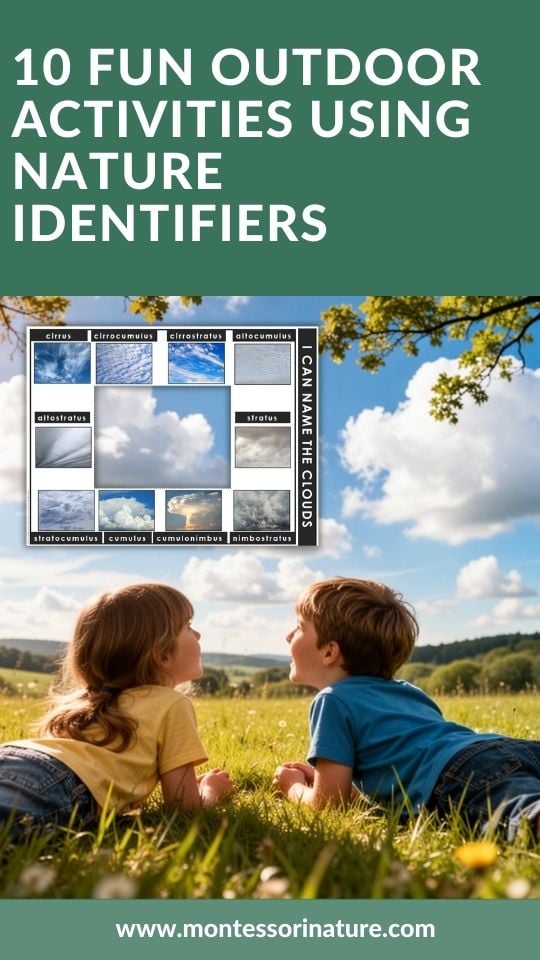
- The Cloud Watch (Clouds Identifier)
Best for: A lazy afternoon with a blue sky
What to do: Lie down on a blanket with your child and look up. Hold the Clouds identifier by its popsicle stick and use the window to frame different parts of the sky.
Ask them: “Can you find a cloud that looks like a cotton ball? That’s cumulus. Can you find one that looks like a horse’s tail? That’s cirrus.”
Extend the learning: Bring a notebook and sketch the clouds each day for a week. Do the same clouds appear? What does the weather do after you see cirrus clouds?


- Leaf Detective (Leaves Identifier)
Best for: A walk in the woods or a backyard exploration
What to do: Give your child the Leaves identifier and challenge them to find all 10 leaves on the card. Some will be on trees; some will already be on the ground.
Ask them: “Why do you think this leaf is shaped like a hand? Why is that one long and narrow?”
Extend the learning: Collect one of each leaf and do leaf rubbings at home. Place each leaf under a piece of paper and rub the side of a crayon over it. The veins appear like magic!
- Moon Phase Tracker (Moon Phases Identifier)
Best for: Evening observation over a full month
What to do: Each night, go outside with your child and look at the moon. Hold up the Moon Phases identifier and find the phase that matches tonight’s moon.
Ask them: “Is the moon growing (waxing) or shrinking (waning)? Which side is lit?”
Extend the learning: Create a moon journal. Each night, draw a picture of the moon and write the date. After a month, flip through the pages and watch the cycle unfold.
- Wildflower Hunt (Wildflowers Identifier)
Best for: Spring and summer meadow walks
What to do: Take a walk through a field or along a trail. Use the Wildflowers identifier to spot common blooms. Teach your child to look carefully at each flower—count the petals, notice the leaves, observe who is visiting.
Ask them: “Do you see any bees or butterflies on the flowers? Why do you think they’re there?”
Extend the learning: Press a few flowers between the pages of a heavy book. After a week, tape them into a nature journal and label them.
- Star Gazing Adventure (Constellations Identifier)
Best for: A clear, dark night away from city lights
What to do: Wait until the sky is fully dark. Bring a red flashlight (regular white light ruins night vision). Use the Constellations identifier to find the Big Dipper, Cassiopeia, and other easy patterns.
Ask them: “Can you find the North Star? Follow the two stars at the end of the Big Dipper’s bowl.”
Extend the learning: Tell the stories behind the constellations. The ancient Greeks saw Orion the Hunter. Many Native American tribes saw a bear in the same stars. What story would your child tell?
- Bird Watching Morning (Birds Identifier)
Best for: Early morning when birds are most active
What to do: Find a quiet spot and sit still for 10 minutes. Use the Birds identifier to identify any birds that visit. Pay attention to colors, size, and behavior.
Ask them: “What is that bird doing? Is it hopping on the ground or climbing a tree? What do you think it eats?”
Extend the learning: Build a simple bird feeder (a pinecone rolled in peanut butter and seeds) and hang it near a window. Keep a log of who visits.
- Backyard Bug Safari (Invertebrates Identifier)
Best for: Any day—bugs are everywhere!
What to do: Head outside with the Invertebrates identifier. Look under logs, on leaves, and in the soil. (Remember to gently return logs to their exact spot after looking!)
Ask them: “How many legs does it have? Is it an insect (6 legs) or a spider (8 legs)?”
Extend the learning: Build a “bug hotel” by stacking sticks, pinecones, and leaves in a corner of the yard. Check back each week to see who has moved in.
- Beachcombing Day (Seashells Identifier)
Best for: A trip to the beach or lake shore
What to do: Walk slowly along the water’s edge, looking down. Use the Seashells identifier to identify any shells you find.
Ask them: “Is this a bivalve (two halves) or a gastropod (spiral)? Can you find the hole where a predator drilled through?”
Extend the learning: Sort your shells by type, size, or color. Make a shell collage when you get home.
- Rock Collecting (Rocks Identifier)
Best for: Any walk—rocks are everywhere!
What to do: Collect interesting rocks as you walk. Use the Rocks identifier to figure out what kind they are. Look for speckles (granite), layers (sandstone), or bubbles (basalt).
Ask them: “Is your rock all one color or speckled? Can you see crystals? Does it feel rough or smooth?”
Extend the learning: Try the vinegar test on a rock that might be limestone. Does it fizz? (That means it’s made of ancient seashells!)
- Herb Garden Exploration (Herbs Identifier)
Best for: A garden, farmer’s market, or windowsill
What to do: Visit a garden or herb planter. Use the Herbs identifier to find mint, basil, lavender, and other common herbs. Gently rub a leaf and smell your fingers.
Ask them: “What does it smell like? Mint? Lemon? Pizza?”
Extend the learning: Make herb-infused water by adding fresh mint or lemon balm to a pitcher of water. Let it sit in the sun for an hour and enjoy a refreshing drink.
How to Make Your Own Nature Identifier Kit
Ready to start your own outdoor adventures? Here is what you need:
- Get the printable.
- Print on white cardstock – regular paper is too flimsy for outdoor use
- Laminate each page – this makes them waterproof and kid-proof
- Cut out the window – adults may need to start the hole with a craft knife
- Attach a popsicle stick handle – tape or glue it to the back
- Head outside!
The whole process takes about 30 minutes, and the identifiers will last for years of outdoor exploration.
Why This Works: The Science of Hands-On Learning
There is a reason children remember what they learn with these identifiers.
When a child holds the tool themselves, points it at a cloud, and announces, “That’s a cumulonimbus—it might thunder later!” —that knowledge sticks. It isn’t memorized from a worksheet. It is discovered.
This approach taps into:
Inquiry-based learning (children ask questions and find answers)
Kinesthetic learning (hands-on tools engage the body)
Authentic context (learning happens where it matters—outside)
Agency and confidence (the child becomes the expert)
And best of all? It feels like play.
Each identifier is designed for North American species and phenomena, so your child will recognize what they see.
Plus, you get a Teacher & Parent Guide with:
Teaching tips for every topic
Kid-friendly “memory clues”
Safety notes and preparation instructions
A Final Thought
The Danish have a word: “friluftsliv” (free-loofts-liv). It means “open-air living”—the idea that spending time outdoors is essential to a good life.
For children, friluftsliv is more than fresh air. It is wonder. It is discovery. It is the moment they look up at the stars and realize how big the world is, and how much there is to learn.
A simple card with a window and a popsicle stick handle won’t teach them everything. But it will point them in the right direction—outside.
Happy exploring!
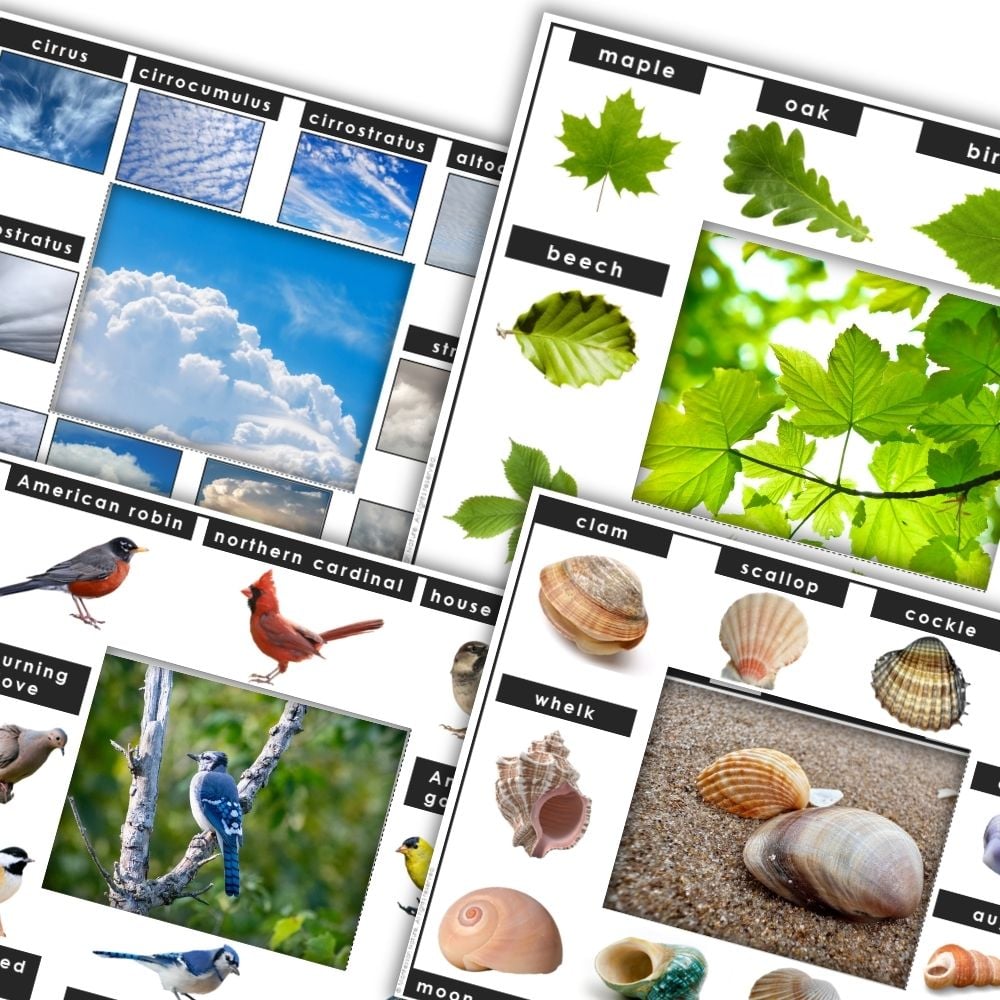
Outdoor Nature STEM Activity: I Can Name It Identifiers
Take nature study outdoors with this hands-on set of Summer Camping Nature Identifiers—a printable activity pack designed for K-3 students, homeschoolers, and outdoor classrooms. These interactive identification tools help young learners explore the natural world of North America, featuring plants, animals, and celestial objects commonly found across the continent.
This printable is also available on TPT
You Might Also Enjoy
-
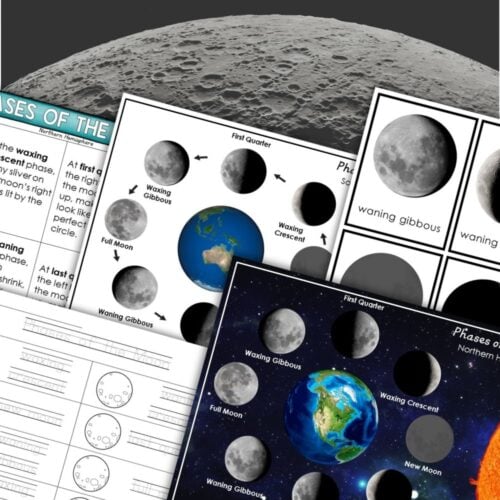
 Phases of the Moon: Northern and Southern Hemispheres Learning Activities$4.10
 -
Three Types of Rocks Life Cycle Sorting 3 Part-Cards Charts Booklet$5.60
-
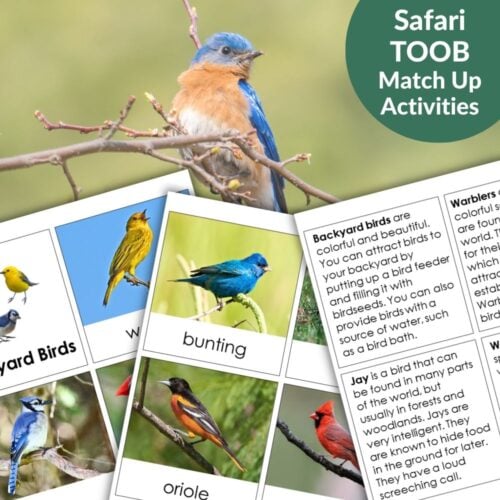
Backyard Birds: Safari TOOB Compatible 3 Part Cards Facts$3.10
-
2D Shapes in Nature Match Up Picture 3 Part Cards Coloring Tracing Worksheets$2.60
-
Types of Clouds: 3 Part Cards Cloud Identifier Weather Report$4.90



About Anastasia | Anastasia is an early childhood teacher with over twenty years of experience in Montessori classrooms and homeschooling. With a Master’s in Information Science, she blends education and information design to create clear, organized, research-backed resources. As founder of Montessori Nature, she develops evidence-based, nature-inspired printables that support holistic child development and foster curiosity, independence, and a love of learning. Explore more in her shop and Teachers Pay Teachers store.


