How to nurture social beings, not just students
There’s a quote from The Montessori Method that reorients me every time I read it. It pulls me back to what matters most.
Montessori writes:
“The ‘Children’s House’ is a garden of child culture, and we most certainly do not keep the children for so many hours in school with the idea of making students of them!… Considering the method as a whole, we must begin our work by preparing the child for the forms of social life, and we must attract his attention to these forms.”

Let those words sink in: We do not keep children in school with the idea of making students of them.
Not students. Not scholars. Not miniature academics racing toward the next grade level.
Children. Living, growing, social beings who are learning how to move in the world with others.
Montessori saw the Children’s House as a garden of child culture—a protected space where children could absorb, practice, and internalize the forms of social life. How to greet someone. How to wait. How to help. How to ask. How to apologize. How to belong.
This isn’t a nice add-on to the “real” curriculum. It is the curriculum. Everything else—the materials, the lessons, the skills—serves this deeper purpose: preparing children to live well with others.
So what does this look like in daily practice? How do we attract children’s attention to the forms of social life, rather than just pushing academic content?
Here are some steps I’ve been gathering.
1. Redefine Your Goal: Not Student, But Child
Montessori’s words challenge us to examine our deepest intentions. Why do we send children to school? Why do we keep them there for so many hours? What do we hope they’ll become?
Actionable step this week:
Take ten minutes alone—with a notebook, a cup of tea, an honest heart—and ask yourself:
- Am I primarily focused on academic outcomes, or on the whole child?
- Do I measure success by what children know, or by who they are becoming?
- What would shift if I saw my role as nurturing a “garden of child culture” rather than producing students?
Write down your answers. Let them guide your choices this week.
2. Name and Model the Forms of Social Life
Montessori says we must “attract his attention to these forms.” Children don’t absorb social graces by osmosis. They need to notice them—to have their attention gently drawn to how people treat each other.
Actionable step this week:
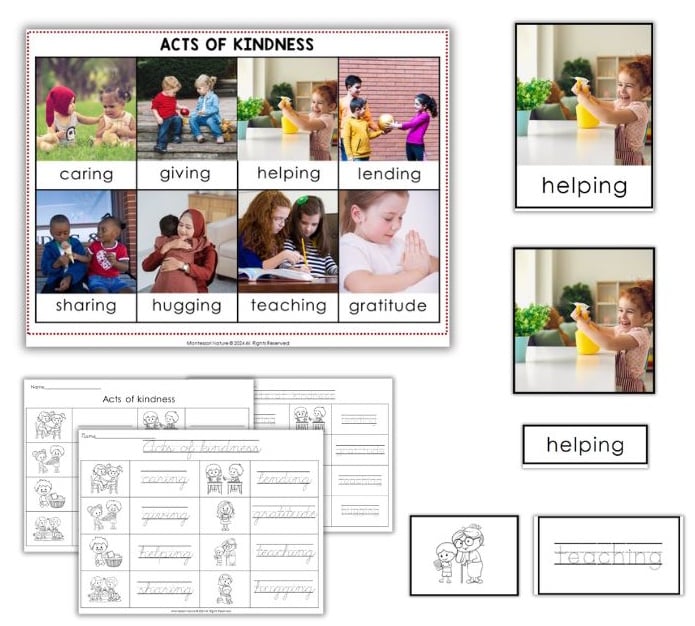
Choose one “form of social life” to highlight. It might be:
- Greeting someone warmly
- Waiting patiently for a turn
- Offering help without being asked
- Apologizing with sincerity
- Expressing gratitude
- Respecting someone’s concentration
Throughout the week, subtly draw attention to this form when you see it—in yourself, in other children, in the world. Not with lectures, but with quiet observations:
- “I noticed how you looked at Mei before you reached for the scissors. That was respectful.”
- “When Leo dropped his work, you helped him pick it up without being asked. That’s what friends do.”
- “Did you see how the shopkeeper smiled when you said thank you? Your words made her day.”
We water what we notice.
3. Create Opportunities for Real Social Practice
Social life can’t be learned from worksheets or lessons. It has to be lived. Children need real opportunities to navigate relationships, solve conflicts, and experience belonging.
Actionable step this week:
Look at your daily rhythm and ask: Where are the opportunities for authentic social interaction?
- Do children have time to simply be together—chatting, playing, negotiating?
- Are there moments when they must collaborate, share, or take turns?
- When conflicts arise, do I step in too quickly, or do I allow them to practice resolution?
This week, try stepping back just a little longer. Let children work it out. Trust the social process.
4. Protect the Mixed-Ages: The Heart of Social Culture
Montessori’s mixed-age classrooms aren’t accidental. They’re essential to “child culture.” Younger children learn from older ones. Older children learn to lead, mentor, and protect. Everyone learns to live in a community that mirrors the real world.
Actionable step this week:
If you’re in a classroom, celebrate and protect the mixed-age dynamic. Resist the urge to separate children by ability or age for convenience.
If you’re a parent, seek out mixed-age opportunities—playgroups, co-ops, neighborhood gatherings, multi-age summer programs. Let your child experience being both the youngest and the oldest.
This is where social life takes root.
5. Treat Manners as Gifts, Not Rules
Montessori didn’t teach manners through charts or rewards. She invited children into grace and courtesy lessons—small, gentle presentations on how to navigate social situations. Not because “that’s the rule,” but because these practices help us live kindly together.
Actionable step this week:
Instead of correcting a child’s manners (“What do you say?” “Say thank you!”), try modeling and inviting:
When someone helps you, exaggerate your gratitude: “Oh, thank you so much! That was so kind!”
Before a situation arises, gently prepare: “When someone hands you a snack, you might like to say thank you. It makes them feel good.”
After a missed moment, quietly revisit later: “At the store today, the man gave you a sticker. Next time, let’s remember to smile and say thank you.”
Manners taught with warmth become gifts. Manners demanded with sharpness become resentments.
6. Create Rituals of Belonging
A garden of child culture needs rituals—small, repeated practices that say we belong to each other.
Actionable step this week:
Introduce or strengthen one ritual of belonging:
- A morning greeting where each child is welcomed by name
- A gratitude circle before snack
- A song sung together at the end of the day
- A special way of celebrating birthdays or achievements
- A class job that contributes to the common good
Rituals weave the fabric of community.
7. Honor the “Invisible Curriculum” of Social Learning
So much of what children learn about social life isn’t in any lesson plan. It’s in the thousand small moments: how we speak to each other, how we handle mistakes, how we include the left-out child, how we celebrate and mourn together.
Actionable step this week:
Become more conscious of the “invisible curriculum” you’re teaching. Ask yourself:
- When I’m frustrated, do I model emotional regulation or outburst?
- When someone makes a mistake, do I model grace or blame?
- When there’s conflict, do I model problem-solving or punishment?
- When I see kindness, do I notice it aloud?
Children are watching. Always. We are the curriculum.
8. Remember: We’re Growing Citizens, Not Just Students
Montessori’s vision extended far beyond the classroom walls. She was preparing children for life—for participation in family, community, and the wider world. Every social skill practiced in the Children’s House is groundwork for becoming a citizen who contributes, cares, and connects.
Actionable step this week:
Look at a child you love and imagine them at twenty-five. Not their test scores or college acceptances. Their character.
- Will they know how to listen?
- Will they offer help without being asked?
- Will they handle conflict with grace?
- Will they contribute to their community?
- Will they know how to belong, and help others belong too?
- Then ask: What am I doing today to grow that person?
A Simple Challenge for This Week
Choose one of these steps—just one—and try it.
- Redefine your goal: child, not student.
- Name one form of social life and notice it.
- Step back and let social practice happen.
- Protect mixed-age opportunities.
- Teach manners as gifts, not rules.
- Strengthen one ritual of belonging.
- Notice the invisible curriculum you’re teaching.
- Imagine the citizen they’re becoming.
Then notice what shifts. In the children. In you. In your community.
Because here’s what I’m coming to believe: Montessori wasn’t describing a teaching method. She was describing a way of raising human beings who know how to live with each other.
The Children’s House is a garden. And in that garden, we’re not growing students.
We’re growing people. Citizens. Friends. Neighbors. Humans who will one day go out into the world and shape it.
What we do today matters forever.
You Might Enjoy



About Anastasia | Anastasia is an early childhood teacher with over twenty years of experience in Montessori classrooms and homeschooling. With a Master’s in Information Science, she blends education and information design to create clear, organized, research-backed resources. As founder of Montessori Nature, she develops evidence-based, nature-inspired printables that support holistic child development and foster curiosity, independence, and a love of learning. Explore more in her shop and Teachers Pay Teachers store.