
Spring is the season of awakening, and there is no better place to witness nature’s magic than at a pond. As the days grow longer and the air warms, ponds come alive with buzzing insects, darting fish, and the unmistakable chorus of frogs. These small wetland ecosystems play a vital role in our environment—they filter water, control floods, and provide critical habitat for countless creatures. Frogs, in particular, are what scientists call indicator species; their presence tells us a pond is healthy, and their absence can signal trouble. For young children, a spring visit to a local pond is like stepping into a living storybook. And when you bring that story back into the classroom or home, a well-designed frog printable can extend the learning in beautiful, hands-on ways.
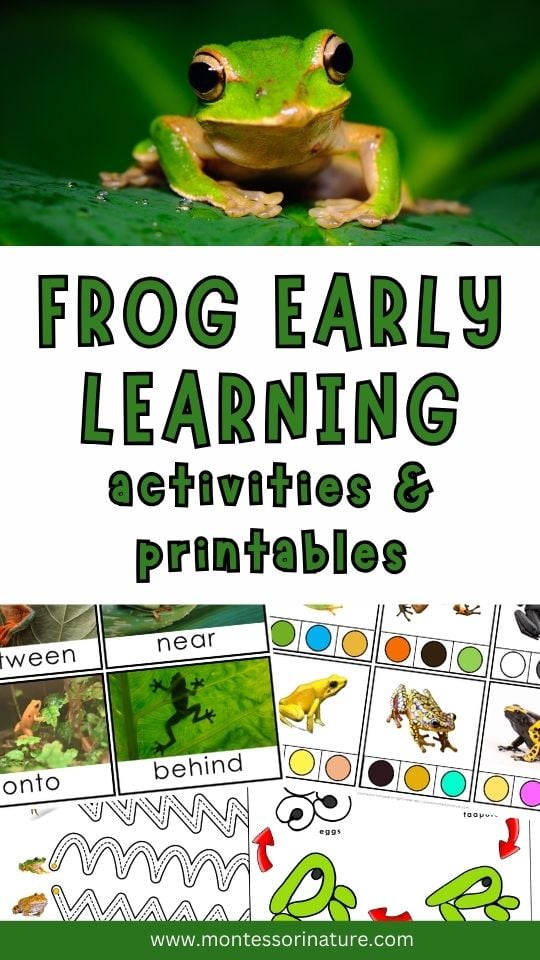
I still remember the first time I took a group of preschoolers to the edge of a pond. We stood quietly, and within minutes, a small green frog leaped from a lily pad with a dramatic plop into the water. The children gasped, then giggled. “Where did it go?” one child whispered. “Why did it jump?” another asked. That moment of wonder sparked days of exploration. We read books about amphibian metamorphosis, sang “Five Little Speckled Frogs,” and most importantly, we used hands-on materials that allowed the children to touch, manipulate, and internalize what they had observed. A frog-themed printable pack became the backbone of our unit, offering structured activities that felt like play.
One of the most powerful tools in that pack was a set of simple poems. Children naturally gravitate toward rhythm and rhyme, and pairing scientific facts with poetic language helps information stick. Here is a poem we used daily—it walks through each stage of the frog life cycle with clear, accurate language that children can understand and remember.
The Frog Life Cycle

A clutch of eggs, a gelatinous sphere,
In tranquil waters, they appear.
Within each orb, an embryo grows,
A new life begins as the warm sun flows.
A hatching larva, a fish-like form,
With feathery gills, a growing swarm.
With a fin-like tail, it swims and feeds,
On algae and plants, a life of simple needs.
Metamorphosis now takes its hold,
A wondrous change begins to unfold.
First hind, then front legs push and grow,
The tail shortens, a froglet starts to show.
Lungs replace gills, a final change complete,
On four strong legs, the frog can leap.
An insect hunter on the shore,
Beginning the cycle forevermore.
After reading this poem together, children can sequence the life cycle cards, act out the stages with their bodies, or illustrate each verse in a homemade booklet. The language is precise enough to satisfy curious minds while remaining accessible to early learners.
Bringing the Pond Indoors: Science Hands-On Activities
The best way to teach children about pond life is to let them experience it, but not every day can be a field trip. That is where hands-on science activities come in. These activities allow children to explore frog biology and pond ecosystems right at the classroom sensory table or science center.
Frog Life Cycle Sensory Bin
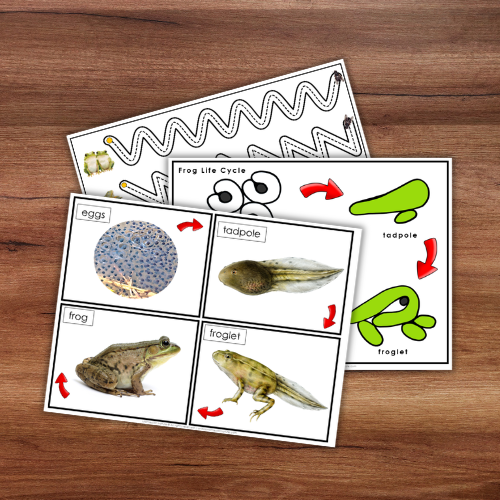
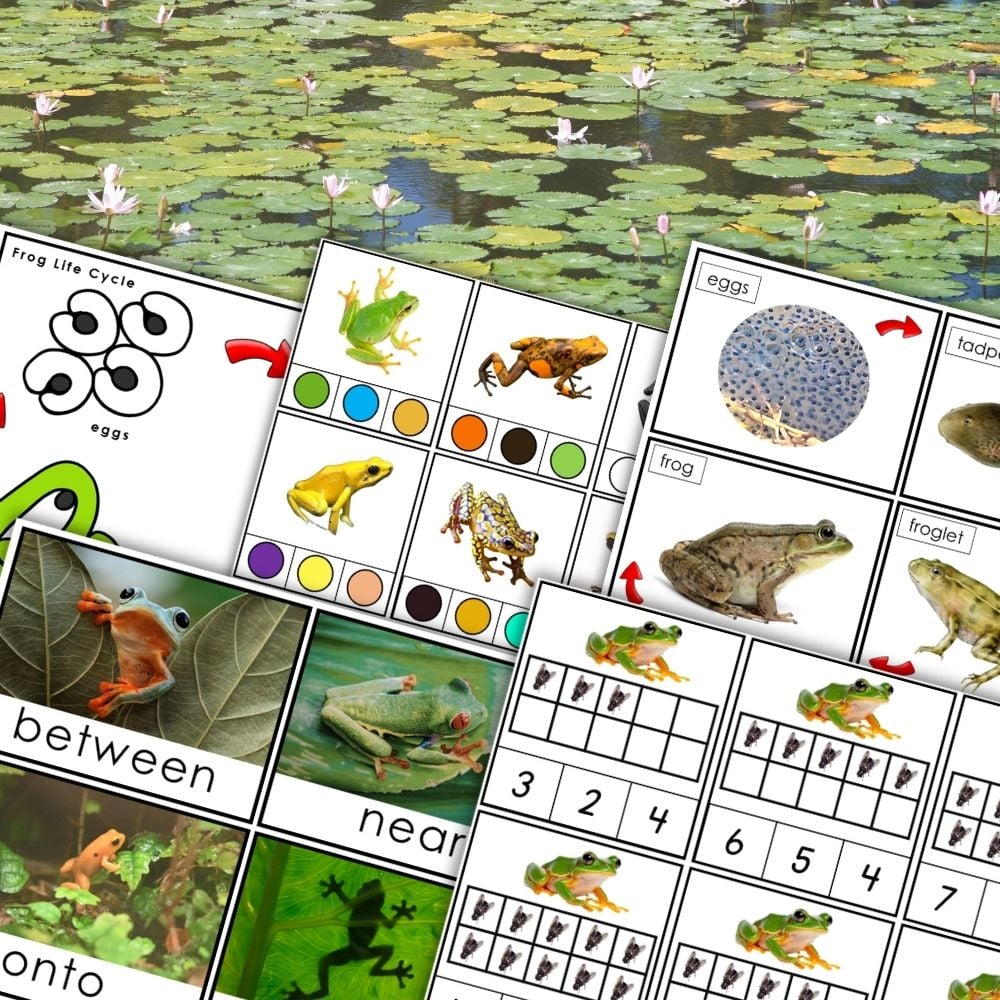
Fill a large bin with blue water beads or blue-dyed rice to represent the pond. Add smooth stones for rocks, silk or plastic lily pads, and a set of frog life cycle figurines (eggs, tadpole, froglet, adult frog). Children can manipulate the figurines as they narrate the transformation. Pair this with the life cycle picture cards from your printable pack—children can sequence the cards and then find the matching figurine to place on top.
Frog Jumping Experiment
Frogs are famous for their jumping abilities. Use a tape measure and a small toy frog (or a paper frog the children fold themselves). Have children predict how far the frog will jump, then test it. Mark the distance with tape. This simple experiment introduces the scientific method—question, prediction, test, conclusion—in a way that feels like play.
Pond Water Investigation
If you can safely collect a small jar of water from a local pond (or create your own using pond water treatment kits available at pet stores), place it in a clear jar with a magnifying glass. Children can observe what moves in the water. They may spot tiny tadpoles, insect larvae, or swimming microorganisms. This connects directly to the real-world importance of ponds as habitats.
Practical Life Activities with a Frog Twist
Practical life activities help children develop coordination, concentration, and independence. Adding a frog theme makes them irresistible.
Frog Egg Scooping
Fill a large bowl with water and add green water beads to represent frog eggs. Provide a slotted spoon, a ladle, and an empty bowl. Children scoop the “eggs” from one bowl to another. This activity strengthens hand muscles and teaches careful movement—essential skills for writing.
Frog Tong Transfer
Place small frog counters or plastic insects in a bowl. Provide tweezers or child-safe tongs and an empty bowl. Children use the tongs to transfer the frogs to the new bowl, mimicking a frog catching prey with its tongue. This refines the pincer grasp needed for pencil control.
Sensorial Activities for Deeper Learning
Sensorial activities engage the five senses and help children classify and understand the world around them.
Frog Life Cycle Play-Doh Mats
This is where your printable truly shines. Print and laminate the life cycle play-doh mats (both color and blackline versions are included in the pack). Children roll green play-doh to form the body of a frog, shape small white balls for eggs, and create long coils for tadpole tails. The tactile experience of molding the dough reinforces the shape and sequence of each stage in a way no worksheet can. As they work, recite the poem together—each stanza matching the mat in front of them.
Frog Color Matching
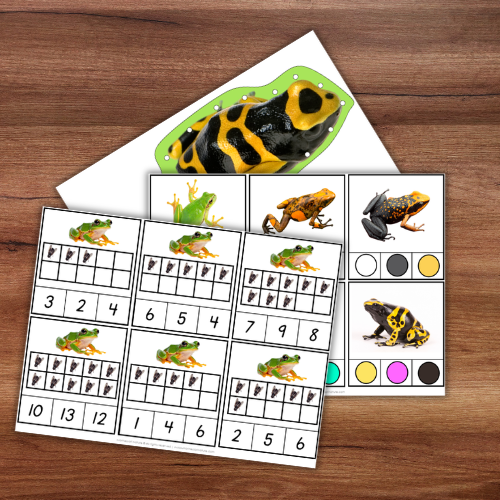
Use the color clip-on cards from the printable. After children clip the pegs to match the frog colors, extend the activity by pulling out colored counters or pompoms. Children can place the correct color counter on each frog, adding another layer of sensory input.
Wet vs. Dry Sensory Exploration
Frogs live both in and out of water. Set up two trays—one with a damp sponge or wet paper towel (representing the pond edge) and one with dry rocks or sand (representing land). Provide small toy frogs. Children can move the frogs between the two environments, feeling the difference between wet and dry with their hands. This connects to the real habitat of frogs and builds descriptive vocabulary.
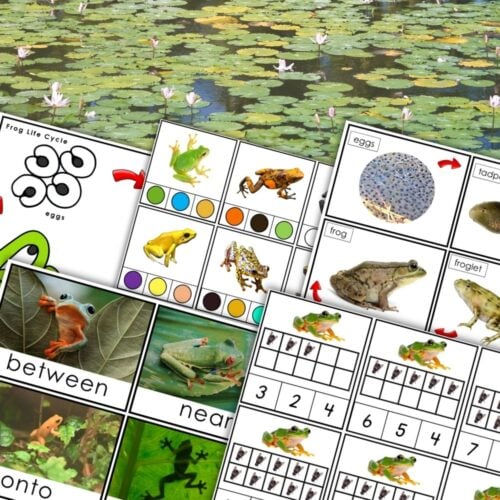
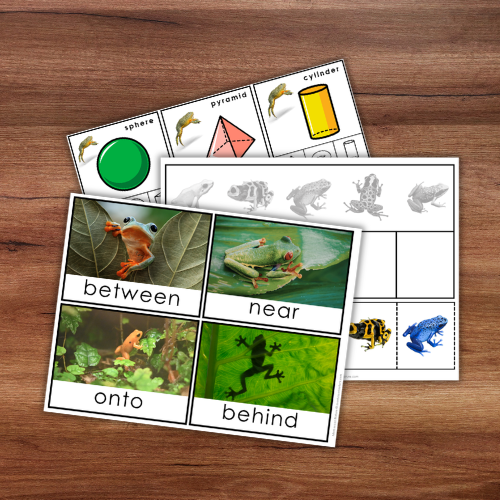
Throughout all of these activities, the frog printable pack serves as the organizing backbone. The alphabet mats go in the literacy center. The ten-frame clip cards find a home in the math area. The cutting strips and lacing cards live in the fine motor corner. And the life cycle poem cards become a reading circle favorite—each four-line verse is simple enough for children to memorize and recite.
What I love most about this approach is that it meets children where they are. The child who needs to build hand strength works with the push-pinning pictures. The child who is ready for reading challenges works with the preposition 3-part cards. The child who learns best through touch spends twenty minutes at the play-doh mats. Every learner finds an entry point.
This spring, as the frogs begin to sing their evening songs, consider bringing their story into your classroom or home. A few simple materials, a bit of curiosity, and a thoughtful printable pack can transform a seasonal moment into a deep, lasting understanding of the natural world. After all, the children who learn to love the pond today will be the ones who protect it tomorrow.
Frog Early Learning Pack
This frog-themed printable pack provides hands-on activities for early childhood classrooms. It is designed to support skill development in literacy, math, science, and fine motor control. The materials work well for spring and summer themes, pond and wetland units, or when studying amphibians.
You Might Also Enjoy

About Anastasia | Anastasia is an early childhood teacher with over twenty years of experience in Montessori classrooms and homeschooling. With a Master’s in Information Science, she blends education and information design to create clear, organized, research-backed resources. As founder of Montessori Nature, she develops evidence-based, nature-inspired printables that support holistic child development and foster curiosity, independence, and a love of learning. Explore more in her shop and Teachers Pay Teachers store.


