Teaching children about hygiene is an essential part of their early development. Good hygiene habits, such as proper handwashing, help prevent the spread of germs and keep children healthy. In an early childhood classroom, we emphasize independence and practical life skills, making hygiene lessons a natural part of the daily routine. Here, we’ll explore effective ways to teach children about hygiene, share a story to help them understand germs, and provide hands-on activities for practicing handwashing.

Why Hygiene Matters for Children
Young children are naturally curious and love to explore their environment—often by touching everything in sight. While this is an important part of learning, it also means they come into contact with countless germs. Teaching them the importance of hygiene helps them take responsibility for their own health and well-being.
In a Montessori setting, we approach hygiene lessons in a way that is engaging, age-appropriate, and rooted in real-life application. Instead of simply telling children to wash their hands, we show them why it matters and how to do it properly.

A Story to Explain Germs
To help children understand why handwashing is important, storytelling is a powerful tool. Here’s a simple story you can share with them:
The Tiny Germs and the Soap Heroes
Lena loved to explore. She built sandcastles at the park, played with her pet rabbit, and shared crayons with her friends. But everywhere she went, tiny little things followed her—so small that she couldn’t even see them. These were called germs.
Germs are tiny living things, like invisible bugs, that can stick to our hands when we touch things. Some germs are harmless, but others can make us sick if they get inside our bodies. They sneak in when we rub our eyes, bite our nails, or eat food without washing our hands first.
One day after playing outside, Lena was hungry and reached for an apple. She didn’t wash her hands first, and some of the germs hitched a ride into her mouth. Later, her tummy felt funny, and she had to rest instead of playing.
Her mom sat beside her and said, “Do you know what fights off those tiny germs? Soap and water!” She explained that soap isn’t just for making bubbles—it’s like a superhero that breaks germs apart. When we scrub our hands, the soap traps the germs, and the water washes them away.
Mom showed Lena the right way to wash her hands:
Wet them with clean water.
Rub soap everywhere—palms, between fingers, under nails, even the backs of her hands.
Count to 20 (or sing the “Happy Birthday” song twice) to make sure all the germs are gone.
Rinse and dry with a clean towel.
The next day, Lena remembered to wash her hands before eating. The soap heroes did their job, and the germs didn’t stand a chance! Now, Lena knows that even though germs are too small to see, washing her hands keeps her strong and healthy.
This story helps children visualize germs and understand how handwashing keeps them safe.
Hands-On Activities for Teaching Handwashing
Children learn best through experience. Here are some Montessori-friendly activities to reinforce handwashing habits:
The Glitter Germ Experiment
- Materials Needed: Glitter, hand lotion, soap, water, and a sink.
- How to Do It:
- Rub a small amount of lotion on each child’s hands.
- Sprinkle glitter over their palms and fingers to represent “germs.”
- Ask them to shake hands with a friend or touch a piece of paper—notice how the “germs” spread!
- Then, have them try rinsing their hands with just water. Most glitter will stay.
- Finally, demonstrate how soap helps wash away all the glitter.
This activity visually demonstrates why soap is necessary for proper handwashing.
Sequencing the Handwashing Steps
Children thrive on order and repetition. Print this step-by-step handwashing guide. You can display it near the sink as a visual reminder.
Setting Up a Handwashing Station
In a Montessori classroom, practical life activities are carefully designed to help children develop independence, coordination, and real-world skills. The handwashing station is a classic exercise that teaches proper hygiene while refining fine motor control.
Materials Needed
- A small table or low shelf to hold supplies
- A plastic basin or bucket to catch water
- A ceramic bowl for holding soapy water
- A pitcher for pouring water
- A nail scrubbing brush to clean under fingernails
- A bar of natural soap in a soap dish
- A hand towel folded neatly in a basket
- A sponge or towel for drying spills
Setup
- Arrange the station near a water source if possible.
- Place the bucket on the left to catch used water, the ceramic bowl in the center, and the soap, brush, and towel on the right. This follows the left-to-right workflow that reinforces order.
- Before inviting the child to try, demonstrate the activity slowly and with precise movements.
Step-by-Step Demonstration
Pouring Water
- Hold the pitcher with both hands and pour a small amount of water into the ceramic bowl.
- If any water spills, show how to use the sponge to clean it up.
Wetting Hands
- Dip fingertips into the bowl to wet them thoroughly.
Lathering Soap
- Pick up the soap and rub it between the palms three times before returning it to the dish.
- Rub hands together to create lather, covering palms, backs of hands, between fingers, and thumbs.
Scrubbing Nails
- Take the nail brush and gently scrub under each fingernail, counting to five for each finger.
- Place the brush back in its designated spot when finished.
Rinsing
- Dip hands into the ceramic bowl to rinse off the soap.
- If needed, pour fresh water from the pitcher for a final rinse.
Drying
- Pat hands dry with the towel.
- Replace the towel and toss the used towel into the washing basket, or fold it neatly and return it to the basket.
Cleaning Up
- Empty the ceramic bowl into the bucket.
- Use the sponge to wipe any drips or spills.
- Empty dirty water into a sink so it is ready for the next child.
Key Learning Objectives
- Independence: Children follow a logical sequence without needing constant adult guidance.
- Fine Motor Skills: Pouring, scrubbing, and folding help develop hand strength and coordination.
- Hygiene Awareness: The ritual reinforces the importance of thorough handwashing.
- Order and Precision: Each material has a designated place, teaching responsibility and organization.
Extension Activities
- Introduce a lesson on germs using glow powder to visually demonstrate areas that are often missed during washing.
- Place a handwashing sequence card near the station for children to reference as they work.
Teaching hygiene is not a one-time lesson but an ongoing practice. By incorporating stories, hands-on experiments, and structured routines, we help children develop lifelong healthy habits. The key is to make learning interactive and meaningful.
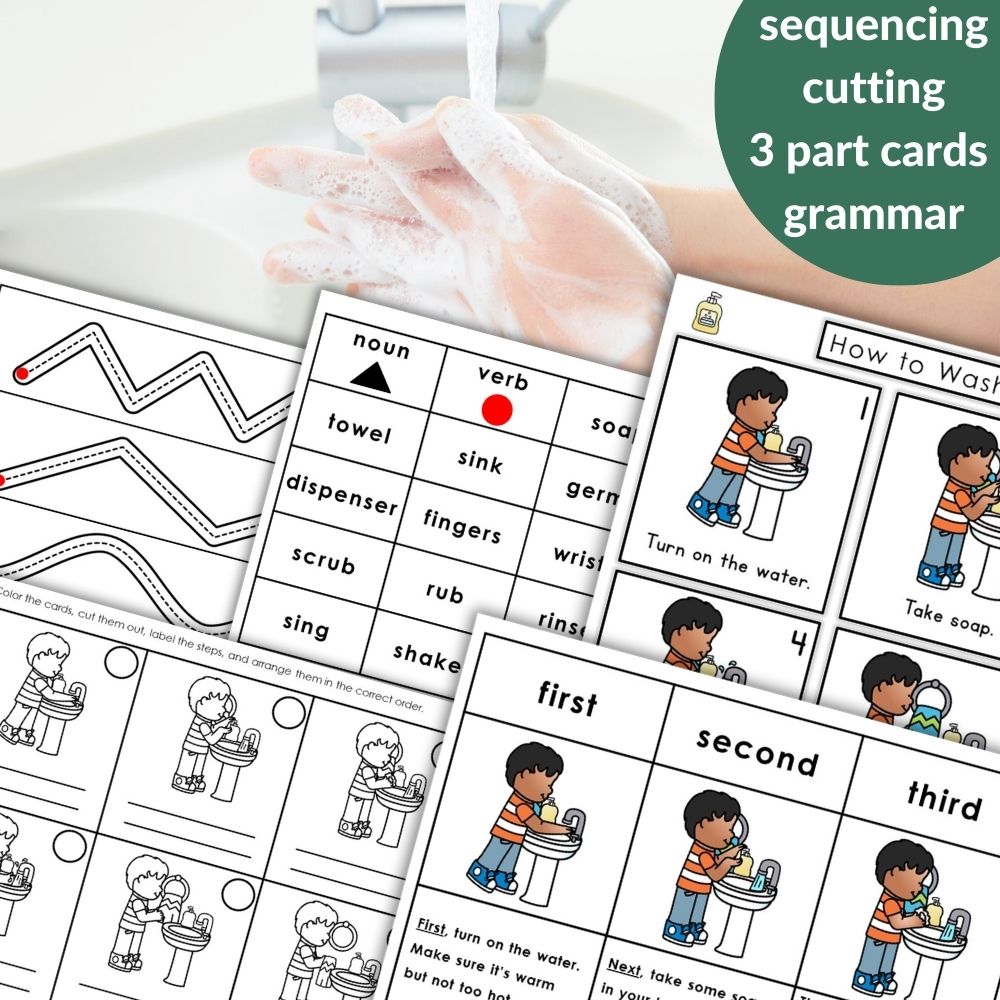
For a helpful resource, you can use our Sequencing Printable for How to Wash Your Hands, which guides children through each step with clear visuals.
How to Wash Your Hands Hygiene
This How to Wash Hands printable is designed for preschool, kindergarten, and first-third grade students, offering hands-on activities to teach proper handwashing techniques.
This printable is also available on TPT
-
 Human Body I am a Doctor Preschool and Kindergarten Pack$8.10
 -
Germs and Hygiene Pack: Information Picture Packet 3 Part Cards Sort$5.60
-
How to Build a Snowman: Sequencing Grammar Fine Motor Activities$3.10
-
Sequencing Cards: Nature Theme$2.30
-
Systems of the Human Body: 3-Part Cards Facts Blackline Master$4.30
-
Our Amazing Human Body Activity Pack Parts of the Body 3 Part Cards$6.10


About Anastasia | Anastasia is an early childhood teacher with over twenty years of experience in Montessori classrooms and homeschooling. With a Master’s in Information Science, she blends education and information design to create clear, organized, research-backed resources. As founder of Montessori Nature, she develops evidence-based, nature-inspired printables that support holistic child development and foster curiosity, independence, and a love of learning. Explore more in her shop and Teachers Pay Teachers store.