Have you ever watched a child stare at a map and ask, “Why is one part of the world all green and another all yellow?” That question opens the door to biomes – Earth’s great communities of plants, animals, and climate.
Today, I’ll share what makes each biome unique, plus simple hands‑on activities for ages 6–9 and 9–12. And I’ll show you a printable that breaks down 9 biomes into their essential parts – perfect for the Imaginary Island project.
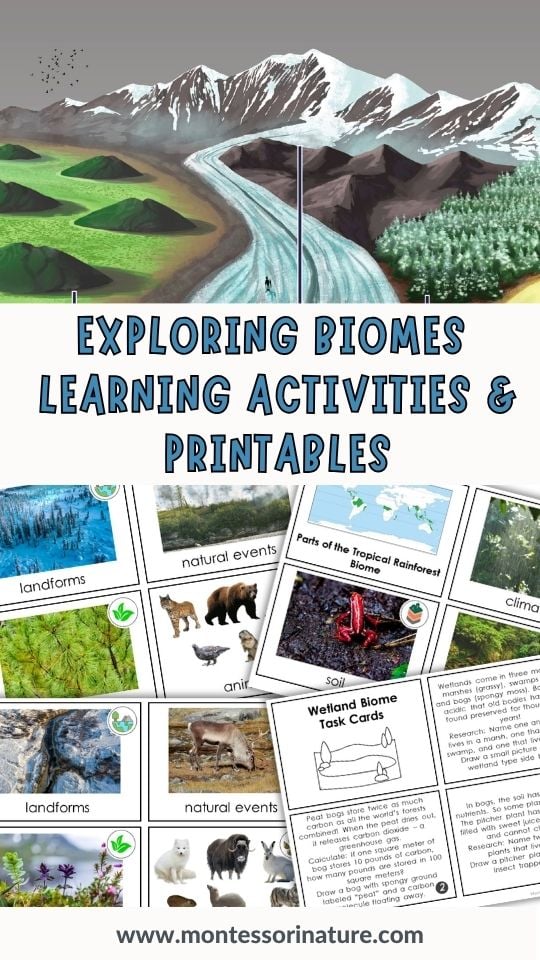
What Are the “Parts” of a Biome?
Every biome is more than just pretty scenery. Scientists study nine key parts:


Climate – Temperature and rainfall (the main driver)
Soil – Sand, clay, permafrost, or rich humus
Water – Rivers, lakes, swamps, or dry ground
Landforms – Flat plains, rolling hills, or mountains
Decomposers – Fungi, bacteria, and insects that recycle nutrients
Natural Events – Fire, flood, drought, hurricanes, or animal activity
Plants – The specific trees, grasses, or shrubs that grow there
Animals – The wildlife adapted to that biome
People – How humans live, farm, or build in that region
When children learn these nine parts, they don’t just memorize “the desert is dry.” They understand why it’s dry (climate), what lives there (plants and animals), how the soil behaves, and how people survive. That’s deep geography.
Hands‑On Science Activities for Ages 6–9
Activity 1: Biome in a Jar – Tundra
What you need: A small jar, pebbles, moss, ice cubes, a toy polar bear or seal (optional).
What to do: Layer pebbles, then moss. Place ice cubes on top. Cover and put in the freezer for 30 minutes. Take it out and observe – the “ground” is frozen (permafrost). Only a thin top layer might melt.
Discuss: “What happens to water in the tundra? Can trees grow with frozen ground?” (No – only mosses and small shrubs.)
Activity 2: Desert Soil Touch Test
What you need: Sand, clay, potting soil, a spray bottle.
What to do: Let the child feel dry sand (desert), sticky clay (wetland), and spongy potting soil (forest). Spray water on each. Which one holds water? (Clay holds it; sand drains quickly.)
Discuss: “Why do desert plants need long roots?” (Water drains deep down quickly.)
Activity 3: Rainforest Humidity Bag
What you need: A clear plastic bag, a damp paper towel, a small plant (optional).
What to do: Seal the damp paper towel inside the bag. Place in a sunny window. After a few hours, water droplets form on the inside – that’s humidity.
Discuss: “Why are tropical rainforests so humid?” (Warm air holds lots of water vapor from rain and plants.)
Hands‑On Science Activities for Ages 9–12
Activity 4: Ocean Biome – Build a Tide Pool
What you need: A shallow pan, sand, rocks, salt water, small plastic marine life.
What to do: Create a rocky shoreline with a depression. Add salt water. Let it sit for a day – water evaporates, leaving salt crust. Add a drop of blue food coloring to fresh water and watch it mix.
Discuss: “How do ocean animals survive changing salinity and temperature?” (Adaptations like shells, camouflage, etc.)
Activity 5: Compare Two Biomes – Venn Diagram
What you need: Two biome reference sheets (e.g., Tropical Rainforest and Taiga).
What to do: Draw a large Venn diagram. Label one side “Rainforest,” the other “Taiga.” In the middle, write what they share (e.g., have trees, animals, people). On each side, list unique features (rainforest: hot, wet, many species; taiga: cold, conifers, few species).
Discuss: “If you were an animal, which adaptations would you need for each biome?”
How the Printable Resource Brings It All Together
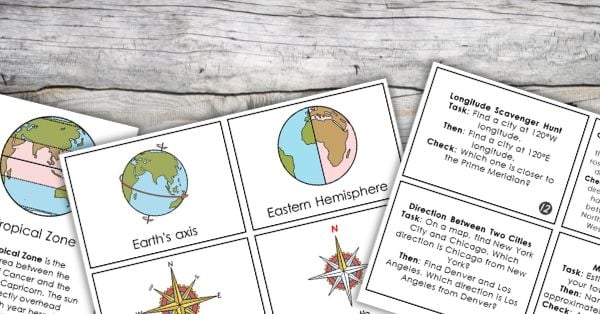
Teaching nine biomes with all nine parts could be a huge task. That’s why I created a complete set of cards for each biome.
What’s inside (for each of the 9 biomes):
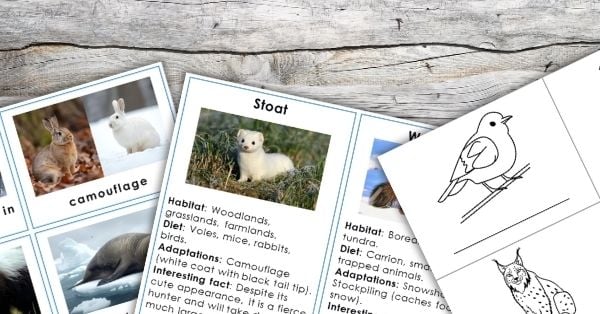
Book – labeled picture cards with short descriptions (can be bound into a reference book)
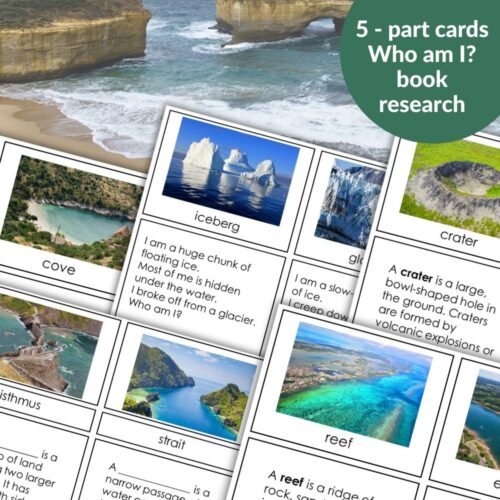
5‑part cards
“Who Am I?” riddle cards – fun, descriptive riddles for each part
Task cards – hands‑on activities for that biome
How to use it with different ages:
Ages 6–9: Introduce one biome per week. Use the book as a read‑aloud. Play “Who Am I?” by reading the riddle and having the child find the matching picture. For task cards, choose one simple activity (e.g., desert sand touch test).
Ages 9–12: Give them all nine biomes at once or in groups of three. Let them work independently with the cloze cards for self‑testing. Use the task cards as small group investigations. Have them create a comparison chart of the nine parts across three biomes.
How it connects to the Imaginary Island project:
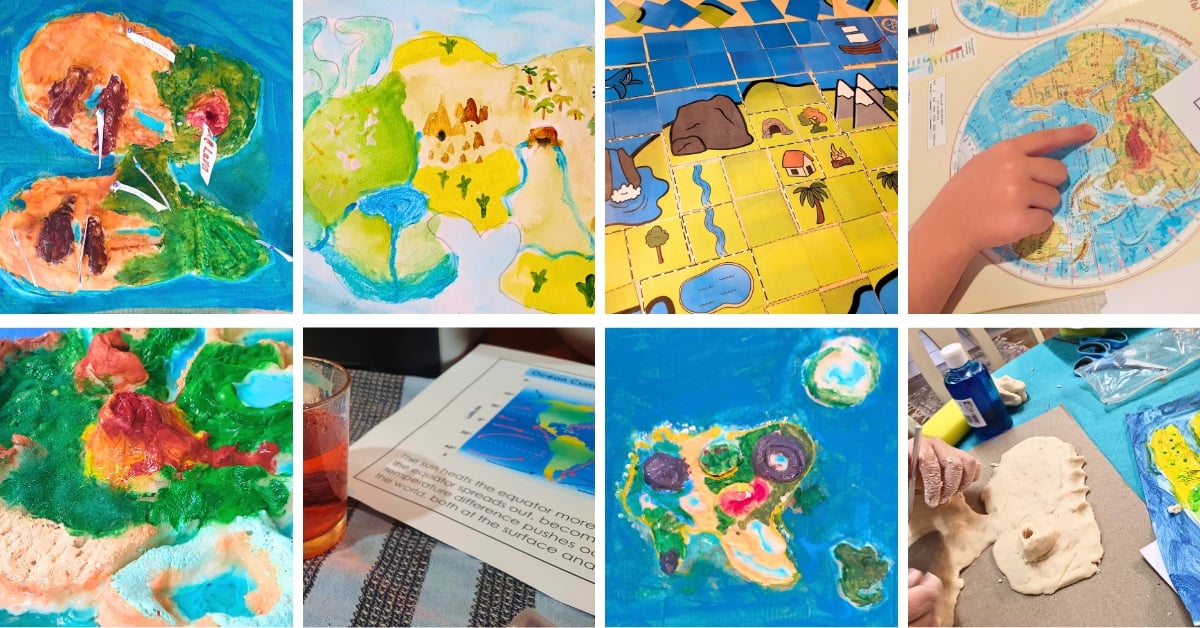
When a child builds their salt‑dough island, they first decide its latitude, climate, and ocean currents (using my other resources). Then they ask: What biomes grow here?
With these cards, they can:
Match the climate card to their island’s temperature and rainfall.
Choose soil and water features that fit.
Add plants and animals (using clay, drawings, or labels) from the biome’s picture cards.
Consider natural events – will their island have wildfires, hurricanes, or drought?
Think about people – do they live in villages, cities, or nomadic camps?
The cards turn biome selection into a rich, cross‑curricular design challenge.
Here is how it may look in practice:
“My island is at 25°N, so it’s tropical,” said Aiden, pointing to his salt‑dough creation. “That means it could be a tropical rainforest or a tropical grassland. I want a rainforest because I love monkeys and parrots.”
He pulled the Tropical Rainforest book from our shelf and flipped to the “Plants” and “Animals” cards. “I’ll put tall trees here, a river through the middle, and decomposers like leaf‑cutter ants.”
Then he added a small clay toucan on a branch.
That moment – when a child uses real biome science to build an imaginary world – is why I created this resource.
Biomes are not just names on a map. They are living systems of climate, soil, water, plants, animals, and people. With a few hands‑on activities and a clear set of picture cards, your students will understand what makes a desert a desert and a rainforest a rainforest. And when they build their own Imaginary Island, they will choose its biomes with confidence and joy.
This printable is also available on TPT
You Might Also Enjoy
-
 Climate Zones 5 Part Cards and Book$3.10
 -
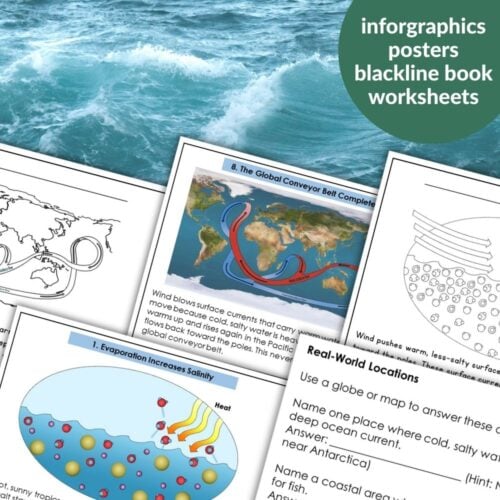
Ocean Currents and Climate 5 Part Cards and Book$3.60
-
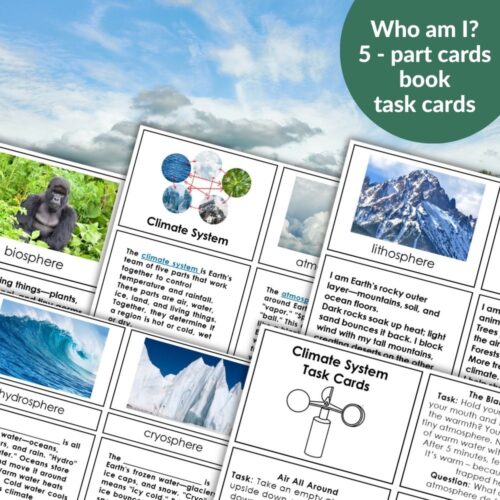
Earth’s Climate System 5 Part Cards and Book$3.60
-
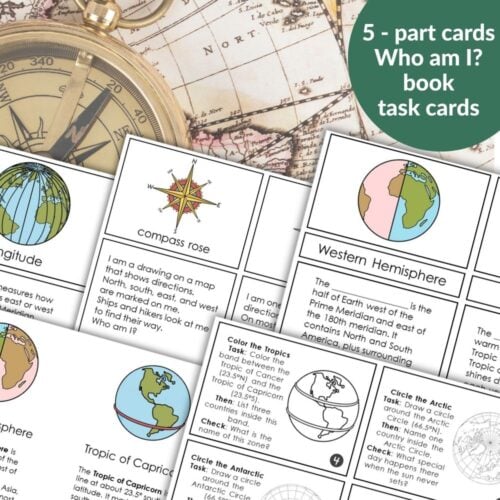
Latitude and Longitude: Geographic Coordinate System 5 Part Cards and Book$7.10
-
Inland and Coastal Features: Advanced Land and Water Forms 5 Part Cards and Book$8.10
-
Biomes of the World Maps Animals Student Research Forms$9.60


About Anastasia | Anastasia is an early childhood teacher with over twenty years of experience in Montessori classrooms and homeschooling. With a Master’s in Information Science, she blends education and information design to create clear, organized, research-backed resources. As founder of Montessori Nature, she develops evidence-based, nature-inspired printables that support holistic child development and foster curiosity, independence, and a love of learning. Explore more in her shop and Teachers Pay Teachers store.