
Before children can determin the weather on their Imaginary Island, they need to understand what shapes climate. It guides children to apply real climate science to their clay island, turning a creative project into a meaningful earth science lesson.
Included Spheres
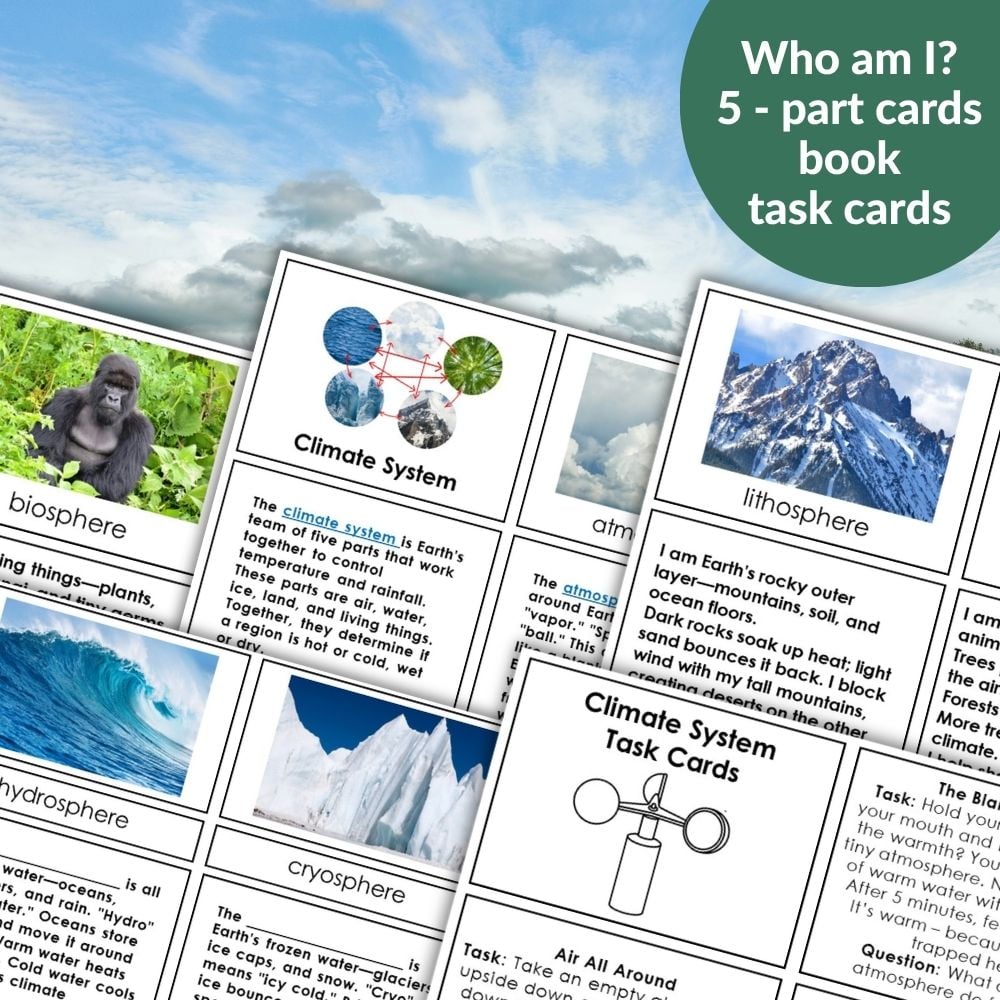
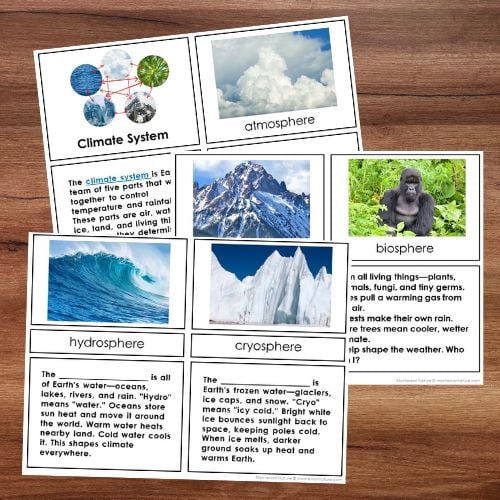
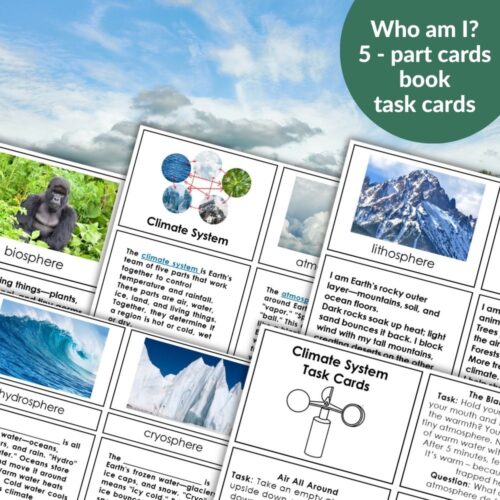
Atmosphere – the blanket of air that traps heat
Hydrosphere – all of Earth’s water (oceans, lakes, rivers)
Cryosphere – Earth’s frozen water (glaciers, ice caps, snow)
Lithosphere – Earth’s rocky outer layer (mountains, soil, ocean floors)
Biosphere – all living things (plants, animals, fungi, germs)
What’s Included
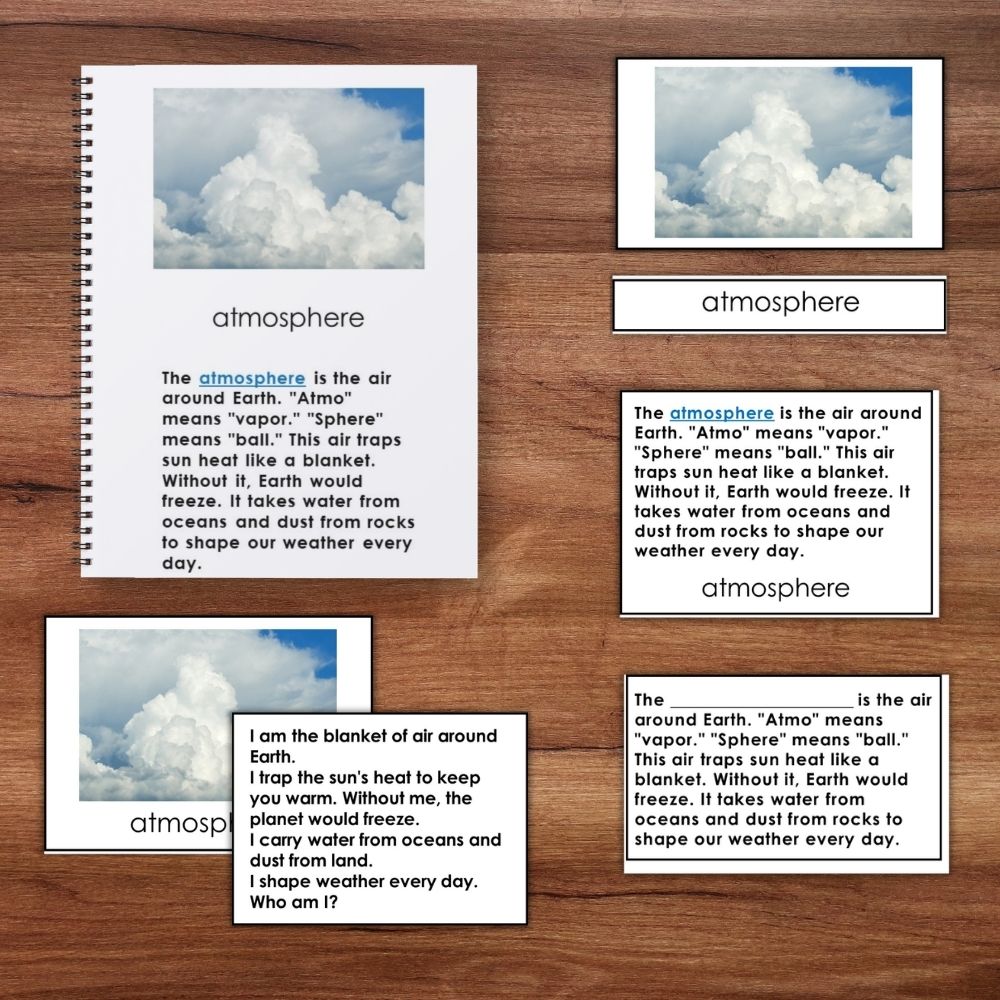
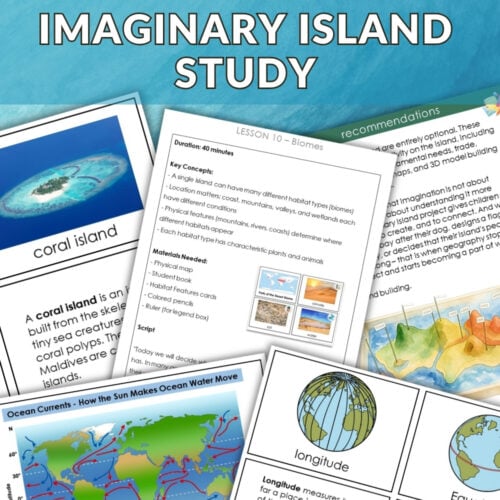
Picture card
Label card
Control card (picture + label) – for self‑correction
Definition card – short, clear definition (45 words)
Cloze card – definition with the main term removed (fill‑in‑the‑blank)
Plus:
“Who Am I?” riddle cards – riddles for each sphere. Great for games, reviews, and independent self‑checking.
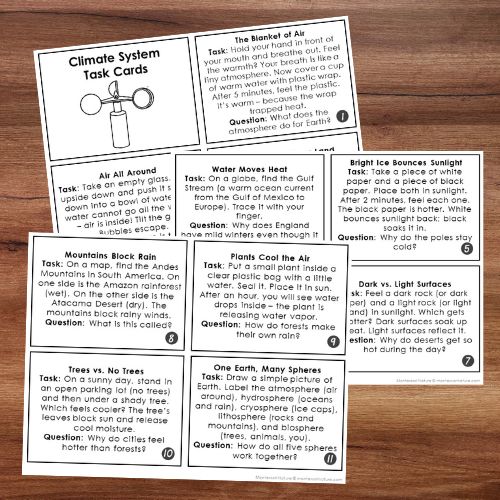
Task cards – 11 hands‑on science activities that bring each sphere to life (e.g., “Cover a cup of warm water with plastic wrap – that’s the atmosphere trapping heat”).
Book – easy to assemble: simply print, fold each sheet in half, and staple along the spine. No cutting or complex binding required. The book contains pictures, terms, and definitions – perfect for independent reference.
How to Use
Children match picture, label, and definition, then fill in the missing term on the cloze card. They self‑correct using the control cards (picture+label and definition+word).
Use the riddle cards as a guessing game or review.
Students refer to the book while building and labeling their Imaginary Island (e.g., adding an atmosphere layer, a warm ocean current, or a forest that makes rain).
Complete task cards as hands‑on science explorations – individually, in pairs, or as small groups.
Why Teachers Use This
Complete 5‑part card system for deep vocabulary work
Book prints and folds instantly – no complex binding
Works for ages 6–9 and 9–12
Supports independent work and self‑checking
Task cards turn abstract concepts into concrete experiments
“Who Am I?” riddles make learning fun and interactive
What Children Gain
A strong vocabulary for talking about Earth’s climate systems
Understanding of how air, water, ice, land, and living things shape weather
Confidence to explain their Imaginary Island’s climate using real earth science





Reviews
There are no reviews yet