Imaginary Island

  • Climate Zones

    Climate Zones

    $3.00 Add to cart

    Introduce Earth’s three main climate zones – Polar, Temperate, and Tropical. This Montessori-inspired set helps children understand how latitude affects temperature and weather. Perfect for the Imaginary Island project – children can decide which climate zone their island belongs to.

  • Ocean Currents and Climate

    Ocean Currents and Climate

    $4.00 Add to cart

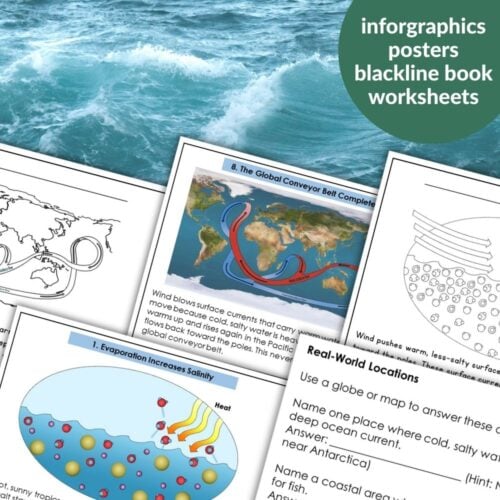
    Help your students discover how ocean currents shape climate around the world – from the sun‑drenched equator to the freezing poles. This Montessori-inspired printable explains key processes. Perfect for the Imaginary Island project, this resource guides children to design realistic ocean currents around their island based on its location.

  • Earth's Climate System

    Earth’s Climate System

    $4.00 Add to cart

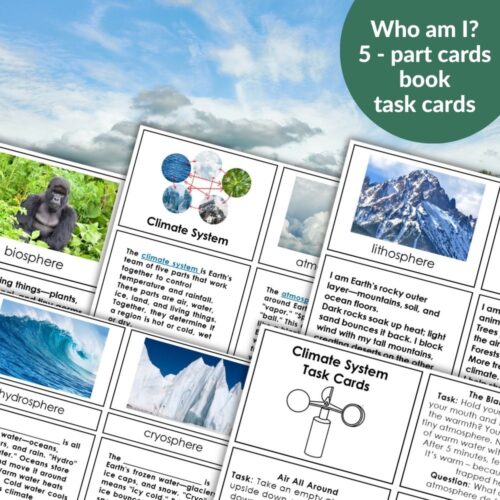
    Help your students explore Earth’s climate system – the atmosphere (air), hydrosphere (water), cryosphere (ice), lithosphere (rocks/land), and biosphere (living things) – with this Montessori-inspired printable. Perfect for the Imaginary Island project, this resource helps children determine what kind of weather and climate their island experiences based on its location, surrounding water, ice, land, and living things.

  • Latitude and Longitude: Geographic Coordinate System

    Latitude and Longitude: Geographic Coordinate System

    $8.00 Add to cart

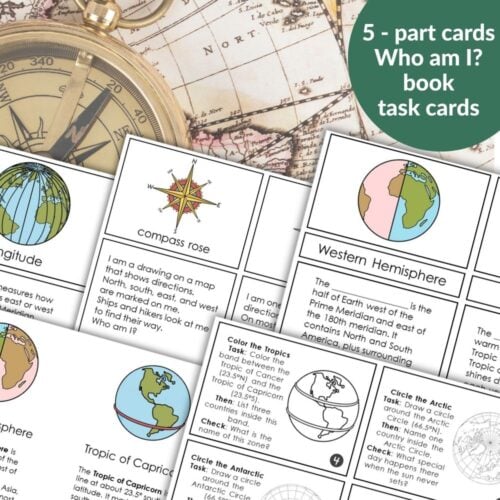
    Help your students master latitude and longitude, the Equator, Prime Meridian, hemispheres, poles, Tropics, Arctic and Antarctic Circles, compass rose, and the Axis of Earth with this Montessori-inspired resource. It contains 5-part cards and a corresponding book. Perfect for the Imaginary Island project, this resource gives children the tools to place their island accurately on a global grid and understand its climate.

  • Mountains and River Landforms

    Mountains and River Landforms

    $5.50 Add to cart

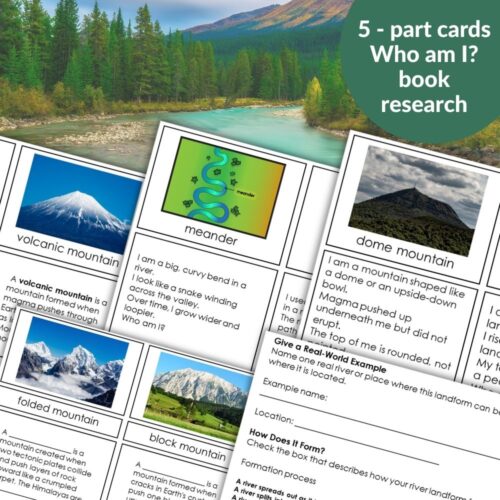
    This Mountains and River Landforms resource supports the Montessori Imaginary Island project in both earth science and geography. It introduces 6 mountain types and 9 river landforms through 5‑part cards, a book, riddles, and student research worksheets. Before children can build their Imaginary Island, they need to know what kinds of mountains and rivers to sculpt.

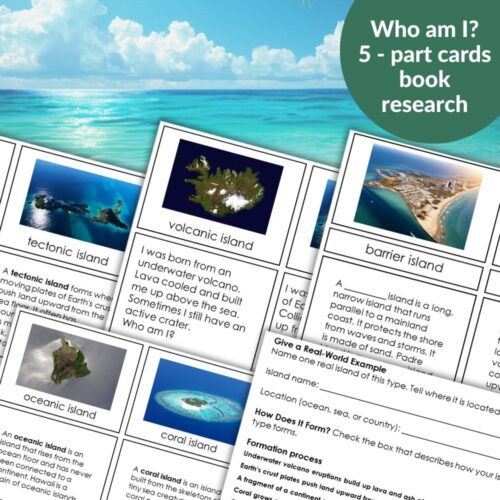
  • Discover our Types of Islands Cards and Research Worksheet, featuring descriptions and images of volcanic, tidal, barrier, oceanic, and coral islands on a colorful tropical background—ideal for classroom learning and research activities. Montessori Nature Printables

    Types of Islands

    $4.00 Add to cart

    This Types of Islands resource supports the Montessori Imaginary Island project in both earth science and geography. It introduces 10 island types through 5‑part cards, a book, riddles, and a student research worksheet. Before children can create their imaginary Island, they can decide what kind of island it is. Is that a volcanic island or a coral atoll? This resource gives them the answers.

  • Inland and Coastal Features

    Inland and Coastal Features

    $8.00 Add to cart

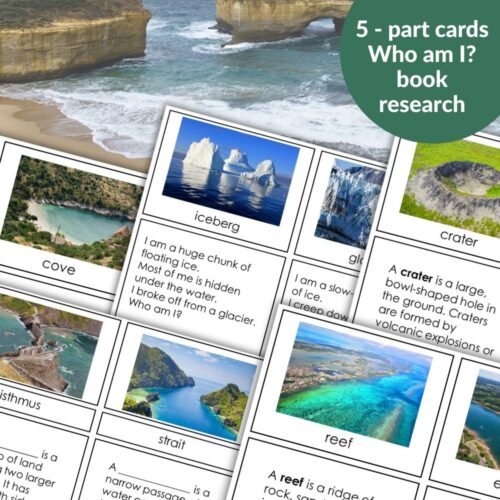
    This Land and Water Forms resource supports the Montessori Imaginary Island project. It introduces 39 inland and coastal features through 5‑part cards, a book, riddles, and a research worksheet. Before children can map their Imaginary Island, they need to know what they are drawing. Is that a peninsula or a cape? A bay or a gulf? A strait or an isthmus? This resource gives them the answers.

  • Build an Island Puzzle and Follow-Up Work includes educational geography worksheets with illustrated islands, landforms, and vocabulary cards arranged on an ocean background—ideal for puzzle activities or follow-up work. Montessori Nature Printables

    Build an Island Puzzle and Follow-Up Work

    $6.00 Add to cart

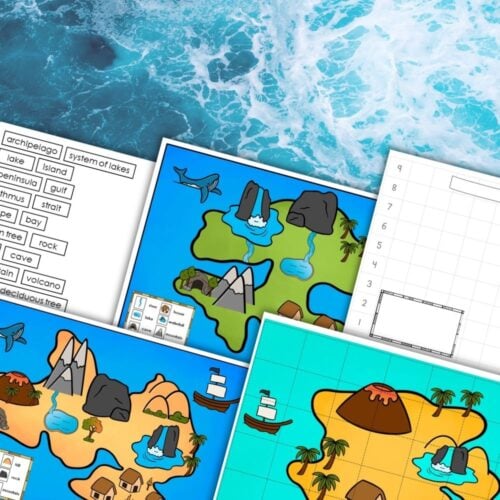
    Reinforce land and water forms with this Build an Island puzzle, great as an end of the year hands on assessment or a focused follow-up for land and water forms work. This resource bridges concrete geography materials and the more abstract Imaginary Island lesson. Children build a color puzzle directly onto a black-and-white control sheet, then add labels for each geographical feature. A graph paper worksheet invites students to draw their own labeled island and legend.

0