
This resource builds vocabulary, classification skills, and a deep understanding of how living and non‑living things thrive in Earth’s water‑saturated, nutrient‑rich transitional zones between land and water.
How This Connects to the Imaginary Island Project
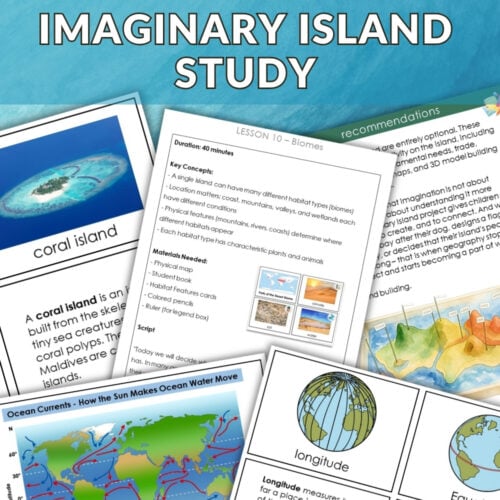
After children place their Imaginary Island on a map and determine its climate zone (using the Climate Zones printable), they decide which biomes belong there. For low‑lying, water‑logged areas along coasts, river deltas, or lake edges – where soil is saturated year‑round – the wetland biome is a natural fit.
Once the biome is identified, this printable helps children populate their island with realistic, interdependent features.
Children then sculpt or draw these features onto their salt‑dough island – adding a cattail‑fringed marsh, a beaver pond, a mangrove forest, or a peat bog – turning biome knowledge into a living, breathing map.
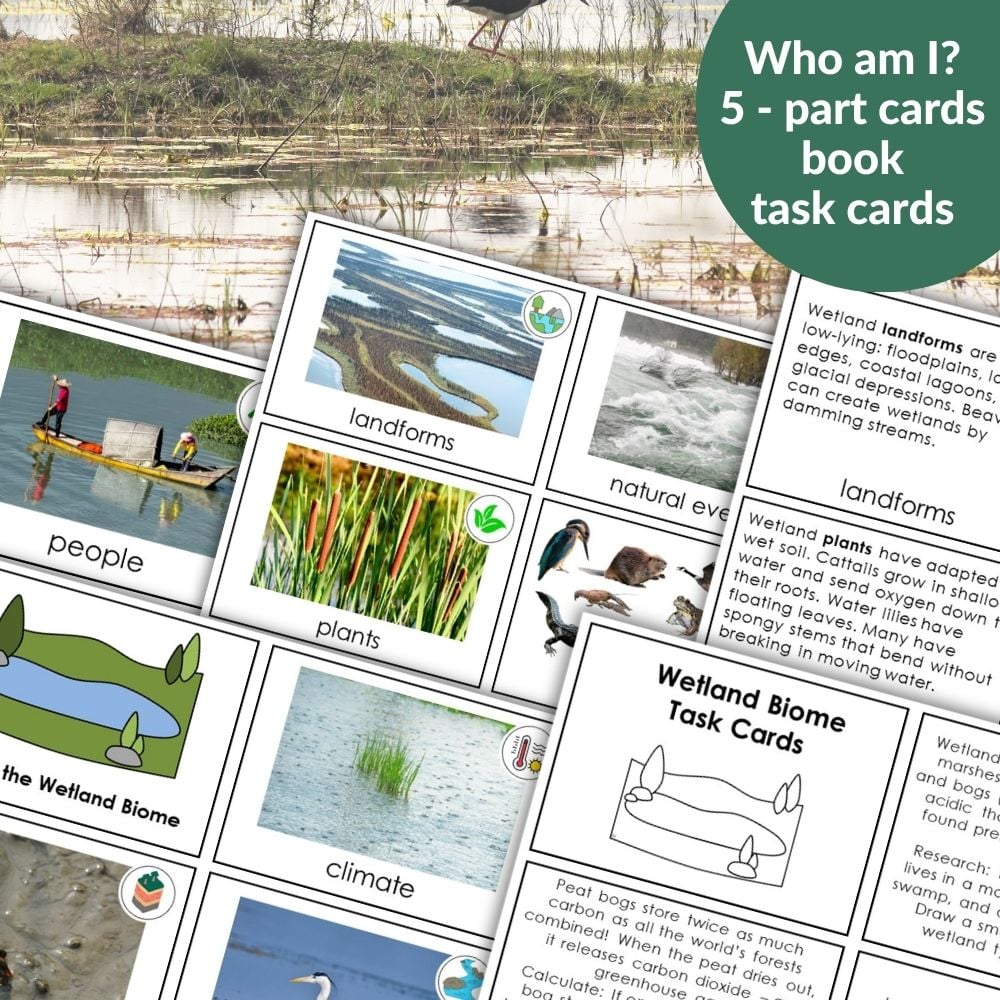
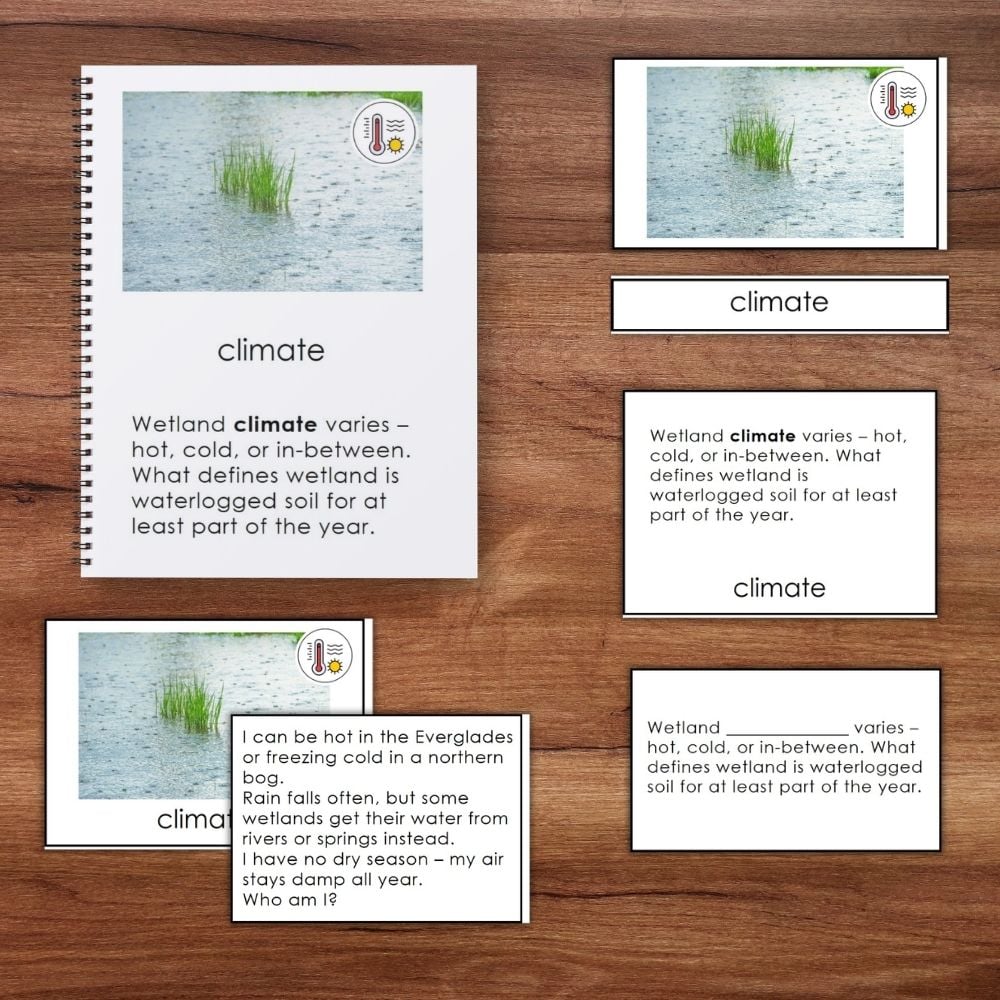
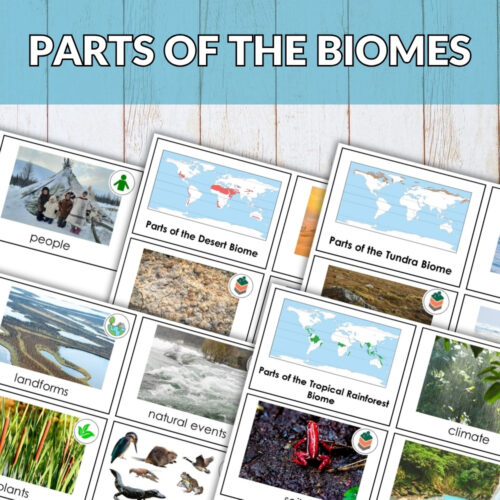
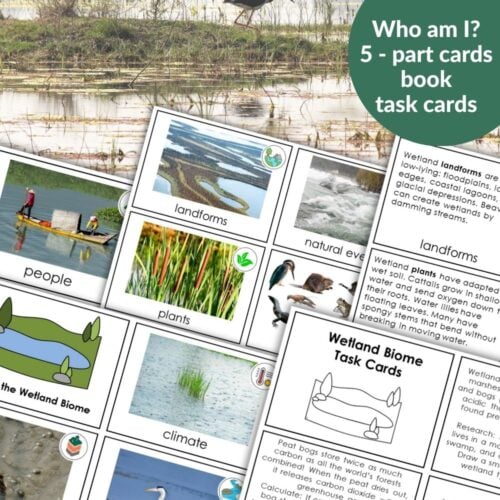
What’s Included (5‑Part Cards)
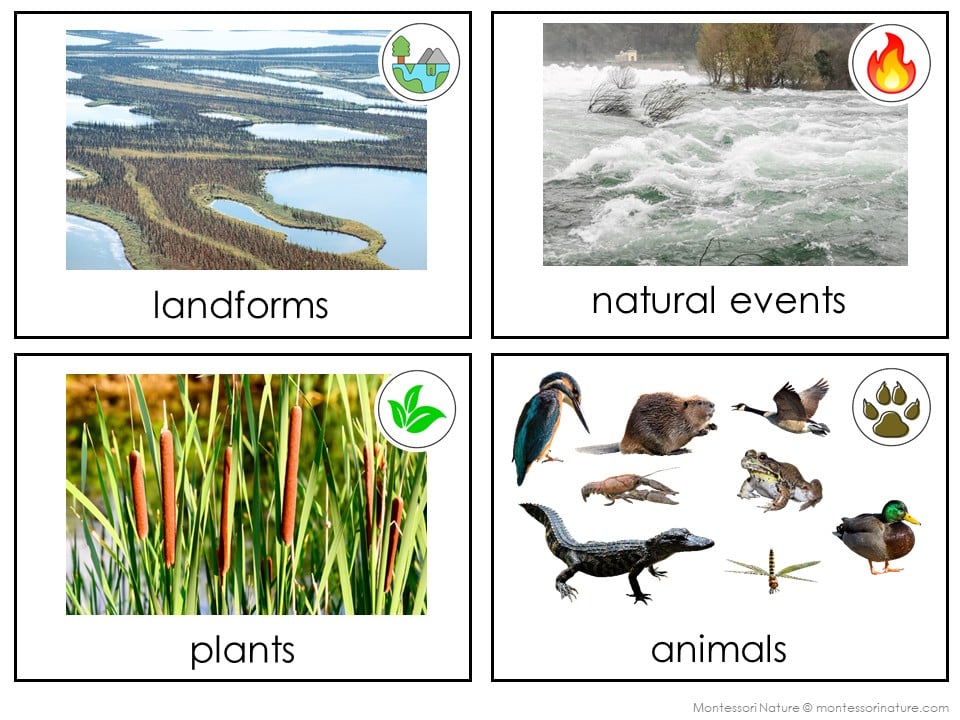
Picture card
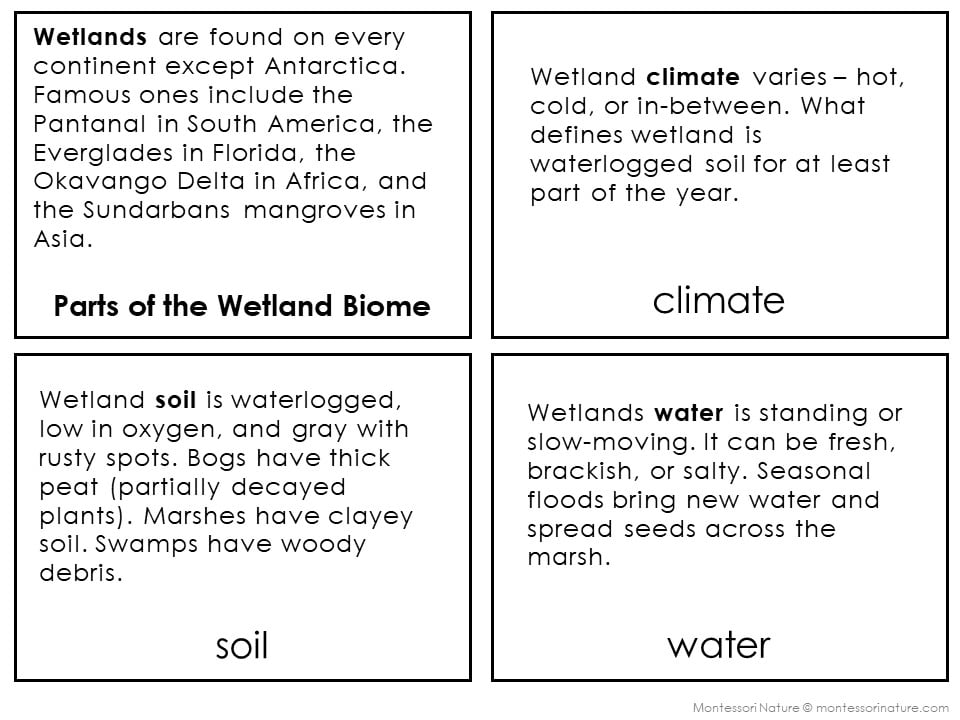
Label card
Control card (picture + label) – for self‑correction
Definition card – short, clear definition
Cloze card – definition with the main term removed (fill‑in‑the‑blank)
Plus:
“Who Am I?” riddle cards – riddles for each part. Great for games and review.
Sorting activity – children sort cards into living (biotic and non‑living (abiotic). A control sheet is included for self‑correction.
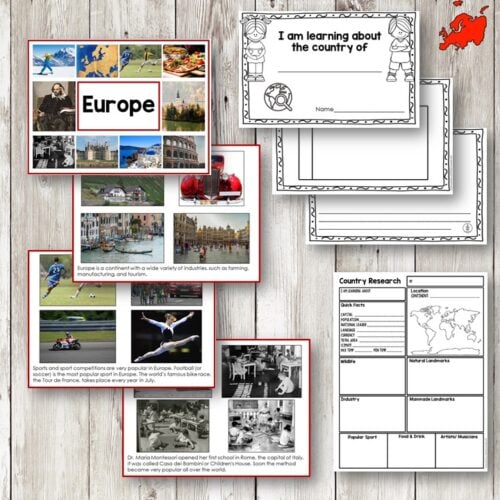
Book – easy to assemble: simply print, fold each sheet in half, and staple along the spine. No cutting or complex binding required. The book contains pictures, terms, and definitions – perfect for independent reference.
How to Use
Introduce the wetland biome using the book or control cards.
Match picture, label, and definition – children use the 5‑part cards and self‑correct.
Play “Who Am I?” riddles as a review or guessing game.
Complete the sorting activity (living vs. non‑living) and check with the control sheet.
Apply to the Imaginary Island – children add wetland features to their clay or drawn map (a marsh along a river delta, a mangrove coast, or a beaver pond).
Use the printed book as a lasting reference on the geography shelf.
Why Teachers Love It
✅ Complete 5‑part card system for deep vocabulary work
✅ Book prints and folds instantly – no complex binding
✅ Sorting activity reinforces biotic vs. abiotic concepts
✅ Works for mixed‑age classrooms (ages 6–9 and 9–12)
✅ Supports independent work and self‑checking
✅ “Who Am I?” riddles make learning fun and interactive
✅ Directly supports the Imaginary Island project flow (climate → biome → features)
What Children Gain
A strong vocabulary for talking about the wetland biome (marshes, swamps, bogs, fens)
Understanding of how climate, soil, water, landforms, decomposers, natural events, plants, animals, and people interact in water‑saturated environments
Ability to classify biome parts as living or non‑living
Confidence to populate their Imaginary Island with realistic, water‑loving features





Reviews
There are no reviews yet