
This resource builds vocabulary, critical thinking, and a deep understanding of how different societies organize power and leadership.
What’s Included
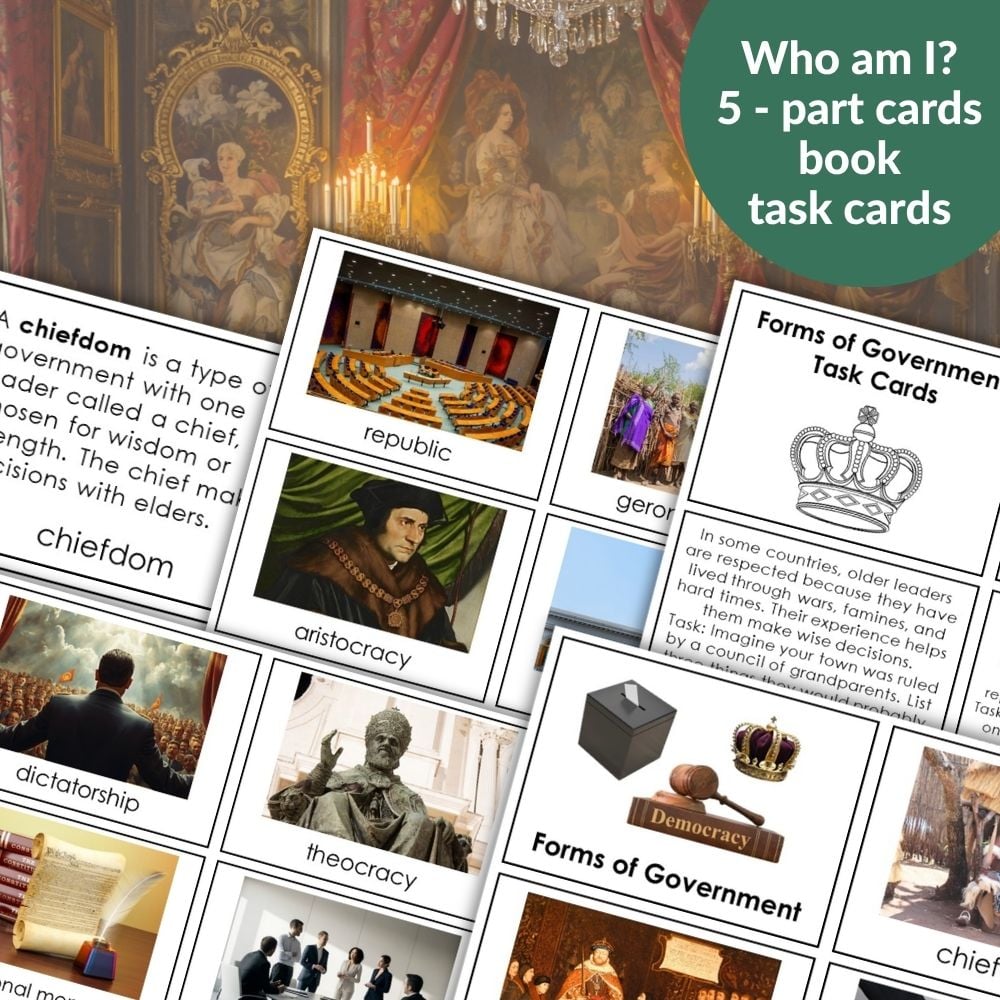
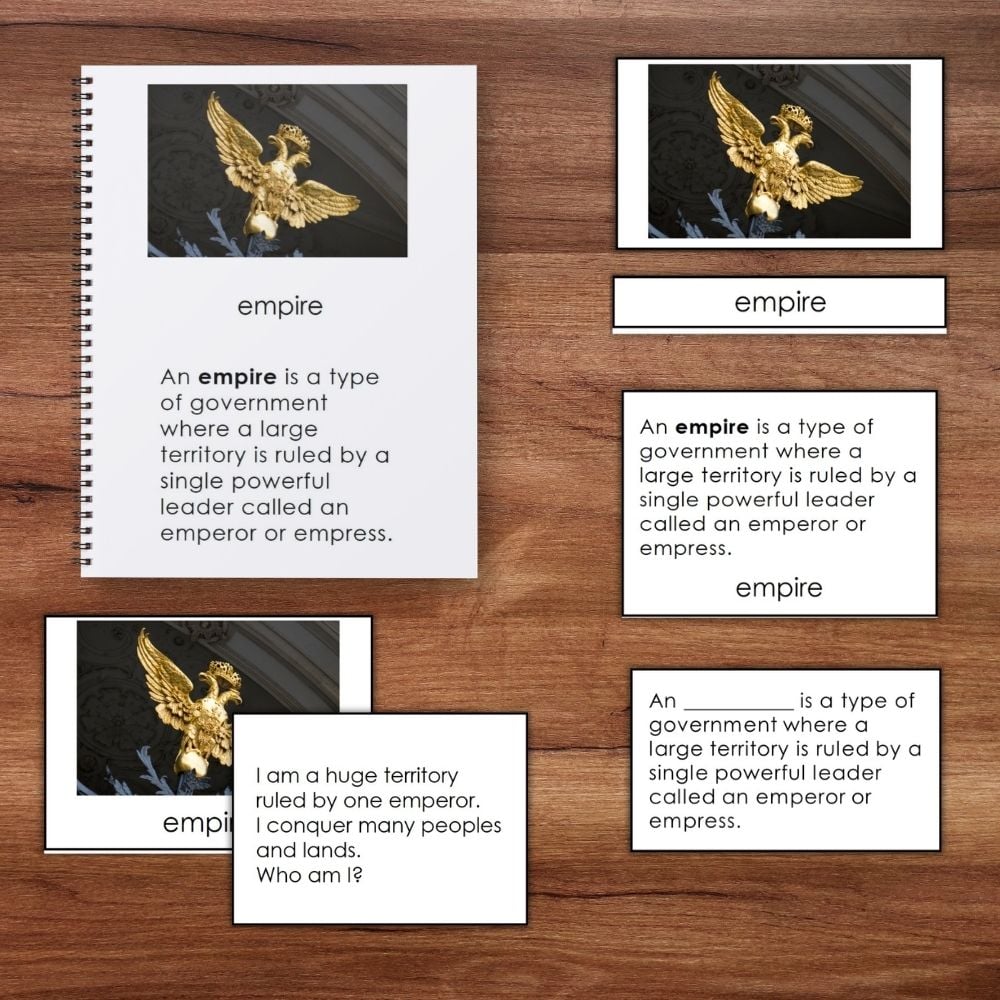
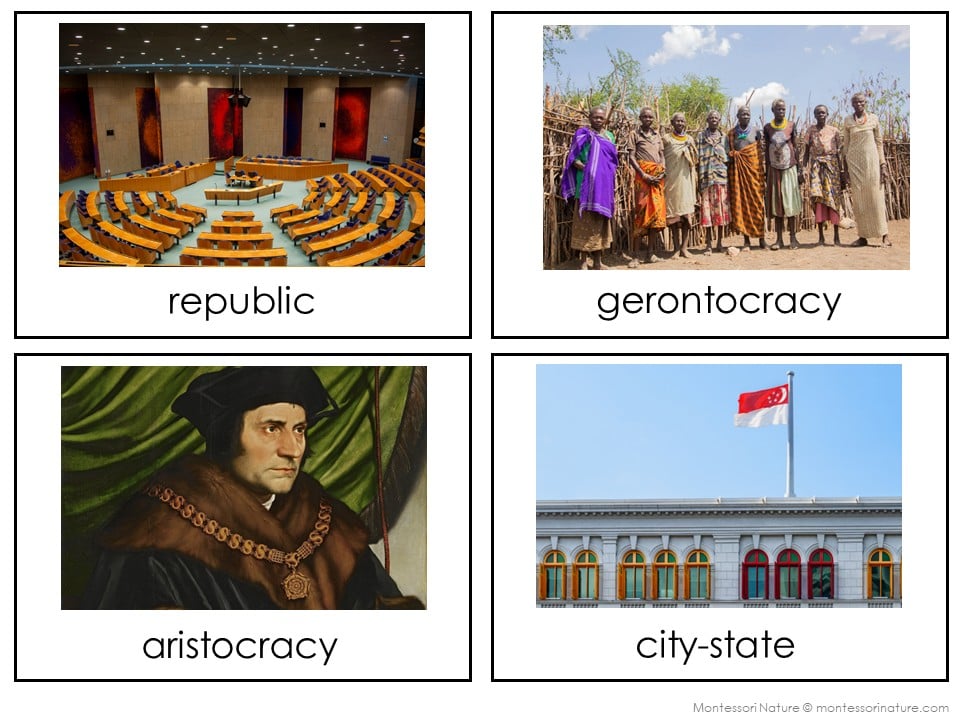
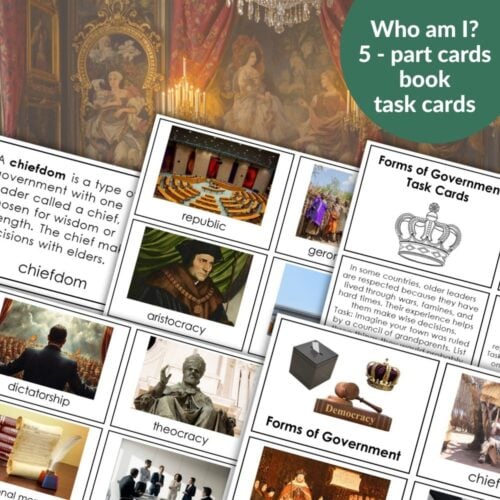
• Picture cards – clear symbolic illustrations
• Label cards – matching terms
• Control cards (picture + label) – for self‑correction
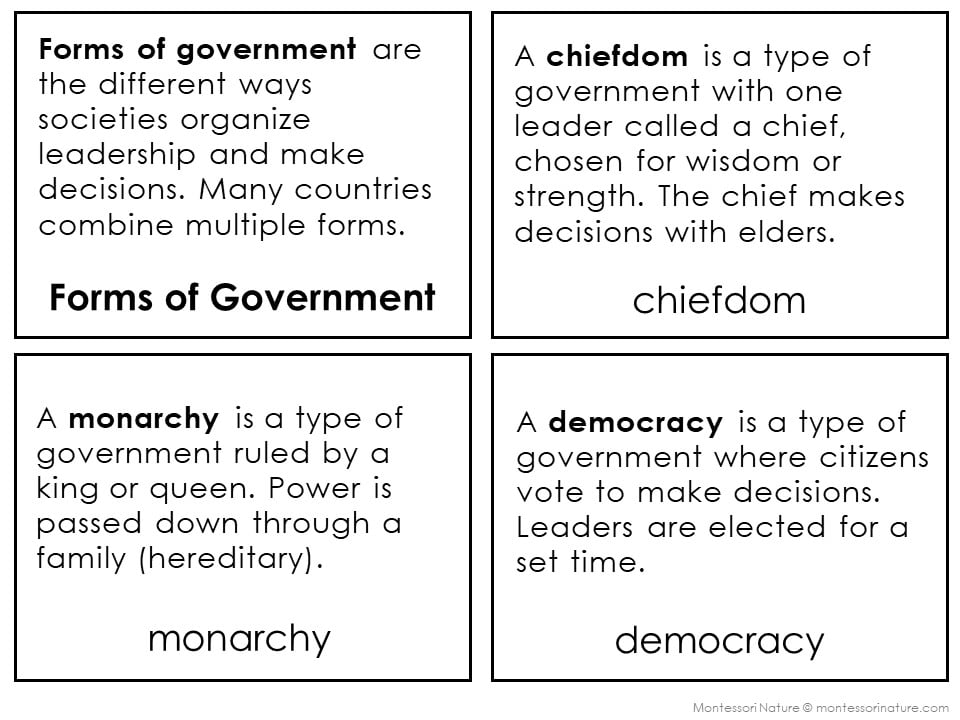
• Definition cards – explanations
• Cloze cards – definitions with the main term removed (fill‑in‑the‑blank)
Plus:
• “Who Am I?” riddle cards – riddles for each form of government. Great for games and review.
• Task cards – hands‑on activities that apply civics concepts.
• Book – easy to assemble: simply print, fold each sheet in half, and staple along the spine. No cutting or complex binding required. The book contains pictures, terms, and definitions – perfect for independent reference.
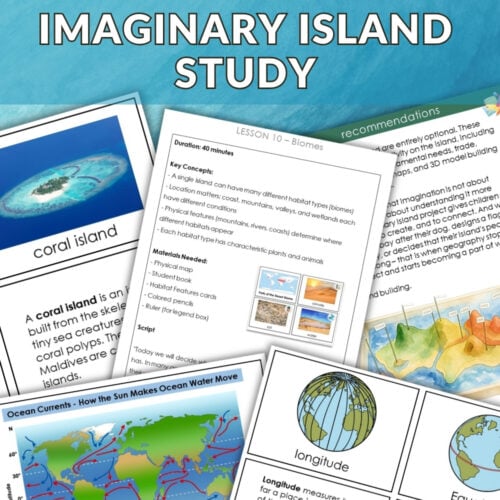
How This Connects to the Imaginary Island Project
After children build their Imaginary Island and decide its physical features, climate zones, and biomes, they can consider: Who rules this island? This printable helps children choose and understand a form of government for their island.
Children can then declare their Imaginary Island a democracy, a monarchy, or even a gerontocracy – and explain why they chose that form of government.
Best Ways to Use
Ages 6–9
• Introduce only 4–6 forms of government at a time. Start with Chiefdom, Monarchy, Democracy, Dictatorship, and Theocracy – these have clear, distinct characteristics.
• Use the picture cards and label cards for matching. Read the short definition aloud together.
• For task cards, choose simple compare/contrast questions (e.g., “Who has more power – a king or a dictator?”)
• During Imaginary Island: Ask the child to choose one form of government for their island and give one reason why.
Ages 9–12
• Introduce all 14 forms of government at once.
• Use the 5‑part cards independently – match picture, label, and definition, then fill in the cloze cards. Self‑correct with control cards.
• Use the “Who Am I?” riddles for pair work or solo review.
• Complete task cards that require research.
• During Imaginary Island: Require a written “constitution” – a short document explaining how their island is governed, who holds power, and how leaders are chosen.
What Children Gain
• A complete vocabulary for 14 forms of government
• Understanding of how different governments organize power
• Ability to compare and contrast government types
• Hands‑on practice with task cards
• Confidence to design a government for their Imaginary Island



Reviews
There are no reviews yet