Why spontaneous, hands-on work with real purpose leads children to discover their own value
There is a passage in Childhood to Adolescence that captures something I’ve witnessed hundreds of times but never had the words for until Montessori gave them to me.
She writes:
Being active with one’s own hands, having a determined practical aim to reach, is what really gives inner discipline. When the hand perfects itself in a work chosen spontaneously and the will to succeed is born together with the will to overcome difficulties or obstacles; it is then that something which differs from intellectual learning arises. The realisation of one’s own value is born in the consciousness.
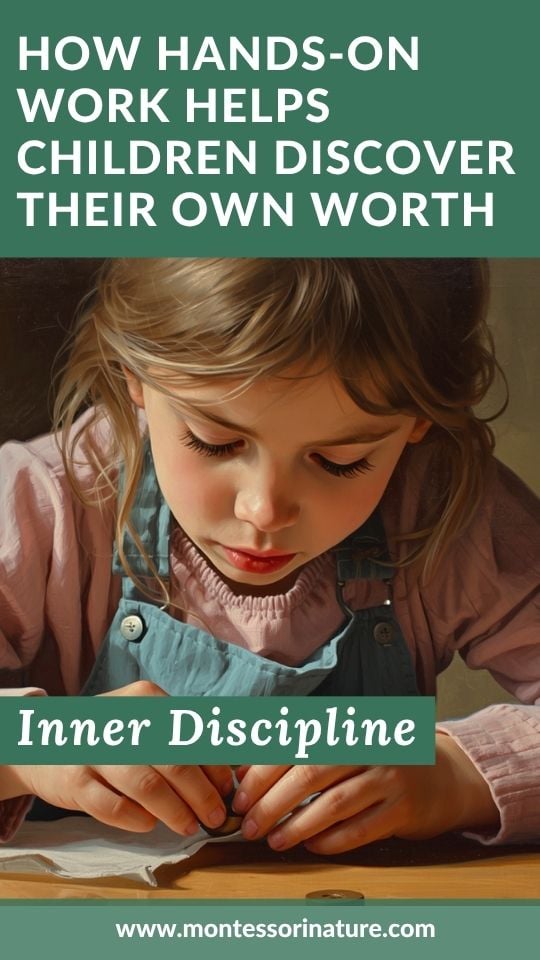

I’ve watched this happen. A child struggling to thread a needle. A child determined to carry a full pitcher across the room. A child returning to the same puzzle day after day until it clicks.
In those moments, something shifts. Not just in what the child can do, but in who the child feels themselves to be.
Montessori names it so precisely: the realisation of one’s own value is born in the consciousness.
Not given by a teacher. Not awarded by a parent. Not earned through praise or prizes. Born. From within. Through the hands, the will, the spontaneous choice, the struggle, the overcoming.
This is not intellectual learning. This is something deeper. This is the child building the inner knowledge: I am capable. I can persevere. I matter.
So how do we create conditions for this to happen? How do we invite children into work that awakens this realisation?
Here are some steps I’ve been gathering.
1. Let Children Work With Their Own Hands
Montessori begins with the hand. Not the worksheet. Not the screen. Not the lecture. The hand. Real, physical, tactile engagement with the material world.
Actionable step this week:
Look at your child’s day. How much time is spent passively receiving information versus actively working with their hands? If the balance feels off, shift it.
Examples by age:
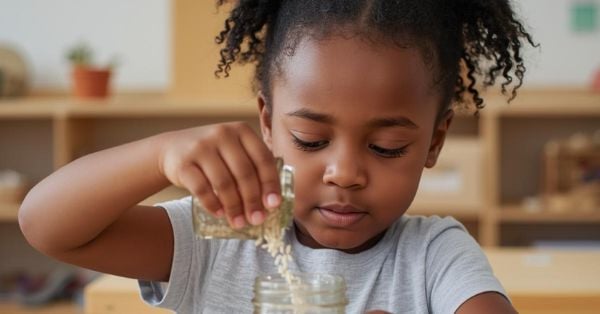
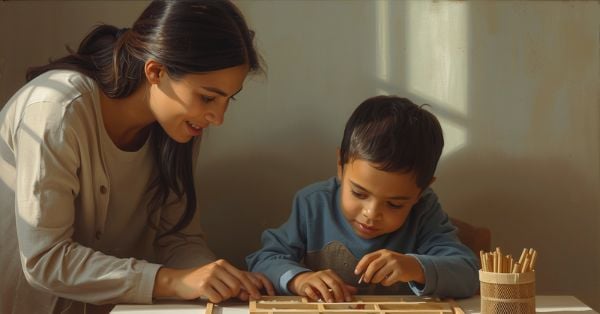
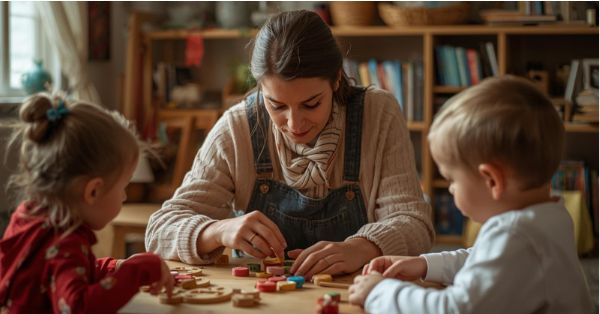
- Ages 3–6: Offer real materials for the hands—a polishing cloth, a watering can, a set of lock and key, a basket of fabric to fold. The hand learns through doing.
- Ages 6–9: Invite hands-on projects—sewing a button, building a birdhouse, kneading bread dough, weaving on a small loom. The hand refines itself through purposeful work.
- Ages 9–12: Encourage hand-centered skills—whittling soap or wood, knitting, repairing a bicycle chain, cooking a meal from scratch, building a model. The hand becomes an instrument of the will.
2. Ensure the Work Has a Determined Practical Aim
Montessori says the work must have “a determined practical aim to reach.” Not random activity. Not busywork. Something real that needs to be accomplished.
Actionable step this week:
Before offering an activity, ask yourself: Does this work have a clear, practical goal that the child can understand and complete?
Examples by age:
- Ages 3–6 (Instead of random water play): “Let’s water the plants. Each plant needs one small pitcher full.” The aim is clear: keep the plants alive.
- Ages 6–9 (Instead of a craft kit with no purpose): “Let’s make a gift for Grandma’s birthday.” The aim is real: create something for someone they love.
- Ages 9–12 (Instead of a generic science worksheet): “Let’s fix the squeaky hinge on the garden gate.” The aim is tangible: solve a real problem in the home.
Practical aims connect the child to the real world. That connection is deeply satisfying.
3. Protect Spontaneous Choice
The work must be “chosen spontaneously.” Not assigned. Not scheduled. Not rewarded. Chosen by the child because something inside them says this one.
Actionable step this week:
Create a prepared environment with a variety of meaningful work. Then step back. Let the child choose. Resist the urge to suggest, direct, or “curate” their choices.
Examples by age:
- Ages 3–6 (Instead of “Let’s do the puzzle now”): Watch. They will pull the puzzle off the shelf when they are ready. Your job is to keep the shelf inviting, not to direct traffic.
- Ages 6–9 (Instead of “You should practice your handwriting”): Let them choose between handwriting, reading, math, art, or practical work. Trust that their inner guide knows what they need.
- Ages 9–12 (Instead of “Here’s your project assignment”): Offer a range of possible projects or let them propose their own. Spontaneous choice fuels the will to succeed.
A child who chooses their own work is a child who is investing their own will. That investment changes everything.
4. Welcome the Will to Overcome Difficulties
Montessori observes that “the will to succeed is born together with the will to overcome difficulties or obstacles.” Struggle is not a sign of failure. Struggle is the birthplace of the will.
Actionable step this week:
When you see a child struggling, resist the urge to rescue. Stay nearby. Offer quiet presence. Let them wrestle with the difficulty. Trust that the struggle is doing something important.
Examples by age:
- Ages 3–6 (Child struggling to button a coat): Don’t jump in. Let them try. Let them feel the frustration. When they finally succeed, that success is theirs in a way it never could be if you had done it for them.
- Ages 6–9 (Child struggling with a math problem): Don’t give the answer. Ask questions. “What have you tried so far?” “What might happen if you tried this?” Let the child find the path themselves.
- Ages 9–12 (Child struggling to master a new skill—tying knots, baking bread, coding): Let them fail. Let them try again. Let them research, ask, experiment. The overcoming builds something no easy success ever could.
The will to overcome is a muscle. It grows only when it is used.
5 Recognise That This Is Not Intellectual Learning
Montessori makes a striking distinction. Something different from intellectual learning arises when the hand works, the will engages, and obstacles are overcome. This is deeper than facts or skills.
Actionable step this week:
Notice the difference in your child between times of intellectual learning (reading, memorising, worksheets) and times of embodied, purposeful work. Which one seems to light them up from inside?
Examples by age:
- Ages 3–6: A child may forget a “lesson” on colors but will remember for life the feeling of matching colored tablets again and again until they get it right. That feeling is not intellectual. It’s existential.
- Ages 6–9: A child may complete a grammar worksheet and forget it by dinner. But the child who writes a real letter to a grandparent? That stays. The work had meaning beyond the intellect.
- Ages 9–12: A child may memorise historical dates for a test and promptly forget them. But the child who builds a model of an ancient Roman aqueduct? That child knows something in their bones.
Intellectual learning fills the mind. This deeper learning fills the self.
6. Watch for the Realisation of Value Being Born
Montessori’s ultimate aim is breathtaking: “The realisation of one’s own value is born in the consciousness.” The child comes to know, deep down, I am worth something. I can do hard things. I matter.
Actionable step this week:
Pay attention to the moments after a child has struggled and succeeded. Look at their face. Listen to their voice. Notice the quiet pride that doesn’t need applause.
Examples by age:
- Ages 3–6 (After pouring water without spilling): The child may look at the full cup, then at you, with a quiet smile. No words needed. They know. They did that.
- Ages 6–9 (After completing a challenging sewing project): The child holds up the finished piece. “I made this.” Not for a grade. Not for a reward. For themselves. That statement is the realisation of value.
- Ages 9–12 (After fixing something broken): The child steps back and surveys their work—the repaired shelf, the mended toy, the cleaned tool. Something shifts in their posture. They stand taller. They have seen their own worth reflected in their work.
These moments are not guaranteed. They cannot be forced. But they can be invited. And when they come, they are sacred.
7. Trust the Process, Even When It’s Slow
Montessori’s vision takes time. The child must repeat, struggle, fail, try again. The realisation of value does not happen in a single lesson. It accumulates, layer by layer, over months and years.
Actionable step this week:
When you feel impatient with a child’s pace—when you want them to “just get it already”—remind yourself: The realisation of value cannot be rushed. It grows in its own time.
Examples by age:
- Ages 3–6 (Repeating the same activity for the tenth time): This is not boredom. This is mastery unfolding. Each repetition adds a layer to the child’s inner knowing.
- Ages 6–9 (Returning to the same challenging task week after week): Trust the rhythm. The child is not stuck. They are deepening.
- Ages 9–12 (Taking longer than expected to complete a project): The timeline matters less than the process. The struggles along the way are where the value is born.
Slow is not broken. Slow is often the sign of deep, meaningful work.
8. Create a Culture of Real Work in Your Home or Classroom
This vision cannot thrive in a world of busywork, passive entertainment, and adult-directed tasks. Children need a culture that values real work, real tools, real purpose.
Actionable step this week:
Look around your environment. Does it invite children to work with their hands? Are there real tools within reach? Is there a place for messy, ongoing projects? If not, choose one small change.
Examples by age:
Ages 3–6: A low shelf with a small broom, dustpan, watering can, plant mister, cloths for wiping. Real tools for real work.
Ages 6–9: A workbench with a vise, hammer, nails, sandpaper. A sewing basket with real needles and thread. A kitchen drawer with child-sized but real utensils.
Ages 9–12: Access to tools for woodworking, cooking, gardening, repairing. A space where ongoing projects can live without being cleaned up immediately.
Real work requires real tools. Real tools say to the child: I trust you. This matters. You are capable.
A Simple Challenge for This Week
Choose one of these steps—just one—and try it.
- Let children work with their own hands.
- Ensure the work has a determined practical aim.
- Protect spontaneous choice.
- Welcome the will to overcome difficulties.
- Recognise that this is not intellectual learning.
- Watch for the realisation of value being born.
- Trust the process, even when it’s slow.
- Create a culture of real work.
- Then notice what shifts. In the child. In you.
Montessori’s words about the hand, the will, and the realisation of value are not a method. They are a description of what it means to become fully human.
Every child longs to know: I can do something. I am worth something. I matter.
That knowing cannot be given. It must be born. Born in the struggle. Born in the overcoming. Born in the quiet moment when a child looks at what their own hands have made and feels, deep down, I did this.
Our job is not to manufacture that moment. It is to create the conditions where it can arrive on its own.
With real work.
With spontaneous choice.
With room to struggle.
With trust.
And then to watch, with wonder, as the realisation of value dawns.
You Might Enjoy
About Anastasia | Anastasia is an early childhood teacher with over twenty years of experience in Montessori classrooms and homeschooling. With a Master’s in Information Science, she blends education and information design to create clear, organized, research-backed resources. As founder of Montessori Nature, she develops evidence-based, nature-inspired printables that support holistic child development and foster curiosity, independence, and a love of learning. Explore more in her shop and Teachers Pay Teachers store.