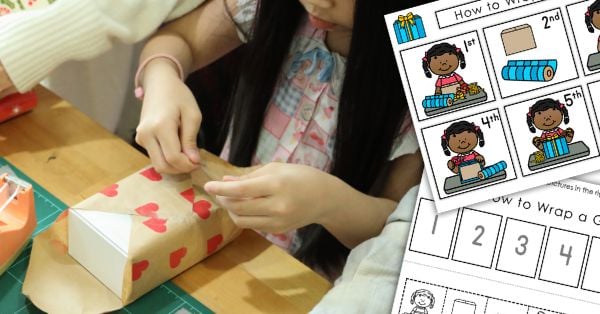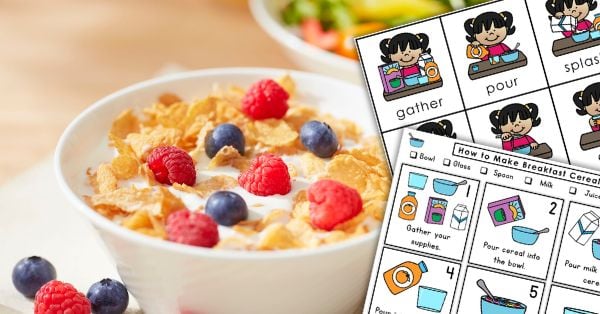
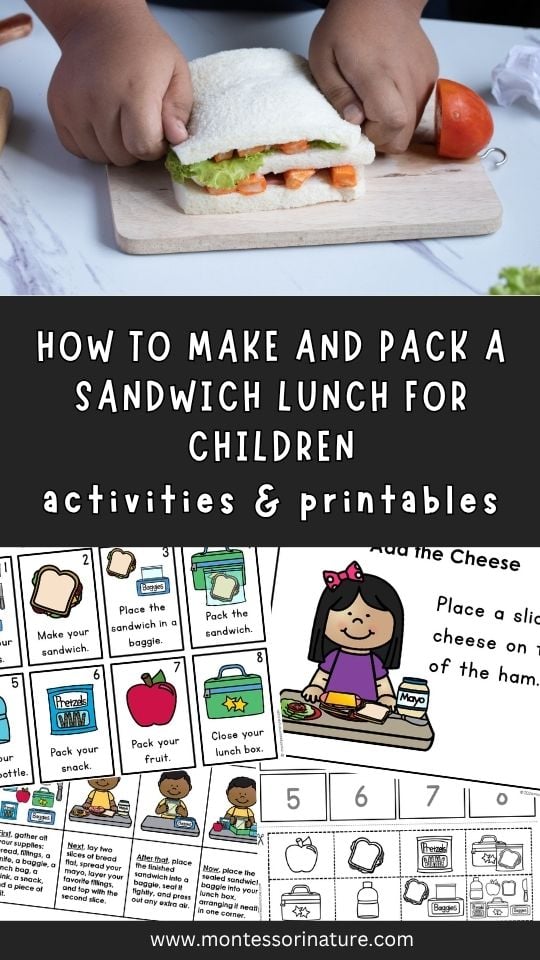
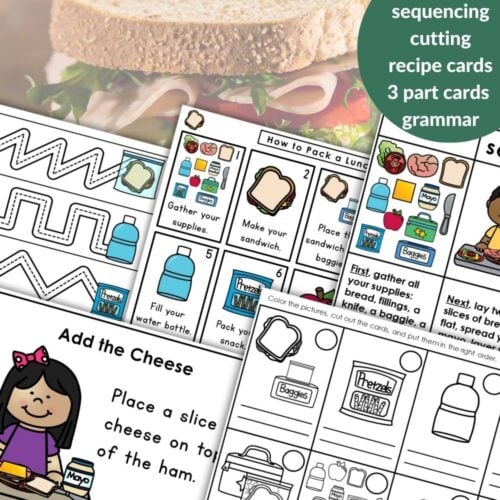
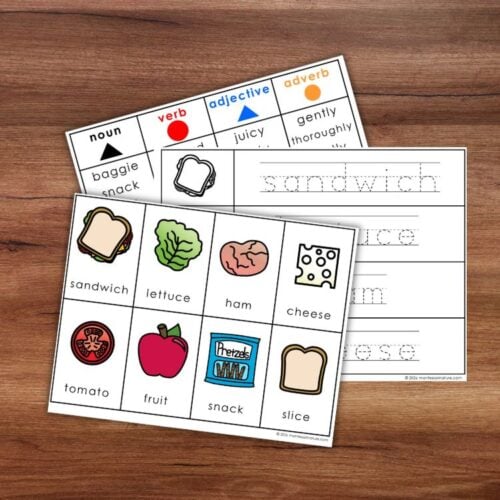
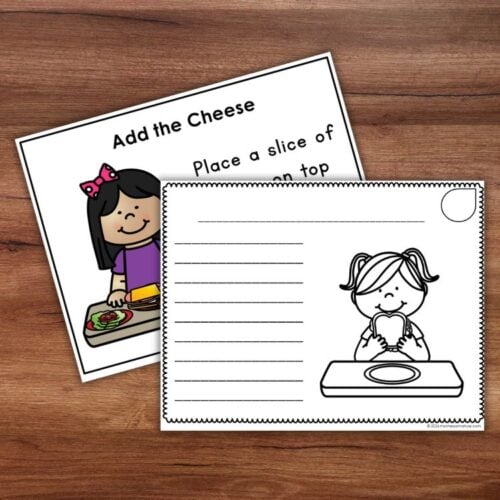
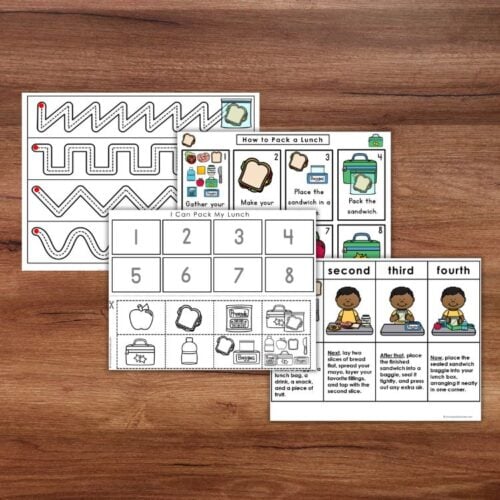
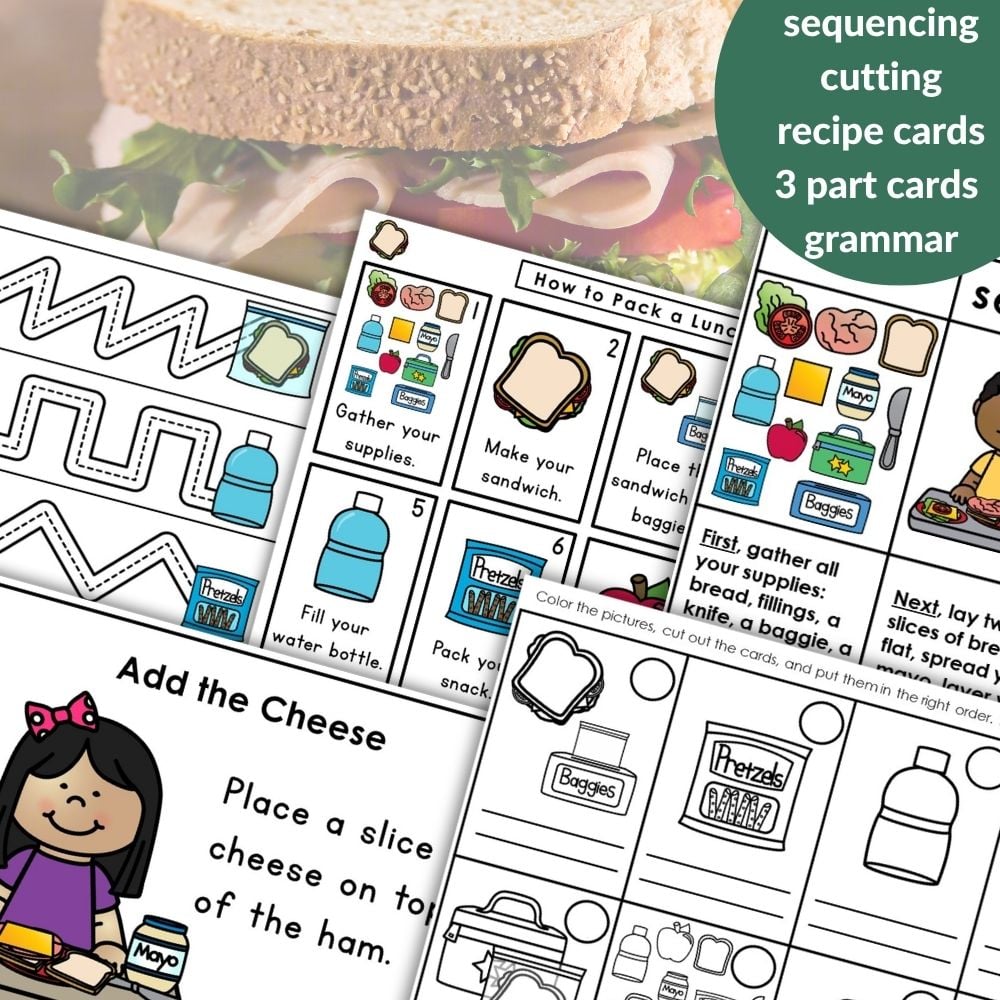
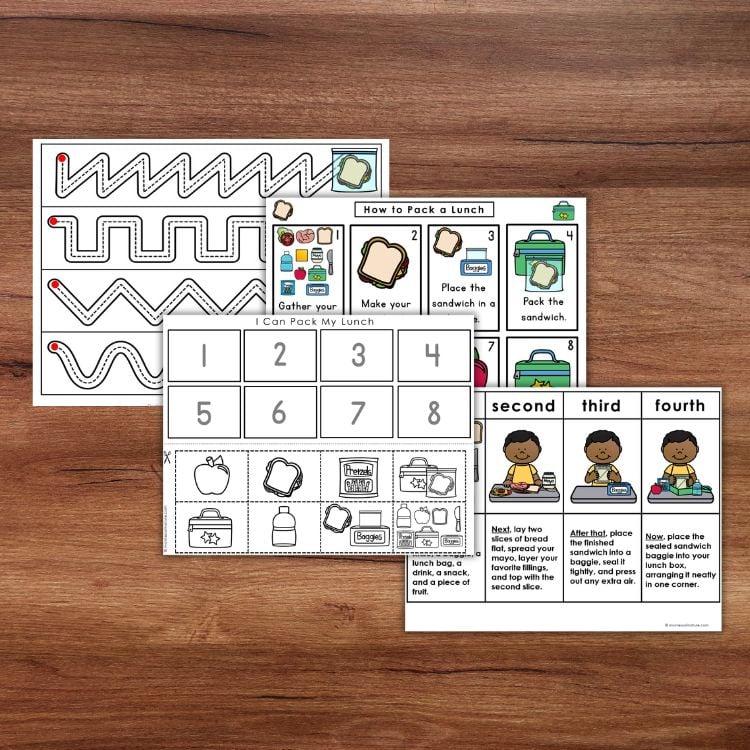
The How to Pack a Sandwich Lunch printable pack provides everything you need to bring this practical life activity into your Montessori classroom or homeschool.
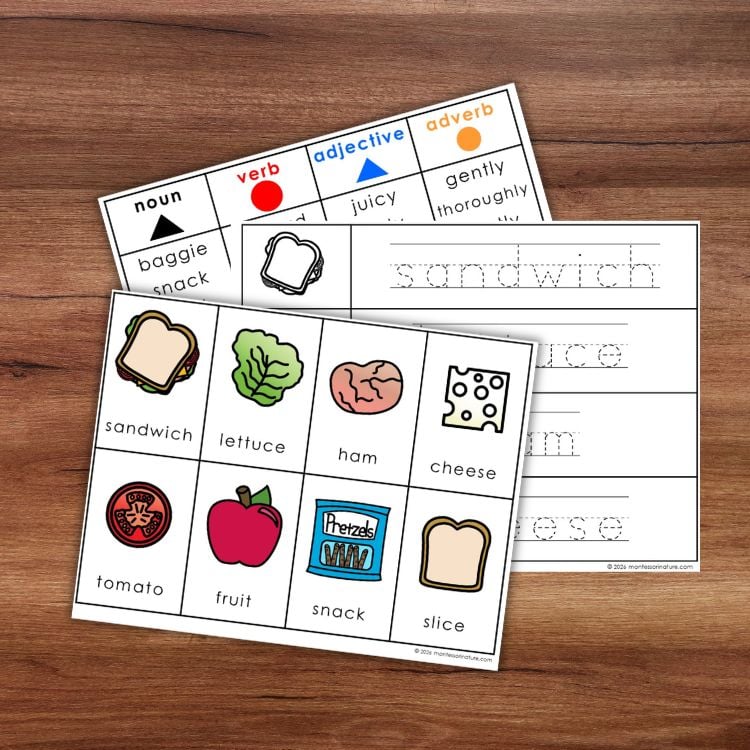
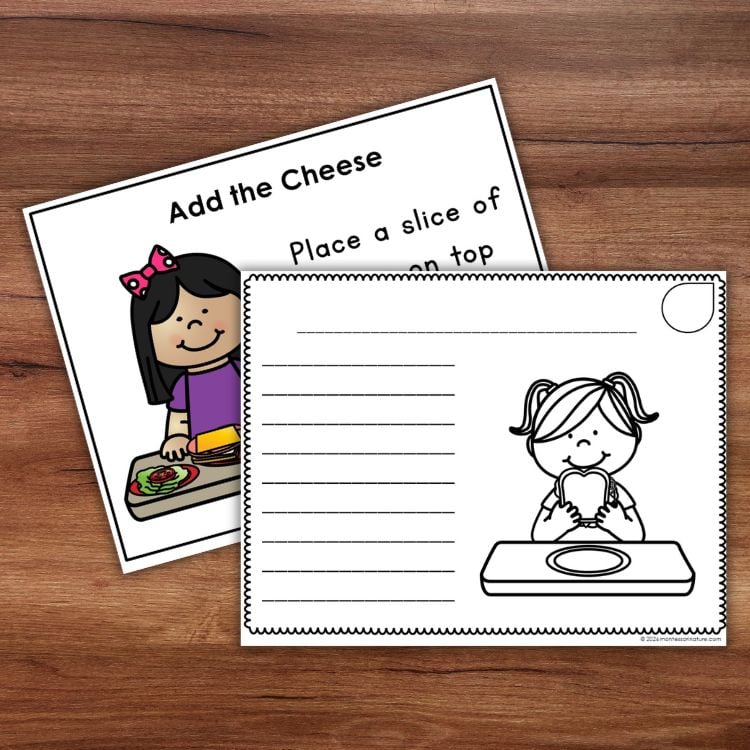
The Step-by-Step Sequencing Cards teach the full process from gathering supplies to packing the lunch. The Recipe Cards provide a detailed guide for children to use independently in the kitchen, covering the entire sandwich-making process from bread and mayonnaise to fillings and optional vegetables. The Supply Checklist builds executive function and planning skills, while the Lunch Packing Safety Rules Card covers food safety, knife safety, and clean-up habits. The Parts of Speech Sorting activity helps children categorize lunch-themed words into nouns, verbs, adjectives, and adverbs.
There’s something special about a child who proudly carries a lunch they packed themselves. It’s not just about the food—it’s about confidence, responsibility, and the quiet satisfaction of “I did this myself.” In Montessori terms, packing lunch is a practical life activity that builds independence, concentration, and real-world skills that last a lifetime.
But let’s be honest: packing lunches can feel like a chore for parents, and kids can be surprisingly picky. The key to transforming this daily routine into a meaningful learning experience lies in involving children in the process from start to finish.
When a child packs their own lunch, they practice:


- Hand-eye coordination through spreading, layering, and sealing
- Concentration by following sequential steps
- Executive function through planning and gathering supplies
- Decision-making by choosing between options
- Responsibility by cleaning up afterward
A simple starting point: create a “lunch station” in your kitchen with child-accessible ingredients like bread, fillings, baggies, and containers. For younger children, keep it simple—you can even lay out a few options for them to choose from, like “Would you like a sandwich or leftovers? An apple or a banana?”
Building a Healthy Lunch: The Simple Formula
Nutrition experts recommend a simple structure for a balanced lunch: protein, fruit or vegetable, and grain. This framework makes decision-making easy for both parents and children.
Protein Power
Protein is essential for maintaining energy levels and concentration throughout the school day. Here are some kid-friendly protein options:
Meat and Fish:
- Turkey, chicken, or lean ham slices
- Canned tuna or salmon for sandwiches or salads
- Leftover grilled chicken or meatballs
Plant-Based Proteins:
- Hummus made from chickpeas
- Beans and lentils
- Edamame
Dairy and Eggs:
- Cheese cubes or string cheese
- Hard-boiled eggs
- Plain Greek yogurt
Colorful Produce
Aim to fill about half of the lunch with fruits and vegetables. Think of it as “eating the rainbow”—the brighter, the better:
- Red: cherry tomatoes, red bell peppers
- Orange: carrots, citrus
- Yellow: corn, yellow bell peppers
- Green: cucumber slices, celery sticks
- Purple: grapes, blueberries, shredded cabbage
Pro tip: Pre-cut fruits and vegetables at the start of the week. Store celery and carrot sticks in a jar of water in the fridge to keep them fresh and crisp.
Alternatives to Bread: Beyond the Sandwich
Let’s face it—even the best sandwich gets boring eventually. If your child is a reluctant sandwich-eater or you simply want to mix things up, there are plenty of nutritious alternatives that still pack the same nutritional punch.
Wraps and Roll-Ups
Try whole wheat tortillas filled with hummus, avocado, lettuce, and chicken.
Pinwheel sandwiches are another great option. Spread cream cheese or hummus on a tortilla, layer with turkey and cheese, roll tightly, and slice into rounds.
For a no-bread option, roll turkey or ham with cheese for a gluten-free, no-heat-required option.
Savory Baked Goods
Savoury muffins like pizza muffins, zucchini slice muffins, or cheesy ham and corn muffins freeze beautifully. Make a batch and grab one each morning.
Mini quiches packed with protein and veggies are perfect for little hands.
Sushi sandwich rolls are a fun twist: flatten a slice of bread with a rolling pin, spread with a base like hummus or cream cheese, add fillings in a narrow strip, roll up, and slice into sushi-style rounds.
“Deconstructed” Lunches
Some children prefer finger foods. This “platter style” approach works brilliantly for picky eaters. Try whole-grain crackers with cheese cubes and cold cooked chicken, or create DIY “Lunchables” with crackers, cheese, turkey slices, apple slices, and hummus. Rice cakes with avocado, cheese, or tomato are another simple option.
Hot Lunch Options
Invest in a good thermos to keep food warm. Hot options that kids can help prepare include pasta with meatballs, chili and cornbread, quesadilla triangles, and mini pizza muffins or English muffin pizzas.
Inspiring Creativity and Ownership
How do you get a child excited about lunch prep? Make it fun.
Let Them Choose
Involve children in planning, shopping, preparing, and packing lunches. Offer two healthy options and let them choose between them—this gives them a sense of control and makes them more likely to actually eat their lunch.
Try this: sit down together and make a menu of lunch options. Post it on the fridge as a visual guide.
Reimagine Leftovers
Turning last night’s dinner into today’s lunch is a game-changer. It saves time, reduces food waste, and helps children learn to enjoy real, homemade food in new ways. Chicken and potatoes can become a cold salad, or pasta can be spooned into a thermos for a hearty midday meal.
Keep It Simple
Remember: most children only get 20 to 30 minutes for lunch, and much of that time is spent socializing. Pack foods that are familiar, easy to open, and don’t require much cutting or heating. Hard-boiled eggs, sliced fruit, deli meats, cheese, and dips are your friends. Lunch doesn’t need to be fancy—just fresh.
Learning Activities to Extend the Experience
Turn lunch prep into a full Montessori-style learning experience with these activities:
- Grocery Shopping Together – Let children help choose ingredients and compare prices. This teaches planning and math skills.
- DIY Sandwich Bar – Lay out bread, wraps, fillings, and condiments. Children assemble their own lunch, practicing portioning and flavor combinations.
- Snack Plate Meal – Create a mini charcuterie board tailored to kids. This helps with food variety and introduces new flavors in a non-intimidating way.
- Make a Weekly Menu – Involve children in meal planning. This builds ownership and anticipation.
- Writing Practice – Have children write their own lunch list or label ingredients.
- Food Group Sorting – Sort ingredients into protein, fruit, vegetable, and grain categories.
- Cooking Together – Prepare make-ahead items like muffins or energy bites on weekends for the week ahead.
Packing lunch with your children isn’t just about getting food into a box—it’s about building skills for life. When children plan, prepare, and pack their own lunches, they develop confidence, independence, and a deeper appreciation for the food they eat. They learn to make healthy choices, follow sequences, and take pride in their work. And let’s be honest—it also takes a little pressure off busy parents.
The kitchen truly is a place of learning, connection, and growth.
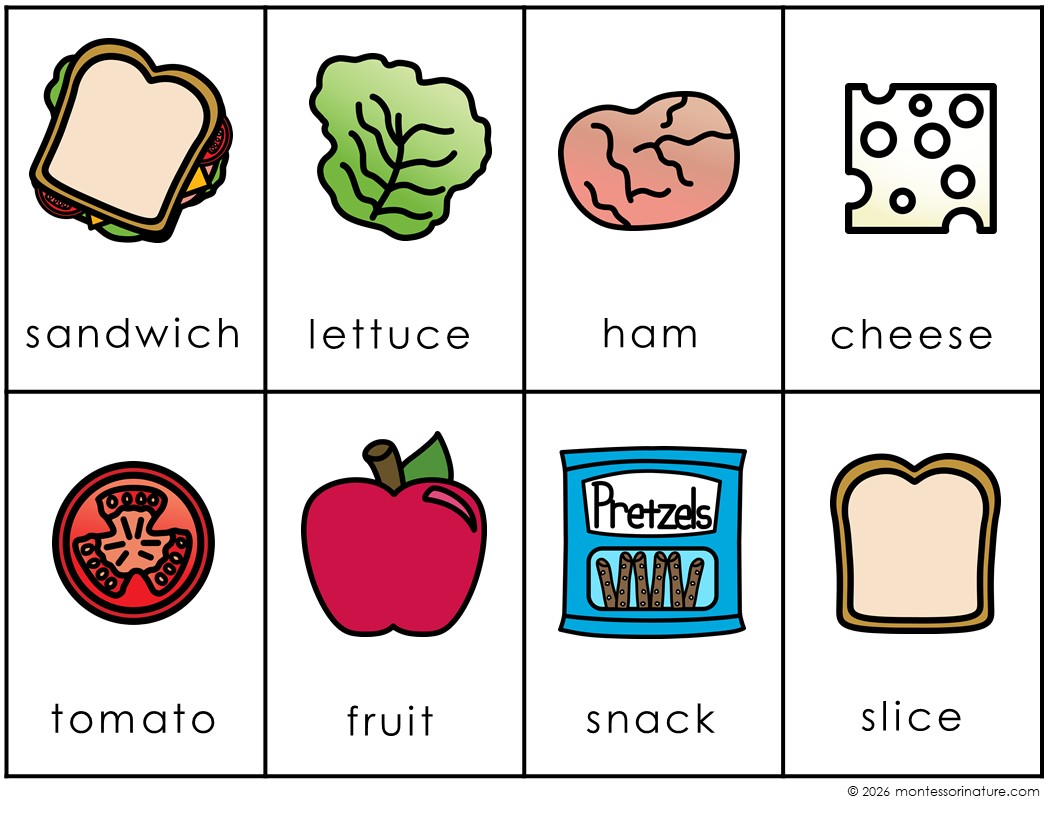
This printable is also available on TPT
You Might Also Enjoy
-
 How to Get Ready for School Daily Routine$3.10
 -
How to Get Ready for Bed Daily Routine Sequencing Cards$3.60
-
How to Clean Your Bedroom Daily Chores Sequencing Cards$3.60
-
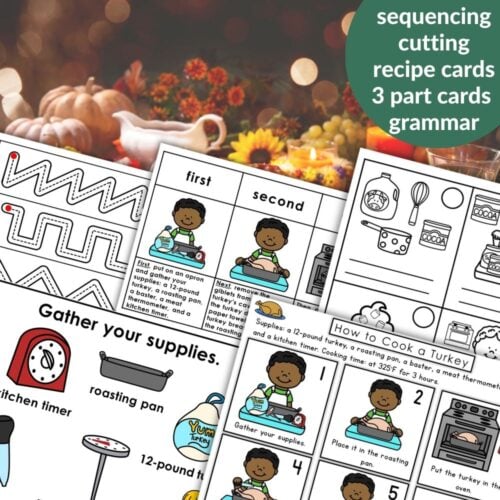
How to Cook a Turkey Thanksgiving Recipe Sequencing Cards Blackline Master$4.60
-
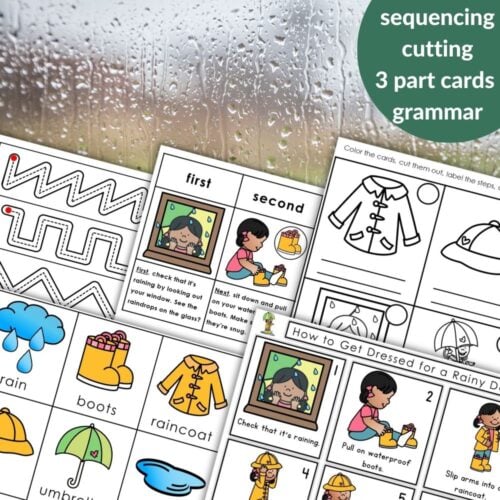
How to Get Dressed for a Rainy Day$3.10
-
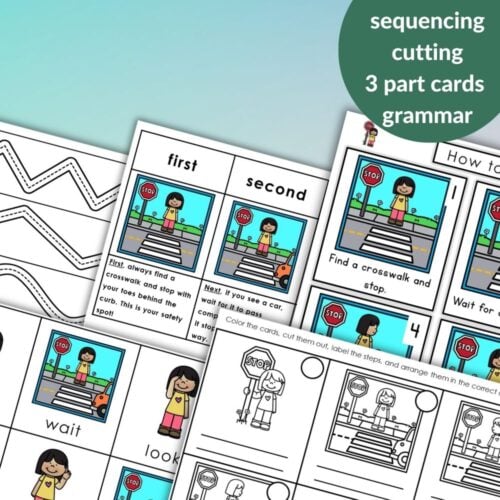
How to Cross the Street Safety Activities$3.10
About Anastasia | Anastasia is an early childhood teacher with over twenty years of experience in Montessori classrooms and homeschooling. With a Master’s in Information Science, she blends education and information design to create clear, organized, research-backed resources. As founder of Montessori Nature, she develops evidence-based, nature-inspired printables that support holistic child development and foster curiosity, independence, and a love of learning. Explore more in her shop and Teachers Pay Teachers store.