
How to step back and trust the child’s spontaneous path to self-development
There is a passage in Maria Montessori Speaks to Parents that has convicted me more times than I care to admit. It’s about love. Our love. The very love that drives us to do so much for our children.
Montessori writes:
“It is tremendously important that we should understand the spontaneous way in which the child develops himself. We are so anxious to help, to us it seems the burden of growth and development is so great that we must do all we can to make the pathway easy. And so our love may easily overreach itself and by providing too many urges, too many cautions and corrections.”

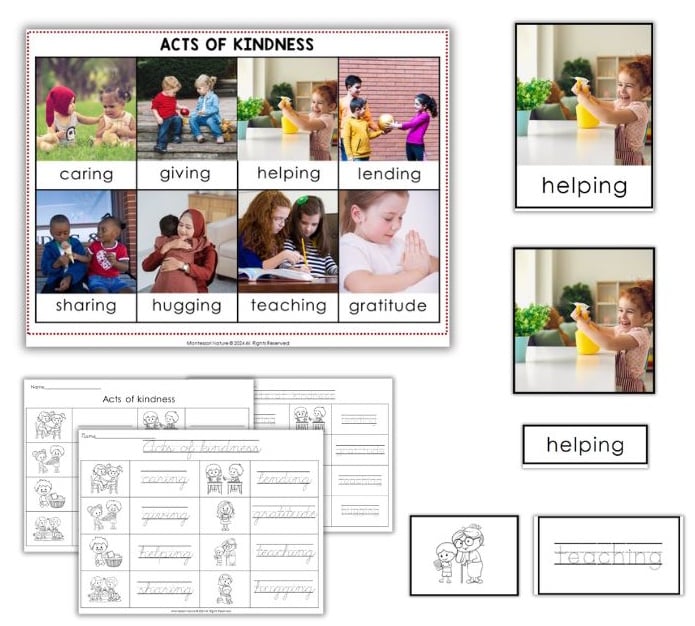

I read these words and I feel seen. And also gently scolded.
Because yes. Yes, I am anxious to help. Yes, the burden of growth seems so great. Yes, I want to make the pathway easy. Yes, I provide too many urges, too many cautions, too many corrections.
All from love. All from the deepest, most genuine place in my heart.
And yet Montessori gently suggests: this love may overreach itself.
Not because love is bad. But because we misunderstand how children grow. We think they need us to push, to warn, to fix. But the child develops himself. Spontaneously. From within. Our job is not to do the work for him. It’s to trust the work he is already doing.
So how do we pull back without pulling away? How do we love without overreaching? How do we provide urges, cautions, and corrections only when they’re truly needed?
Here are some steps I’ve been gathering.
1. Understand What “Spontaneous Development” Really Means
Montessori uses the word “spontaneous” deliberately. It means the child’s development arises from within, not from external pressure. Like a seed that knows how to become a plant without being told, the child knows how to become a human being without being pushed.
Actionable step this week:
Spend time simply observing a child without intervening. Watch how they move, what draws their attention, how they solve problems. Notice the spontaneous choices they make when no one is directing them.
Age-specific examples of spontaneous development:
Ages 3–6: A child repeatedly pours water from a small pitcher into a cup, spilling some each time. Without being told, they slow down, adjust their grip, and eventually pour without spilling. No lesson needed. The repetition is the teacher.
Ages 6–9: A child discovers a dead beetle in the garden and spends twenty minutes examining it with a magnifying glass, then draws it in a notebook. No one assigned this. The curiosity came from within.
Ages 9–12: A child becomes fascinated by maps after seeing one on the wall. They begin tracing countries, looking up capitals, and asking questions about borders. This interest wasn’t scheduled. It emerged spontaneously.
Ask yourself: What would happen if I trusted this inner guidance more and my own urges less?
2. Notice When Your Love Is Overreaching
Montessori’s phrase “overreach itself” is so gentle. It doesn’t say our love is wrong. It says our love can go too far. It can try to do what it was never meant to do.
Actionable step this week:
Pay attention to the moments when you feel most anxious to “help.” Notice the physical sensations—tight chest, quick breath, urge to jump in. That’s your love reaching.
Before you act, pause and ask:
- Is this truly needed, or is my anxiety driving me?
- Is the child struggling, or am I uncomfortable with their struggle?
- Will my intervention help them grow, or will it rob them of an opportunity to develop themselves?
Age-specific examples of overreaching love:
Ages 3–6: A child is struggling to button their coat. Your hands twitch toward theirs. You want to “just do it” because you’re late. But your intervention would rob them of the chance to develop fine motor control and persistence.
Ages 6–9: A child is trying to pack their own school bag. You watch them forget their water bottle, then their library book. You want to step in and organize it for them. But your overreach would prevent them from learning responsibility through natural consequences.
Ages 9–12: A child is planning a small project—a lemonade stand, a garden plot, a craft to sell. You see flaws in their plan. You want to correct it, improve it, make it more “successful.” But your overreach would turn their project into yours.
One honest pause can change everything.
3. Stop Offering “Too Many Urges”
An “urge” is a nudge. A suggestion. A “why don’t you try this?” A “maybe you should do it this way.” Offered once, it might be helpful. Offered too many times, it becomes interference. The child stops listening to their own inner voice and starts listening for ours.
Actionable step this week:
Count how many times you offer an urge in a single hour. “Try the red one.” “Put that here.” “Why don’t you use the other hand?” “How about we do this first?”
Then try an experiment: for one hour, offer no urges at all. Let the child choose. Let them make “mistakes.” Let them figure it out.
Age-specific examples of reducing urges:
Ages 3–6 (Instead of “Try the red one”): Say nothing. Let them choose the color themselves. Even if it doesn’t “match.” Even if you would have chosen differently.
Ages 6–9 (Instead of “Why don’t you do your math first?”): Let them choose the order of their work. They might do reading before math. They might leave the hardest task for last. That’s okay. They’re learning to manage themselves.
Ages 9–12 (Instead of “You should study this way”): Let them experiment with different study methods—flashcards, rewriting notes, reading aloud. They need to discover what works for them, not what works for you.
Notice how it feels. Notice how they respond.
4. Reduce the Cautions
Cautions are our warnings. “Be careful.” “That’s hot.” “Don’t spill.” “Watch your step.” Some cautions are necessary for safety. But many are reflexive—we say them because we’re anxious, not because the child is genuinely in danger.
Actionable step this week:
Before you offer a caution, ask yourself honestly: Is this a real safety concern, or is it my discomfort with risk, mess, or imperfection?
Age-specific examples of reducing cautions:
Ages 3–6 (Instead of “Be careful, you’ll spill”): Stay silent. Let them pour. If they spill, hand them a sponge and let them clean it up. The consequence teaches more than the warning.
Ages 6–9 (Instead of “Watch out, you’ll break it”): Your child is helping wash dishes and handling a glass or a ceramic plate. You feel the urge to say “be careful, you’ll break it.” Instead, take a breath. Give a quick, calm reminder: “Use two hands.” Then step back. If the glass slips and breaks, no one is hurt—but the child learns something profound about fragility, attention, and the natural consequences of carelessness. Cleaning up the broken pieces together (with you handling the sharp parts) becomes a lesson no warning could ever teach as deeply.
Ages 9–12 (Instead of “Be careful, you’ll cut yourself”): Your child wants to help prepare dinner and use a sharp knife to chop vegetables. Instead of hovering or taking over, give a brief, calm demonstration of safe handling. Then step back. Trust them to be careful. A small nick is unlikely, but even if it happens, it’s a memorable lesson—not a catastrophe. Your quiet confidence teaches more than a dozen cautions.
If it’s a real safety concern, say it calmly and once. If it’s your discomfort, try staying silent. Let the child experience the natural consequences of small risks. A spilled cup teaches more than a hundred “be careful”s.
5. Pause Before Correcting
Corrections are our attempts to fix what the child is doing “wrong.” The wrong grip. The wrong order. The wrong color. The wrong way. But Montessori reminds us: the child is developing themselves, not performing for our approval.
Actionable step this week:
When you feel the urge to correct, pause and ask:
- Does this actually matter?
- Will the child figure this out on their own with time and repetition?
- Am I correcting for their benefit or for my own need for things to be “right”?
Age-specific examples of pausing before correcting:
Ages 3–6 (Instead of “That’s not how you hold a pencil”): Let them hold it in a fist if that’s where they are. The tripod grip will emerge naturally when their hand is ready. Your correction only creates self-consciousness.
Ages 6–9 (Instead of “You spelled ‘because’ wrong”): Let the invented spelling stand. They’re still learning sound-symbol relationships. Over-correction kills the joy of writing before it has a chance to grow.
Ages 9–12 (Instead of “That’s not the right way to solve that math problem”): Let them solve it their way first. Even if it’s inefficient. Even if it takes longer. They need to own the process, not just the answer.
If the correction isn’t essential for safety or genuine learning, let it go. Let the child discover their own path.
6. Trust the “Burden” of Growth
Montessori observes that we see the burden of growth and development as “so great” that we must make the pathway easy. But what if the burden is exactly what the child needs? What if struggle is the work? What if an easy path produces weak roots?
Actionable step this week:
Reframe how you think about your child’s struggles. Instead of seeing them as problems to solve, see them as opportunities for the child to develop themselves.
Age-specific examples of trusting the burden:
Ages 3–6 (Struggling to put on socks): The struggle is the work. Each failed attempt is strengthening neural pathways. Your job is to wait, not to do it for them.
Ages 6–9 (Struggling with a friendship conflict): Don’t swoop in to fix it. Ask questions: “What happened? How did that feel? What could you try next?” Let them practice navigating relationships.
Ages 9–12 (Struggling with a challenging assignment): Resist the urge to help too much. Let them wrestle with it. Let them come to you with specific questions rather than general “I need help.”
When you feel the urge to swoop in and “make it easier,” whisper to yourself: The struggle is the work. I trust them to do it.
7. Create Space for Your Own Discomfort
Here’s the hard truth: much of our overreaching comes from our own discomfort. We can’t stand to watch a child struggle. We can’t bear the mess. We’re anxious about what others will think. We need things to go smoothly.
Actionable step this week:
When you feel the urge to intervene, turn your attention inward. Ask: What am I feeling right now? What is this discomfort trying to tell me?
Name it. “I’m anxious.” “I’m embarrassed.” “I’m impatient.” “I’m tired.”
Then breathe. Let the feeling be there without acting on it. The child’s work is not to make you comfortable. Your work is to tolerate your discomfort so they can grow.
Age-specific examples of sitting with your discomfort:
Ages 3–6 (Discomfort with mess): Your child is mixing playdough colors into a brown lump. Your inner voice screams “that’s wasteful!” Breathe. The process matters more than the product.
Ages 6–9 (Instead of “Hurry up, we’re going to be late”): Your child is tying their shoes, and you’re watching the clock. Every second feels like an eternity. Your instinct is to rush them, to take over, to just do it yourself. Instead, take a breath. Let them finish. Later, when you’re both calm, have a gentle conversation: “This morning we were late because the shoes took a long time. Tomorrow, let’s start getting ready five minutes earlier so you have the time you need.” The child learns both that their mastery matters and that schedules matter too. Your patience teaches problem-solving, not just speed.
Ages 9–12 (Discomfort with perceived failure): Your child’s project didn’t turn out well. They’re disappointed. You want to rescue them or fix it. Breathe. Disappointment is a teacher too.
8. Practice the Art of “Being With” Not “Doing For”
Montessori’s vision of the adult’s role is not passive. It’s actively present—but present in a different way. Not doing for. Not fixing. Not directing. Simply being with.
Actionable step this week:
Try this experiment: sit near your child while they work. Say nothing. Do nothing. Just be present.
If they look at you, smile. If they ask for help, offer the minimum needed and then step back. If they make a mistake, wait.
This is hard. It feels like doing nothing. But what you’re doing is offering the greatest gift: your trust. Your presence. Your belief that they can do this themselves.
Age-specific examples of being with, not doing for:
Ages 3–6: Sit nearby while they build a tower that keeps falling. Don’t show them how. Don’t offer advice. Just be there. Your calm presence is enough.
Ages 6–9: Sit at the table while they do homework. Don’t check every answer. Don’t hover. Read your own book nearby. Let them know you’re available if they ask, but not required.
Ages 9–12: Be in the same room while they work on a passion project. Don’t direct. Don’t evaluate. Just share space. Your trust speaks louder than your input.
Neglect Is Not What We’re Talking About
When I talk about stepping back, reducing cautions, and trusting children to develop themselves, I can imagine some readers feeling a knot in their stomach. Isn’t this how neglect starts? Don’t children need us to keep them safe?
Yes. Absolutely yes.
Let me be clear: neglect is not what we’re discussing here. Neglect is the absence of care, the failure to meet a child’s basic needs for safety, food, shelter, and emotional support. Neglect looks like a child left unsupervised in dangerous situations. A child whose injuries go unnoticed. A child who faces real harm because no adult is paying attention.
That is not what Montessori is inviting us into.
What we are talking about is something very different: the intentional, loving, present act of allowing a child to struggle with manageable challenges while we remain nearby, attentive, and ready to step in when genuine danger arises.
The distinction lives in three questions:
- Is the risk real or perceived?
A real risk is a busy street, a hot stove, a sharp blade in unsteady hands. We step in for those. A perceived risk is a child climbing a low, sturdy tree with soft ground below, or pouring water that might spill, or tying shoes that might take forever. Those we can breathe through. - Am I present or absent?
Neglect is absent. Autonomy is present but not interfering. You are watching. You are available. You are ready to step in if needed. You simply aren’t jumping in at the first sign of struggle. - Is the consequence manageable or catastrophic?
A broken glass is manageable. A spilled drink is manageable. A bruised knee from a low fall is manageable. A child running into traffic is catastrophic. We protect from catastrophe. We allow manageable consequences to become teachers.
Montessori never suggested we abandon children to fend for themselves. She suggested we trust them enough to let them try, while staying close enough to catch them if real danger appears.
The difference between neglect and autonomy is the difference between walking away and watching from the doorway. Between indifference and trust. Between “I don’t care what happens” and “I believe you can do this, and I’m here if you truly need me.”
That’s the line we’re learning to walk. It’s not always easy. But it’s where the child’s true development lives.
Here’s another thing I want to be clear about.
Letting children struggle doesn’t mean letting them flounder. Trusting their inner development doesn’t mean abandoning them to figure everything out alone. And stepping back from constant correction doesn’t mean stepping away from teaching.
Discipline—real discipline—has a vital place here.
Montessori wasn’t suggesting we become passive observers who never intervene, never guide, never set expectations. Quite the opposite. She believed deeply in the role of the adult as a model, a guide, and a gentle authority.
So what does that look like?
It looks like showing, not just telling.
Before you step back, you step in—to demonstrate, to model, to teach the right way. You show the three-year-old how to carry a pitcher with two hands. You show the six-year-old how to wipe a table in orderly strokes. You show the nine-year-old how to use a knife safely. You don’t skip this part. The child needs to know what success looks like before they can practice it on their own.
It looks like setting clear, consistent boundaries.
Freedom within limits is the heart of Montessori. Children need to know what the boundaries are. “You may pour your own water, but if you pour it on the floor on purpose, you will clean it up and we will try again another day.” “You may choose your order of work, but all work must be completed by lunchtime.” Boundaries are not the enemy of autonomy. They are the container that makes autonomy safe.
It looks like informed children, not abandoned ones.
A child left to guess what’s expected is an anxious child. A child who has been taught—clearly, kindly, repeatedly—is a confident child. We inform them. We explain the “why” behind the expectation. “We hold the glass with two hands because it’s fragile and we want to take care of our things.” “We finish our morning work before free choice because we made a commitment to our community.” Information is not control. It’s respect.
It looks like consequences, not punishments.
Discipline in the Montessori sense is not about making children suffer for mistakes. It’s about helping them understand the natural and logical outcomes of their choices. You didn’t put your shoes on? Now we’re late to the park and have less time to play. You left your coat outside? Now it’s wet and uncomfortable to wear. You broke the glass by careless carrying? Now you help sweep and tomorrow we try again. These are not punishments. They are reality. And reality is a kind teacher.
So no, stepping back doesn’t mean checking out. It means stepping in intentionally—to teach, to model, to inform, to set boundaries—and then stepping back trustingly to let the child practice, struggle, and grow within those safe limits.
Discipline and autonomy are not opposites. They are partners. And both are acts of love.
A Simple Challenge for This Week
Choose one of these steps—just one—and try it.
- Observe spontaneous development without intervening.
- Notice when your love is overreaching.
- Offer fewer urges.
- Reduce unnecessary cautions.
- Pause before correcting.
- Trust the burden of growth.
- Sit with your own discomfort.
- Practice being with, not doing for.
Then notice what shifts. In the child. In you.
Montessori’s words aren’t a rejection of love. They’re an invitation to a wiser love. A love that knows when to act and when to wait. A love that trusts the child’s spontaneous path. A love that doesn’t overreach.
We love our children so much. That’s not the problem.
The problem is that we love them anxiously. We love them frantically. We love them in ways that try to control what cannot be controlled and fix what is not broken.
The child develops himself. Spontaneously. From within.
Our job is not to take his place.
Our job is to trust him, to protect his space, and to love him without overreaching.
It can be the hardest work we’ll ever do. And it’s important.
You Might Enjoy
-
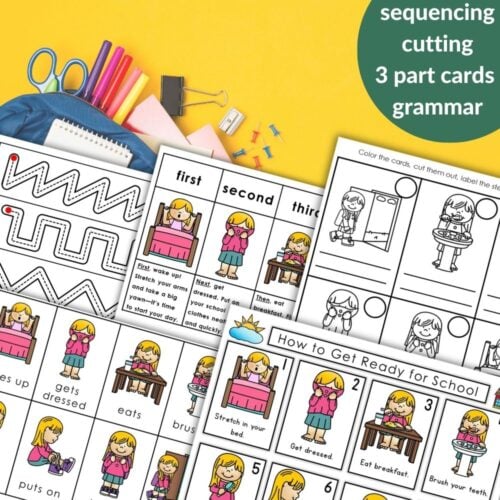
 How to Get Ready for School Daily Routine$3.10
 -
Children in the Kitchen: Recipe Practical Life Skills Sequencing Cards Cooking$15.50
-
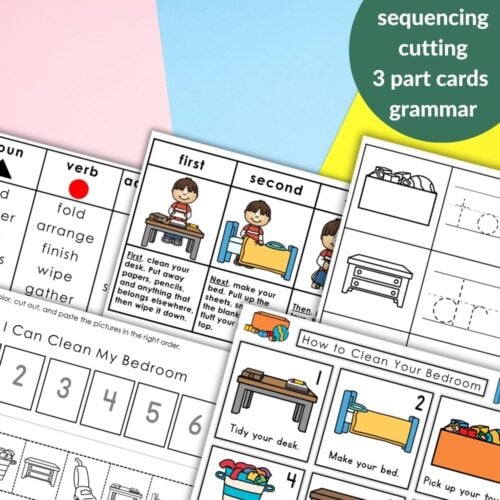
How to Clean Your Bedroom Daily Chores Sequencing Cards$3.60
-
How to Dress for Snowy Weather Practical Life Winter Sequencing Cards Blackline Master$3.10
-
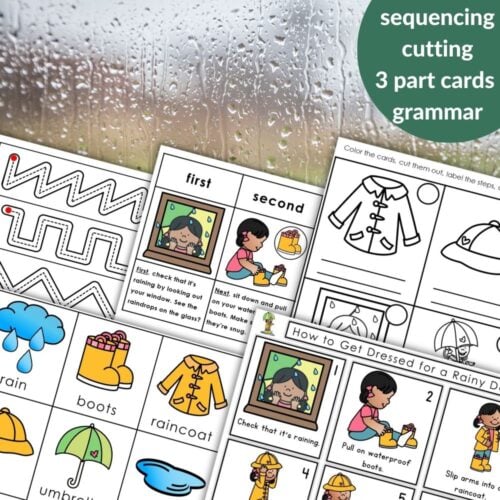
How to Get Dressed for a Rainy Day$3.10
-
How to Cross the Street Safety Activities$3.10



About Anastasia | Anastasia is an early childhood teacher with over twenty years of experience in Montessori classrooms and homeschooling. With a Master’s in Information Science, she blends education and information design to create clear, organized, research-backed resources. As founder of Montessori Nature, she develops evidence-based, nature-inspired printables that support holistic child development and foster curiosity, independence, and a love of learning. Explore more in her shop and Teachers Pay Teachers store.