Teaching Ancient China through the lens of Montessori’s Fundamental Human Needs offers children a profound understanding of human interconnectedness. By exploring how one unique civilization met universal needs, students see both the diversity of human ingenuity and the shared threads that bind all people. This approach moves beyond memorizing dates and emperors to touch the very heart of what makes us human.

The Montessori Framework: Fundamental Human Needs
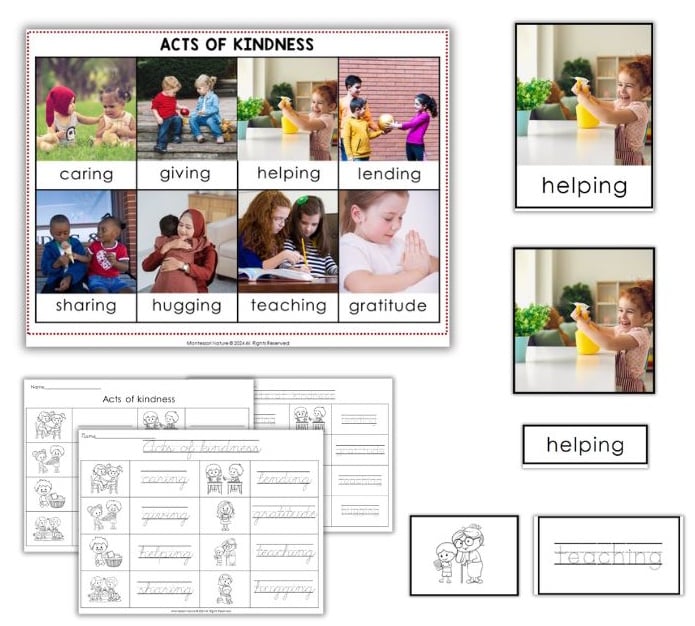
Before diving into Ancient China, children are introduced to the powerful Montessori concept that all humans, across time and culture, share the same fundamental needs. These are divided into two categories: Material Needs (such as food, shelter, clothing, defense, and transportation) and Spiritual Needs (including religion, art, music, communication, and self-adornment) . The study of any civilization, therefore, becomes an investigation into how these needs were uniquely fulfilled.
This lesson is ideally presented after The Story of the Coming of Humans (the Third Great Lesson), which sets the stage for human history and our role within it . Following the study of Ancient China, you can naturally transition to other ancient civilizations, such as Egypt, Greece, or Rome, allowing children to compare and contrast how these same needs were met in different environments .

Ancient China’s Unique Place in the Ancient World
What makes Ancient China particularly fascinating is how it differed from its contemporaries.
A Civilization of Longevity and Continuity: Ancient China is the only ancient civilization whose cultural and historical line has continued unbroken to the present day . Its dynastic system lasted for nearly four millennia, from the legendary Xia dynasty (c. 2070 BC) to the end of the Qing dynasty in 1912 AD .
Coexisting Civilizations: During its long history, the Han Dynasty (202 BC – 220 AD) was a contemporary of the Roman Republic and later the Roman Empire . At the same time, in the Americas, the Maya civilization was in its Classic period. This global perspective helps children visualize a world with multiple, simultaneous centers of innovation.
A Different Worldview: While many ancient Mediterranean cultures believed in a spherical earth, the dominant Chinese world picture for millennia was of a square, flat earth under a round, domed heaven . This cosmology influenced everything from city planning—where the Forbidden City was designed as a symmetrical, square enclosure—to the structure of society itself .
A Focus on Social Harmony: Unlike the more individual-focused philosophies that would develop in the West, Chinese society, particularly under Confucianism, was structured around the Five Basic Relationships (ruler-subject, father-son, husband-wife, elder-younger, and friend-friend) . This created a society where identity was formed through interpersonal duties and respect for elders, known as filial piety (xiao), was a cardinal virtue .
How to Present Ancient China in the Montessori Classroom
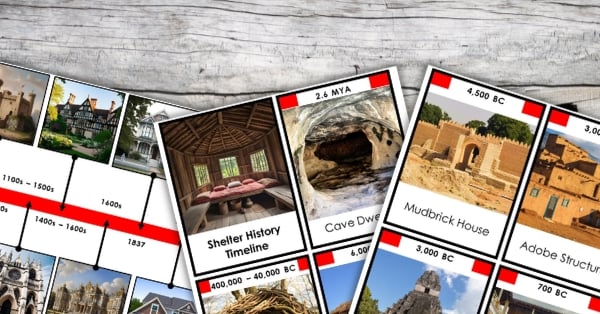
Start with a Timeline: Use a long timeline to place Ancient China visually alongside other civilizations like Egypt, Greece, and Rome. This helps children grasp its vast duration and historical context .
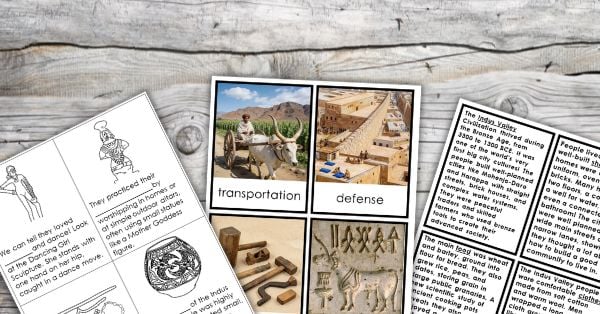
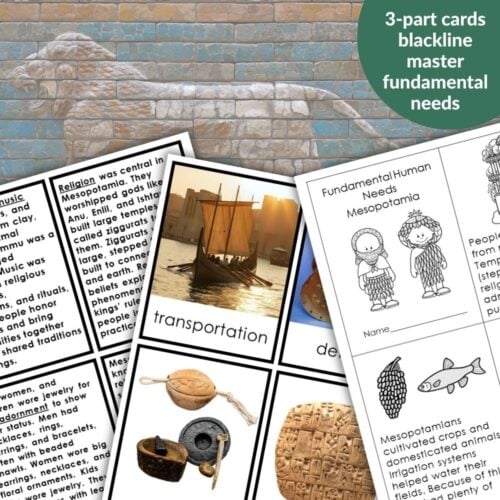
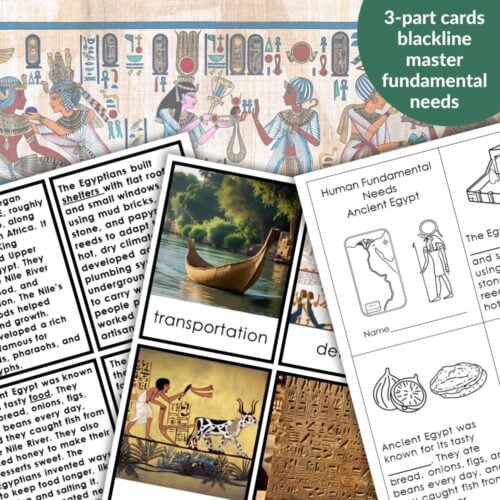
Use Three-Part Cards: Use our set of three-part cards for each fundamental need . Children can work with these to internalize the concepts.
Horizontal and Vertical Research:
Horizontal Study: Have children study all the fundamental needs of the Han Dynasty . They can create a poster, booklet, or presentation showing how this one civilization met all its needs.
Vertical Study: Compare one need, such as “Shelter” or “Communication,” across multiple civilizations (e.g., China, Egypt, and Rome) . This highlights the variety of human solutions.
Engaging Projects and Hands-On Science Activities
To make learning tangible and memorable, incorporate these projects:
Build a Pagoda or a Section of the Great Wall: Using sugar cubes, LEGO bricks, or craft sticks, challenge students to construct a multi-tiered pagoda, focusing on principles of balance and a wide base for stability . Similarly, a Great Wall building challenge teaches structural engineering and perseverance .
DIY Papermaking: Simulate the invention of paper by creating pulp from recycled paper and water, then using a screen to lift and press a new sheet. This activity connects children to ancient chemical and engineering processes .
Block Printing: Carve a simple design into a potato or eraser to demonstrate the principles of woodblock printing, a Chinese innovation. This teaches concepts of mirror images, replication, and mass communication .
Create a Model Canal System: Using recycled materials like plastic bottles and clay, design a miniature canal to explore the hydroengineering behind the Grand Canal. Children learn about water flow, gravity, and the importance of logistics .
Silk Road Trading Game: Set up a classroom simulation where students take on the roles of Chinese, Roman, and Indian merchants, trading goods like silk, paper, spices, and glass. This makes the abstract concept of cultural exchange concrete and exciting .
By studying Ancient China through its fundamental needs, we give children more than historical facts; we offer them a lens of empathy and wonder. They see that while the beautiful silk robe of a Han noble and the simple hemp tunic of a farmer met the same need for clothing, the human drive to create, believe, and connect is a universal force that has shaped our world in incredible ways.
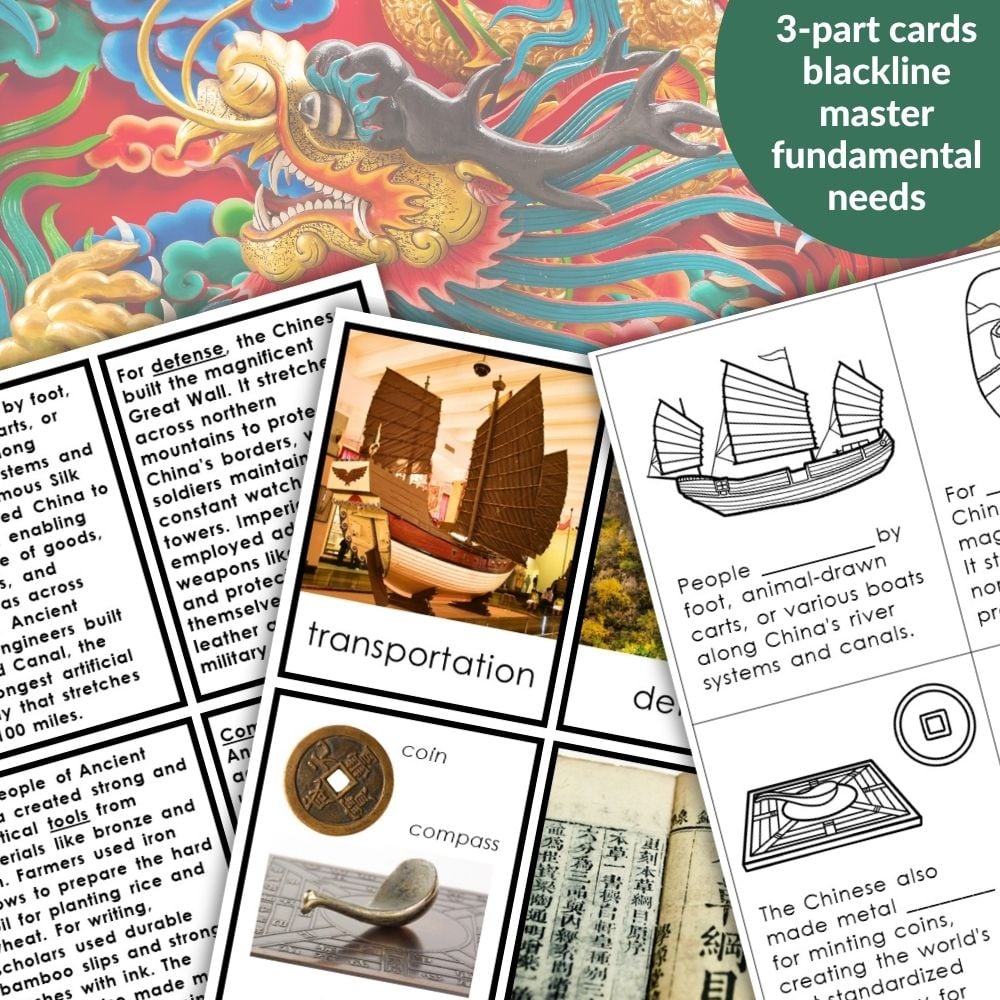
Ancient China: Fundamental Needs 5 Part Cards
This Montessori inspired resource about Ancient China transforms the study of ancient civilizations into an engaging, hands-on exploration of how people met their Fundamental Human Needs.
This printable is also available on TPT
You Might Also Enjoy

About Anastasia | Anastasia is an early childhood teacher with over twenty years of experience in Montessori classrooms and homeschooling. With a Master’s in Information Science, she blends education and information design to create clear, organized, research-backed resources. As founder of Montessori Nature, she develops evidence-based, nature-inspired printables that support holistic child development and foster curiosity, independence, and a love of learning. Explore more in her shop and Teachers Pay Teachers store.