As winter’s blanket settles over the landscape, nature offers us one of its most perfect teaching moments – the story of the Northern Cardinal. This vibrant bird, with its crimson plumage against the snow, seems almost designed to capture children’s imaginations. There’s something magical about how this particular creature can inspire wonder during the quietest of seasons.

Finding the Story in the Cold
You might notice how the cardinal’s red feathers create such a striking contrast against winter’s monochrome palette. That visual drama is a natural starting point for storytelling. The cardinal becomes a character – a brave guardian who doesn’t flee the cold but remains as a splash of color and song when most other birds have departed. Their year-round presence makes them reliable characters in our seasonal narrative, perfect for helping children feel connected to nature even in the deepest cold.
The cardinal’s physical traits read like pages from a storybook. That cone-shaped beak becomes a master key for unlocking seeds when insects are scarce. The male’s brilliant red feathers, colored by berries in their diet, might remind us of a hero’s cape. The female’s subtle brown plumage becomes her camouflage cloak, perfect for protecting the nest. And that remarkable crest – how it raises and lowers like a mood indicator – becomes a natural way to discuss animal communication.


Perhaps the most compelling chapter is the cardinal’s family life. Their lifelong partnerships model cooperation and dedication. The female’s nest-building showcases nature’s engineering at its finest, while the male’s role as provider and protector adds depth to their story. Even their communication – the female’s special songs from the nest – reveals a sophisticated language we’re only beginning to understand.
Connecting to Children’s World
What makes this story particularly meaningful is how cardinals touch daily lives. They’re the birds that visit feeders, sing from backyard trees, and help control insects in the gardens. Children can observe these relationships firsthand, making the learning immediate and personal. The cardinal becomes not just a subject to study, but a neighbor with its own story unfolding alongside ours.
Bringing the Story to Life
Those Cardinal Learning Printables – the life cycle cards, anatomy diagrams, and food vs predators activities – become the illustrations for this living story. They’re not just worksheets but windows into understanding. When children sequence the life cycle cards, they’re not just learning facts – they’re interacting with the story itself.
The cardinal’s winter tale is ultimately about resilience, adaptation, and the quiet drama unfolding in children’s backyards. It’s a story that reminds us – and our students – that even in nature’s quietest moments, there are extraordinary stories waiting to be discovered, if only we know how to look.
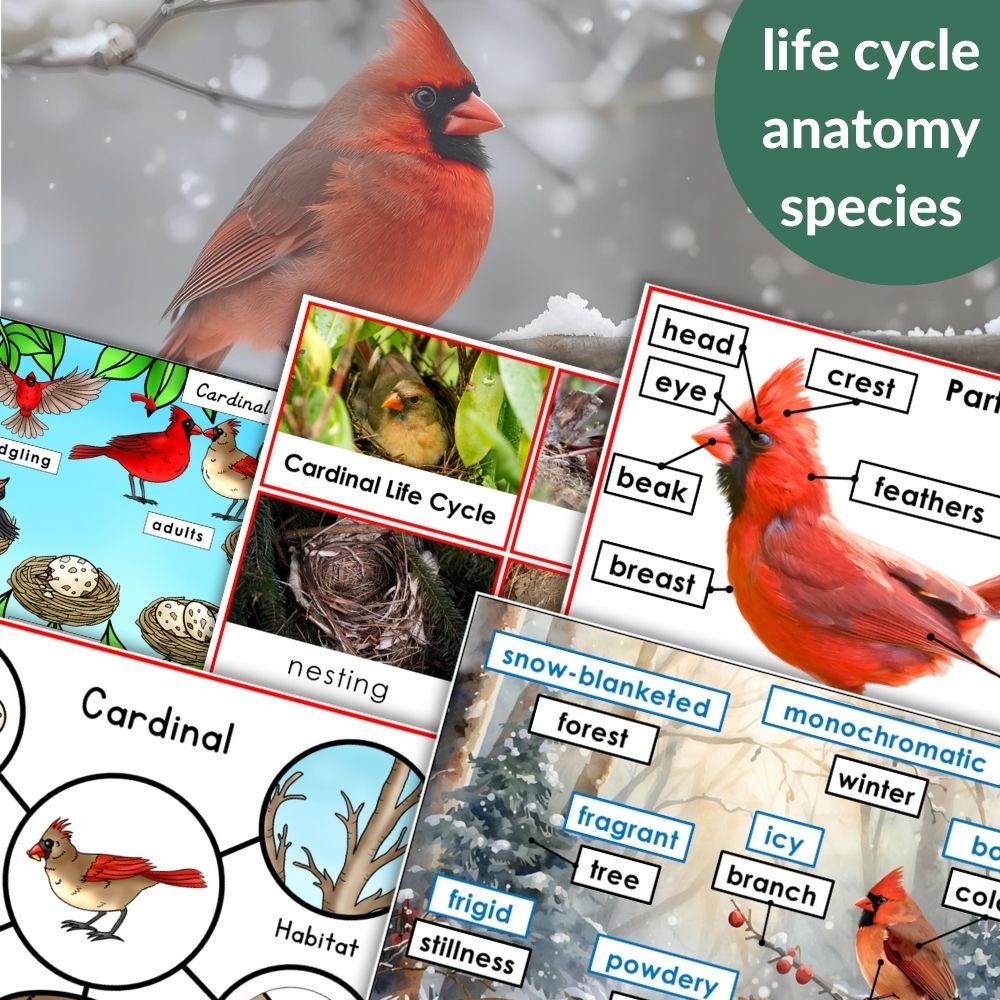
Parts of a Cardinal Life Cycle Activities 3 Part Cards Blackline Master Poster
Suitable for preschool, kindergarten, and Grades 1-3 students, the Northern Cardinal Life Cycle and Anatomy printable offers a variety of Montessori-inspired hands-on activities perfect for individual shelf work, learning centers, or small group lessons in both classroom and homeschool settings.
This printable is also available on TPT
You Might Also Enjoy
-
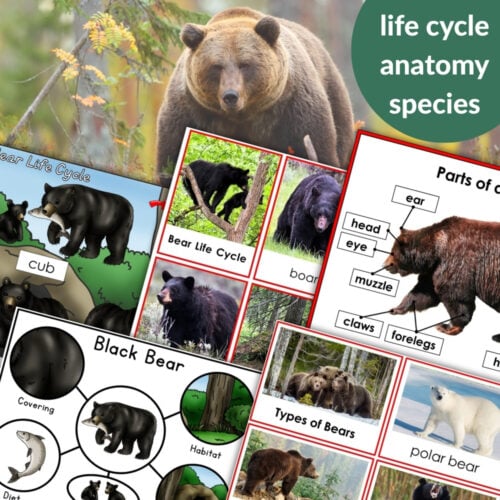
 Parts of a Bear Life Cycle Activities$8.00
 -
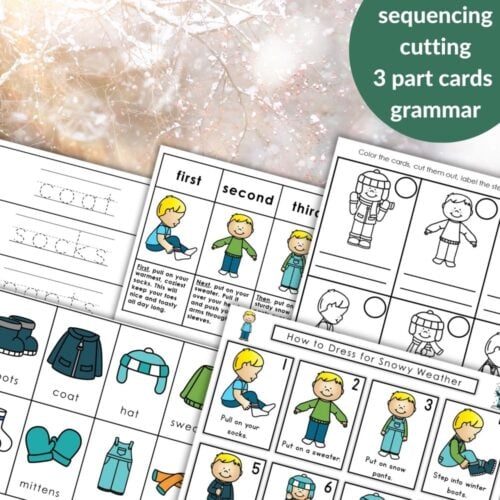
How to Dress for Snowy Weather Practical Life Winter Sequencing Cards Blackline Master$3.10
-
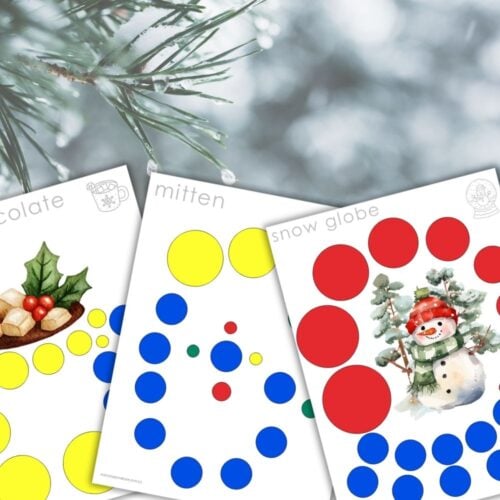
Knobless Cylinder Extension Cards: Winter Patterns$4.10
-
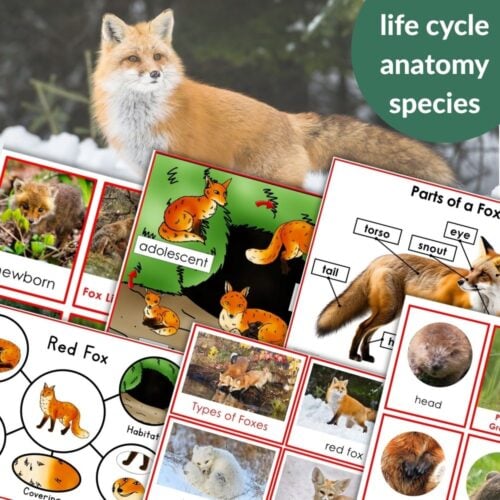
Parts of a Fox Life Cycle 3 Part Cards Blackline Master Activities$7.10
-
How to Build a Snowman: Sequencing Grammar Fine Motor Activities$3.10
-
Winter Hands On Preschool Activity Pack$6.10


About Anastasia | Anastasia is an early childhood teacher with over twenty years of experience in Montessori classrooms and homeschooling. With a Master’s in Information Science, she blends education and information design to create clear, organized, research-backed resources. As founder of Montessori Nature, she develops evidence-based, nature-inspired printables that support holistic child development and foster curiosity, independence, and a love of learning. Explore more in her shop and Teachers Pay Teachers store.