Exploring the natural world often introduces us to some of the most unusual animal life cycles, and among these, the Suriname toad, also known as Pipa pipa, stands out as truly extraordinary. This remarkable amphibian, native to the wetlands of South America, has a unique reproductive process that captivates children. For parents and teachers seeking engaging and educational materials, a free printable Pipa frog life cycle is an great resource to bring this fascinating creature into the classroom or homeschool setting. Part of the comprehensive Suriname Toad Learning Pack, these printables are designed to support early learners from Kindergarten to Grade 3, especially those inspired by Montessori method and hands-on activities.

The Pipa Frog
The Pipa pipa frog, or Suriname toad, is widely recognized for its bizarre and intriguing reproductive and developmental strategies. Unlike most frogs, which lay eggs in water and have tadpoles that develop externally, the Pipa pipa has evolved a highly specialized method of reproduction. The female carries her eggs embedded in her skin, and the young develop directly into froglets within her body, emerging fully formed. This extraordinary life cycle makes the Pipa frog an ideal subject for children to learn about the diversity of animal adaptations in wetland ecosystems.
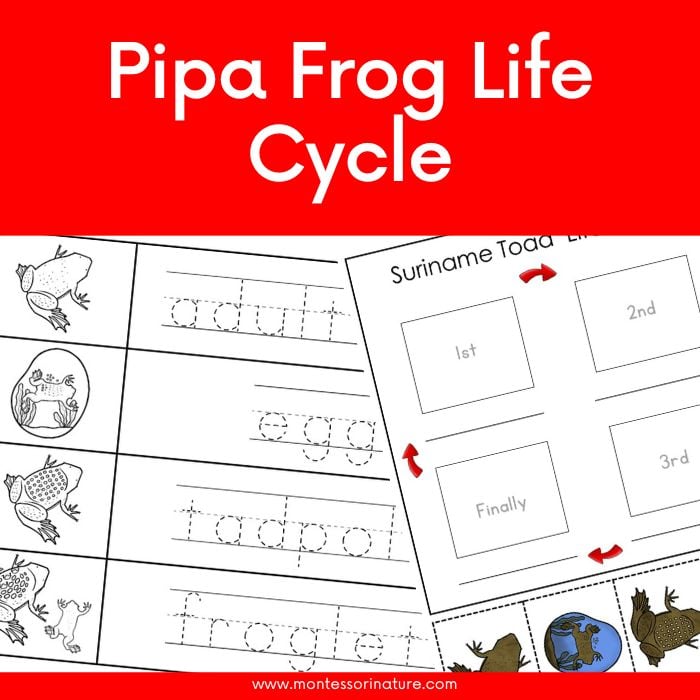
The free printable Pipa frog life cycle resources are designed to illustrate these unique features. Through colorful diagrams, part of the Animals of Wetlands Unit, students can visualize each stage of development, from egg to adult frog. These materials help deepen understanding of amphibian life cycles. This free resource is also included in the learning pack that highlights the interesting facts about how the Pipa’s skin acts as a protective incubator, and how this adaptation benefits the survival of its offspring in the unpredictable environments of South American wetlands.

Characteristics and Interesting Facts
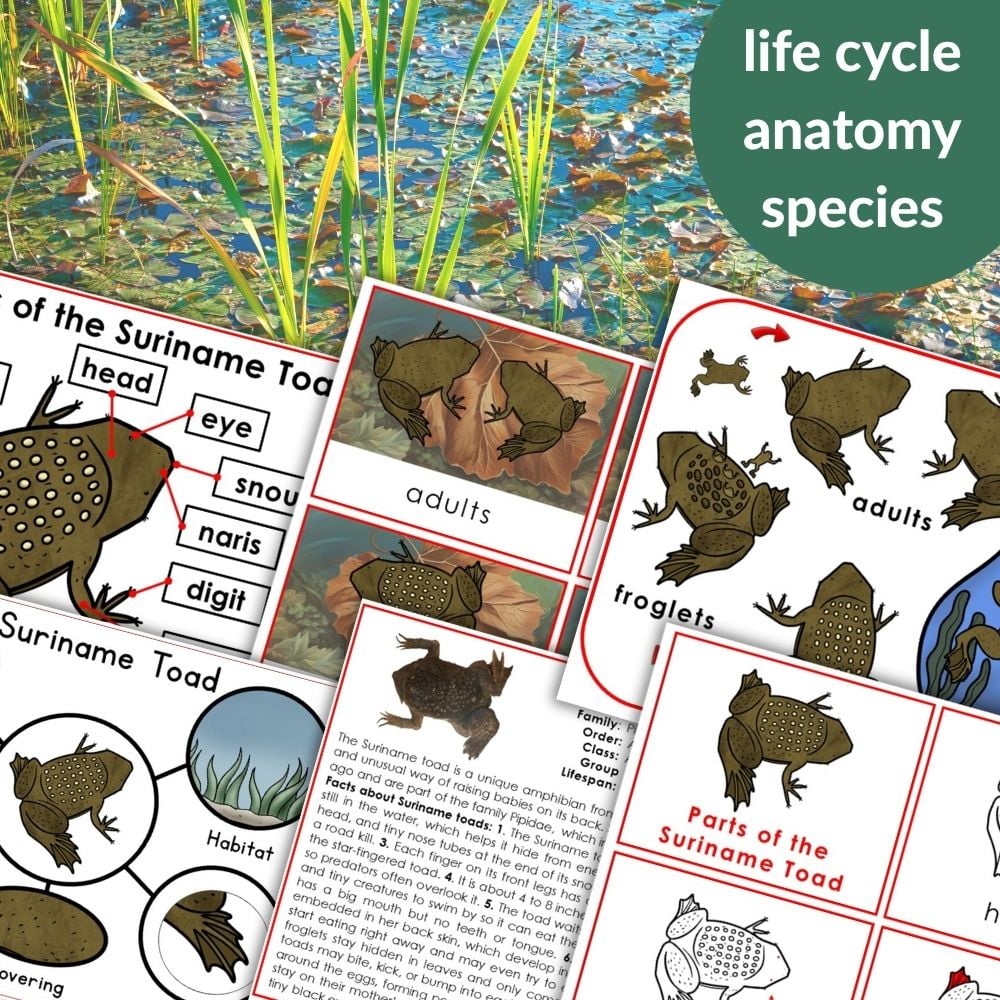
The Suriname Toad or Pipa pipa frog, is not only unusual in its reproductive habits but also in its physical characteristics. It has a flattened, almost leaf-like body, webbed feet, and a broad head. Its skin is smooth and often patterned with spots or mottling that help it camouflage in muddy waters. These features are explained through information cards and posters included in the learning pack, making complex biological details accessible for young learners.
Some fascinating facts to share include:
- The female Pipa can carry hundred eggs embedded in her back skin.
- The developing young emerge as fully formed froglets, skipping the free-swimming tadpole stage.
- The Pipa frog lacks a tympanic membrane (eardrum), which is unusual for amphibians.
- It is an aquatic frog that spends most of its life submerged in wetlands, feeding on small invertebrates.
These facts not only enhance children’s knowledge about amphibians but also foster curiosity about the adaptations that enable survival in diverse environments. The printable diagrams and sorting cards help children categorize and understand these characteristics visually, reinforcing their learning through tactile and visual engagement.
Incorporating the Life Cycle into Units and Activities
The Animals of South America Unit, including the Amphibians Unit and Wetlands Unit, provides a comprehensive framework for teaching about the Pipa frog’s life cycle. Educators and homeschool parents can incorporate these printables into lessons, using hands-on activities inspired by Montessori principles. For example, 3-part cards featuring images and labels of each stage—egg, developing embryo, froglet, and adult—allow children to match and sequence the life cycle stages independently or in small groups.
Poster displays can be created to visually depict the entire cycle, making it easier for children to grasp the progression and relationships between stages. These activities promote critical thinking, observation skills, and a deeper appreciation for biodiversity and animal adaptations.
Additionally, homeschool educators can utilize these resources for unit studies, integrating art, science, and language activities. Children can illustrate their own versions of the Pipa frog’s life cycle, write descriptive sentences, or even craft models using clay or craft materials, fostering a multisensory learning experience.
For educators and homeschool parents seeking to foster curiosity about the natural world, especially in the context of Wetlands, Amphibians, and South American animals, these printables provide a comprehensive and engaging way to explore the life cycle of one of nature’s most unusual amphibians—the Pipa frog.
-

Pipa Frog Printable
$0.00
You Might Enjoy
Pipa Frog Life Cycle Parts of the Suriname Toad
This Pipa Pipa Frog Learning Pack provides a hands-on exploration of the unusual animal life cycle of the Pipa frog, focusing on the parts of the frog and the life cycle of the Suriname toad. Suitable for homeschool or classroom settings, it can be adapted to facilitate hands-on learning for students in Preschool, Kindergarten, Grades 1-3, and aligns with Montessori-inspired activities.
About Anastasia | Anastasia is an early childhood teacher with over twenty years of experience in Montessori classrooms and homeschooling. With a Master’s in Information Science, she blends education and information design to create clear, organized, research-backed resources. As founder of Montessori Nature, she develops evidence-based, nature-inspired printables that support holistic child development and foster curiosity, independence, and a love of learning. Explore more in her shop and Teachers Pay Teachers store.