To help you organize lessons on Deep Sea Creatures and give children beautiful, accurate materials to work with independently, the Anglerfish Learning Pack is a complete resource. It includes everything you need for a thorough study of anglerfish.
Inside, you will find:
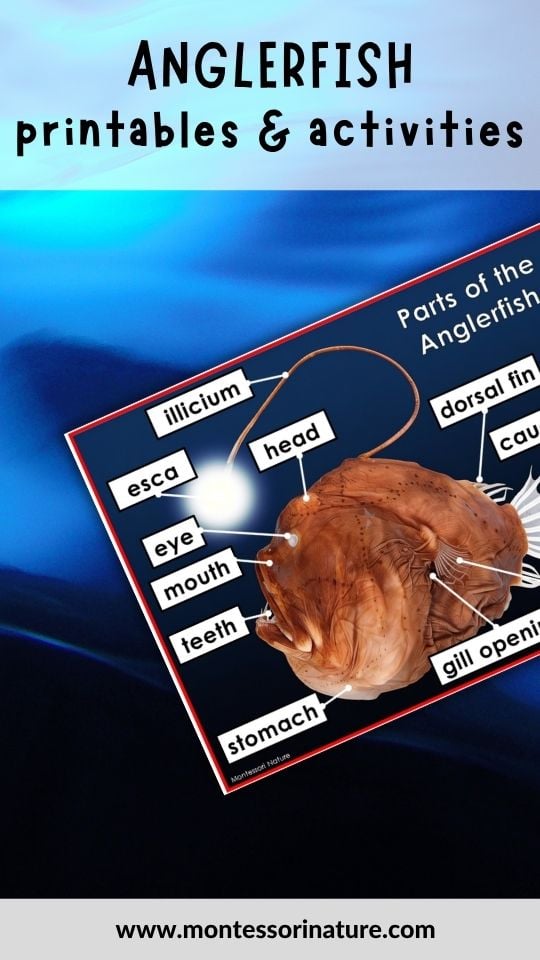
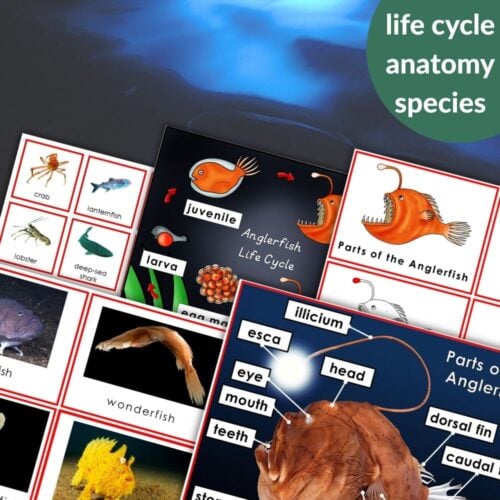
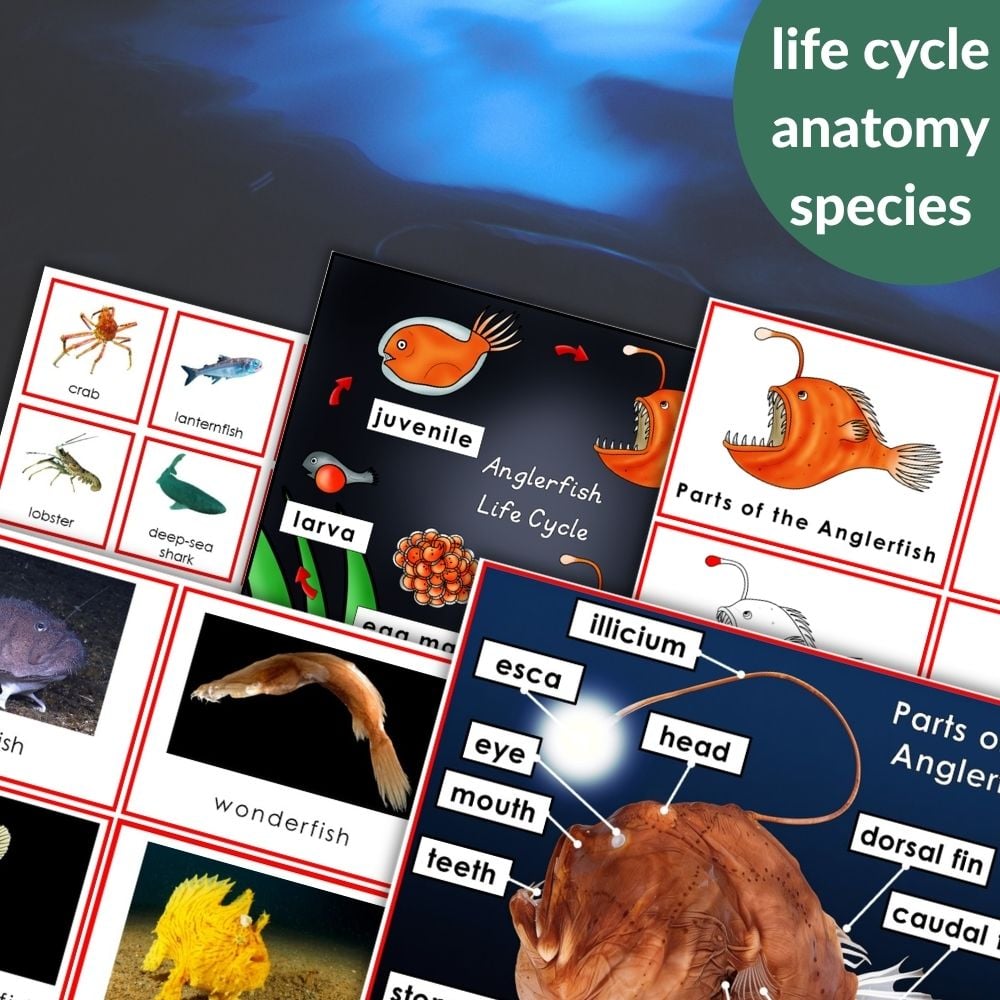
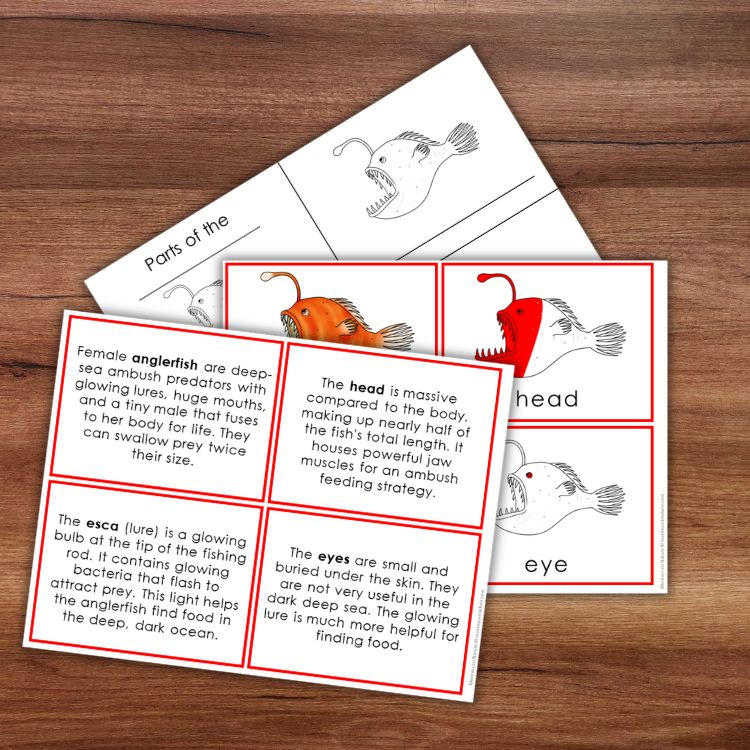
Parts of an Anglerfish – Diagrams, 3-part cards, information cards, and student booklets
Anglerfish Life Cycle – Diagrams, 3-part cards, information cards, and cut-and-paste worksheets
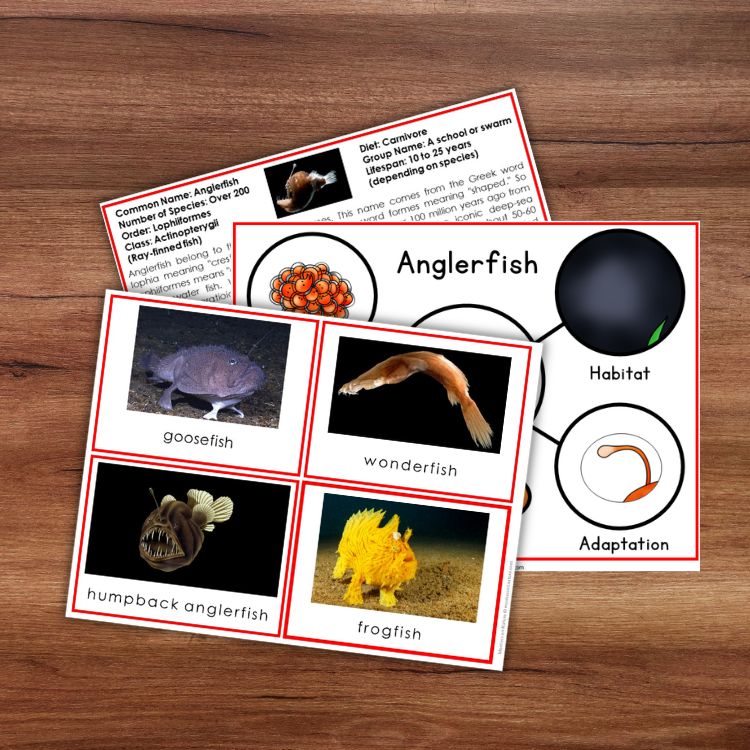
Types of Anglerfish – 3-part cards and information cards for fascinating species
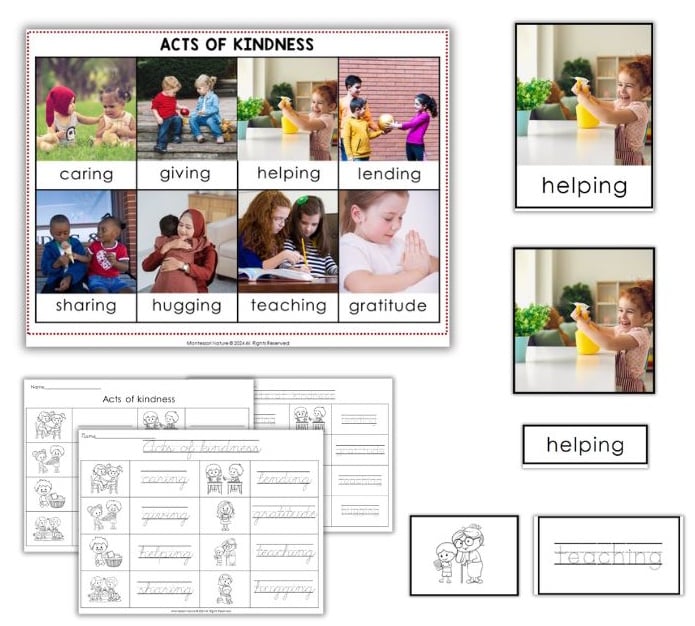

Characteristics and General Information – Color posters, blackline masters, and a student reader
Extended Activities – “Who Am I?” riddle cards, an adjective labeling activity, and prey vs. predators sorting cards
The materials are designed for children ages 3 to 9. Younger children can match picture cards and trace labels. Older children can read information cards, complete fill-in-the-blank activities, and write their own booklets. Every activity is self-paced and child-led, perfect for Montessori shelf work, learning centers, or homeschool study.
About the Anglerfish
Imagine a creature so strange that the male fuses to the female’s body for life, becoming a permanent parasite. Imagine a fish with a glowing light on its head that it uses to lure prey in the pitch-black ocean. Imagine a mouth so huge it can swallow prey twice its size. This is the anglerfish—one of the most extraordinary creatures on Earth.
Anglerfish have been roaming the deep ocean for over 100 million years. There are over 200 species, ranging from tiny deep-sea floaters to giant bottom-dwelling walkers. They live in the dark depths of the ocean, far below where sunlight reaches. They have evolved some of the most bizarre and fascinating adaptations in the animal kingdom.
For children, anglerfish offer a perfect window into the wonders of deep-sea life. They are strange enough to spark endless questions, fascinating enough to capture any child’s imagination, and mysterious enough to inspire a lifelong love of marine biology. Whether you are teaching an ocean unit, exploring animal adaptations, or following the Second Great Lesson on the coming of life, anglerfish belong in your classroom.
What Makes Anglerfish So Amazing?
Let me share a few facts that never fail to captivate children.
They Have a Glowing Lure
Anglerfish have a glowing bulb on their heads called an esca. It contains bioluminescent bacteria that produce light. The fish wiggles the lure to attract prey, just like a fisherman uses bait.
The Male is a Parasite
Tiny male anglerfish are much smaller than females. When a male finds a female, he bites into her side and fuses to her body. Over time, he loses his eyes and organs, becoming a permanent sperm source.
They Can Swallow Prey Twice Their Size
A female anglerfish has a huge mouth and an expandable stomach. She can swallow prey nearly twice her own size. This helps her survive long periods without food in the deep sea.
Some Anglerfish Walk
Shallow-water anglerfish like frogfish have arm-like pectoral fins. They use these fins to walk on the seafloor. They are poor swimmers and prefer to crawl or prop themselves up while ambushing prey.
They Have Two Kinds of Lights
Some anglerfish have two light-producing systems. The main lure glows with bacteria. A second glowing chin barbel produces light the fish controls itself. This may help attract prey from different angles.
They Release Millions of Eggs
Female anglerfish release a long, floating ribbon of eggs that can be over 10 meters (30 feet) long. One ribbon can hold over one million eggs! The eggs drift near the surface until they hatch.
Their Name Means “Crest-Shaped”
The scientific name for anglerfish, Lophiiformes, comes from Greek meaning “crest-shaped.” This refers to the unique head spines that look like a crest or mane.
The Anglerfish Life Cycle
Eggs
Female anglerfish release a large, floating egg mass containing hundreds of thousands of eggs. The eggs drift near the ocean surface until they hatch.
Larva
After 3 to 4 months, tiny, transparent larvae hatch. They drift near the surface, feeding on plankton. At this stage, males and females look exactly alike.
Juvenile
As larvae grow, they become juveniles and undergo metamorphosis. They develop large heads and sharp teeth. They migrate down to the deep “midnight zone” of the ocean.
Adult Male
Adult male anglerfish are tiny. They find a female using scent and bite into her side. Over time, they fuse to her body, losing their eyes and organs. They become permanent sperm sources.
Adult Female
Adult female anglerfish grow large with a glowing lure and a huge mouth. They carry parasitic males and release eggs yearly. They live 10 to 20 years.
Bringing Anglerfish into Your Classroom: Hands-On Activities
The best way to learn about anglerfish is through observation and hands-on exploration. Here are simple, Montessori-friendly activities that invite children to discover anglerfish through science, practical life, and art.
Science Activity: Glowing Lure Demonstration
What you need: A glow stick or small flashlight, a dark room, and a piece of string.
What to do:
Tie the glow stick to the string. Turn off the lights. Wiggle the glow stick in the dark to demonstrate how the anglerfish uses its lure to attract prey. Explain that the anglerfish’s light comes from glowing bacteria.
What they learn: How anglerfish hunt in the dark.
Practical Life Activity: Tweezing Plankton
What you need: Tweezers, small pom-poms or beads (plankton), and a cup (the larva’s mouth).
What to do:
Invite the child to use tweezers to pick up “plankton” and place it into the cup. Explain that anglerfish larvae feed on plankton as they drift near the surface.
What they learn: Fine motor control and how anglerfish larvae feed.
Science Sorting: Anglerfish Prey vs. Predators
What you need: Two sorting mats labeled “Anglerfish Prey” and “Anglerfish Predators,” plus picture cards of various items (small fish, squid, sharks, humans, etc.).
What to do:
Children sort the cards into what anglerfish eat and what eats anglerfish. Then discuss: Why do anglerfish have so few predators? How do they protect themselves?
What they learn: The anglerfish’s place in the food chain.
Language Activity: “Who Am I?” Riddle Cards
What you need: Riddle cards and picture cards of different anglerfish types.
What to do:
Read a riddle aloud. Children guess which anglerfish it describes and match it to the correct picture card. For example: “I am the smallest anglerfish. I fuse to the female for life. Who am I?”
What they learn: Species identification and listening comprehension.
Art Activity: Draw a Glowing Anglerfish
What you need: Paper, pencils, crayons, and reference images of anglerfish.
What to do:
Invite children to draw an anglerfish in the deep ocean with its glowing lure. Encourage them to add details like the huge mouth, sharp teeth, and dark background.
What they learn: Observation skills and artistic expression.
Anglerfish are among the most extraordinary creatures on Earth. They have adapted to one of the harshest environments on the planet—the deep, dark ocean. With their glowing lures, enormous mouths, and bizarre reproductive strategies, they remind us that nature is full of wonder.
Children naturally slow down when they look at an anglerfish. They notice the light. They ask, “How does it glow?” and “Why is the male so small?” These are the beginnings of scientific thinking.
So this season, let the anglerfish be your teacher. Set up a glow-in-the-dark demonstration. Sort prey and predators. Act out the life cycle. And let your children discover that even the strangest creatures have extraordinary stories to tell.


This printable is also available on TPT
You Might Also Enjoy
-
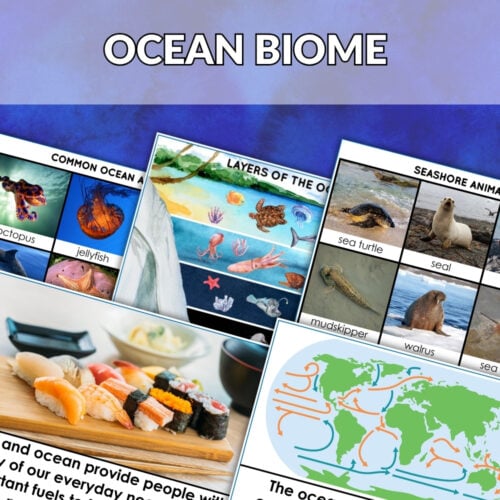
 Ocean Biome Activity Bundle: Animals Plants Types Layers of Ocean Facts
 -
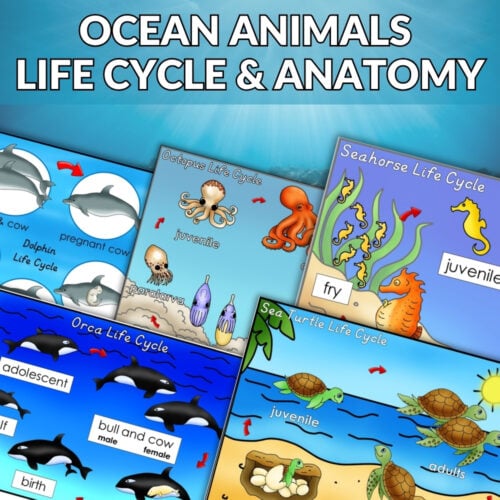
Ocean Animals Life Cycle Anatomy: Facts 3 Part Cards Worksheets Bundle
-
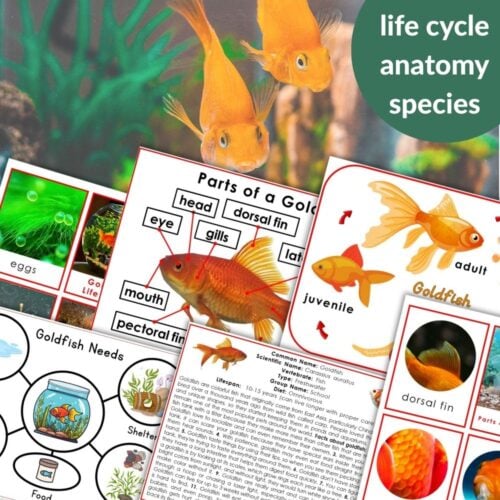
Goldfish Life Cycle Pet Needs Parts of a Goldfish$8.10
-
Parts of a Salmon Life Cycle Activities$8.10
-
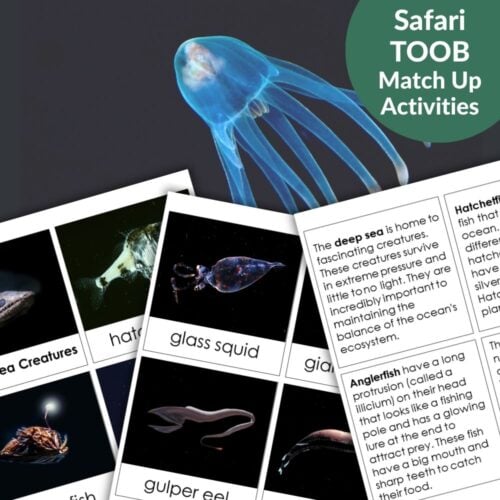
Deep Sea Animals: Safari TOOB Compatible 3 Part Cards Facts$3.10
-
Five Classes of Vertebrates Sort Picture Cards Cut and Paste$3.60


About Anastasia | Anastasia is an early childhood teacher with over twenty years of experience in Montessori classrooms and homeschooling. With a Master’s in Information Science, she blends education and information design to create clear, organized, research-backed resources. As founder of Montessori Nature, she develops evidence-based, nature-inspired printables that support holistic child development and foster curiosity, independence, and a love of learning. Explore more in her shop and Teachers Pay Teachers store.