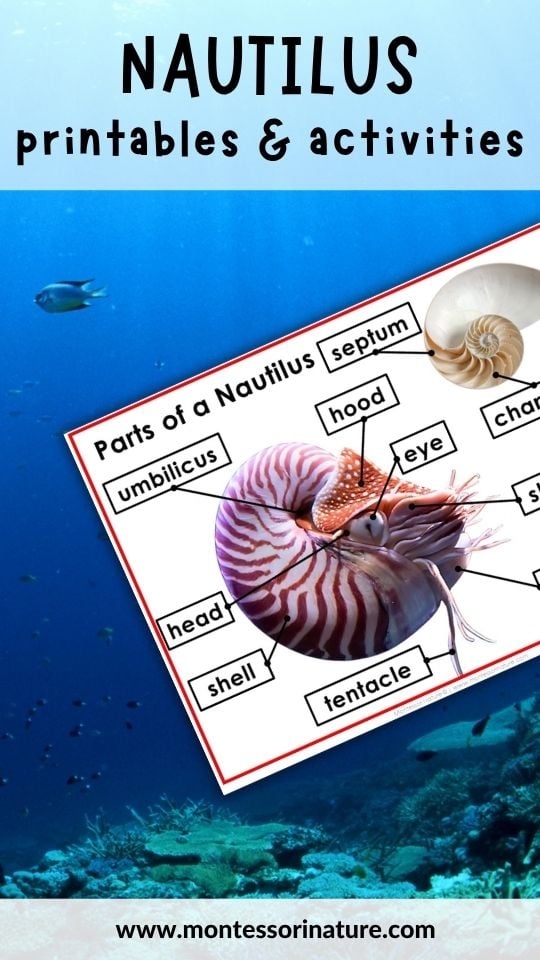
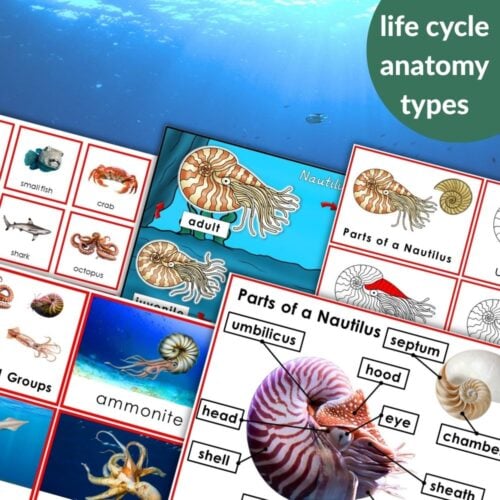
To help you organize these lessons and give children beautiful, accurate materials to work with independently, the Nautilus Learning Pack is a complete resource. It includes everything you need for a thorough study of nautiluses.
Inside, you will find:
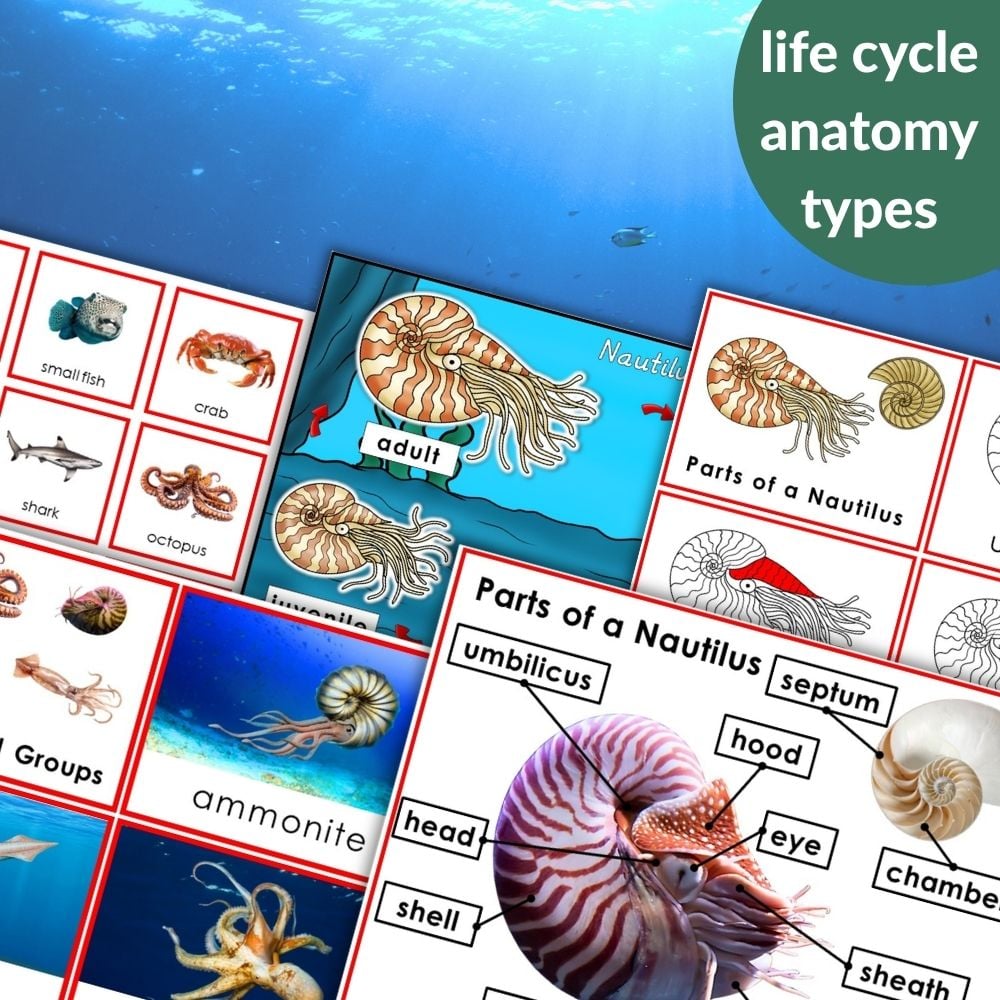
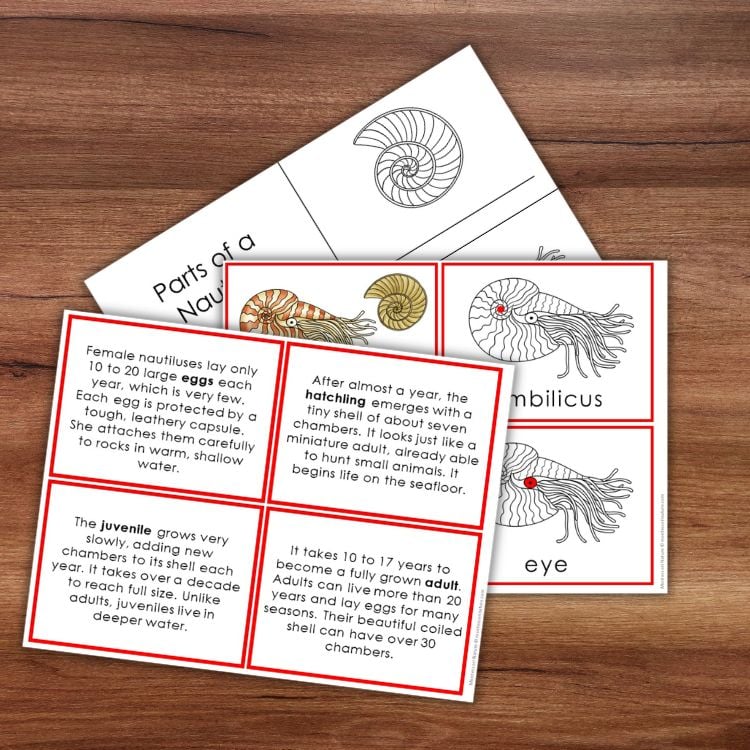
- Parts of a Nautilus – Diagrams, 3-part cards, information cards, and student booklets
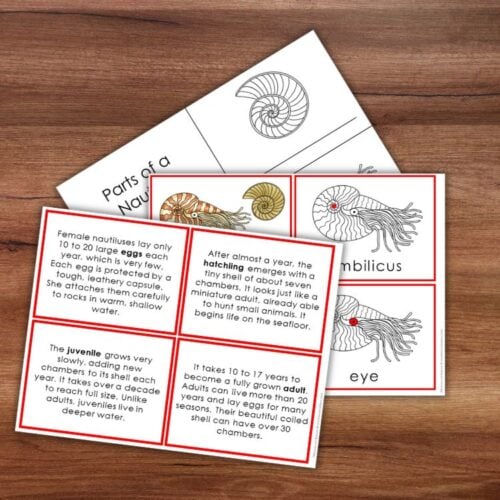
- Nautilus Life Cycle – Diagrams, 3-part cards, information cards, and cut-and-paste worksheets
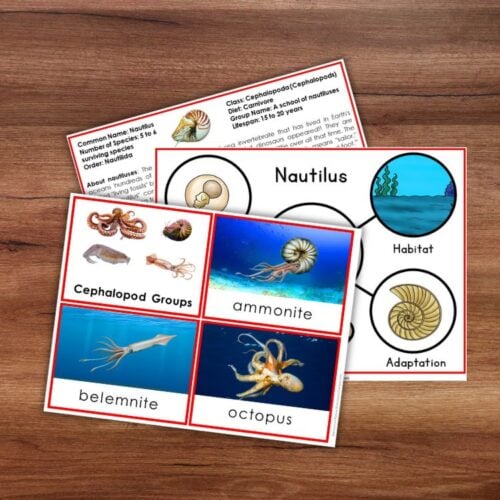
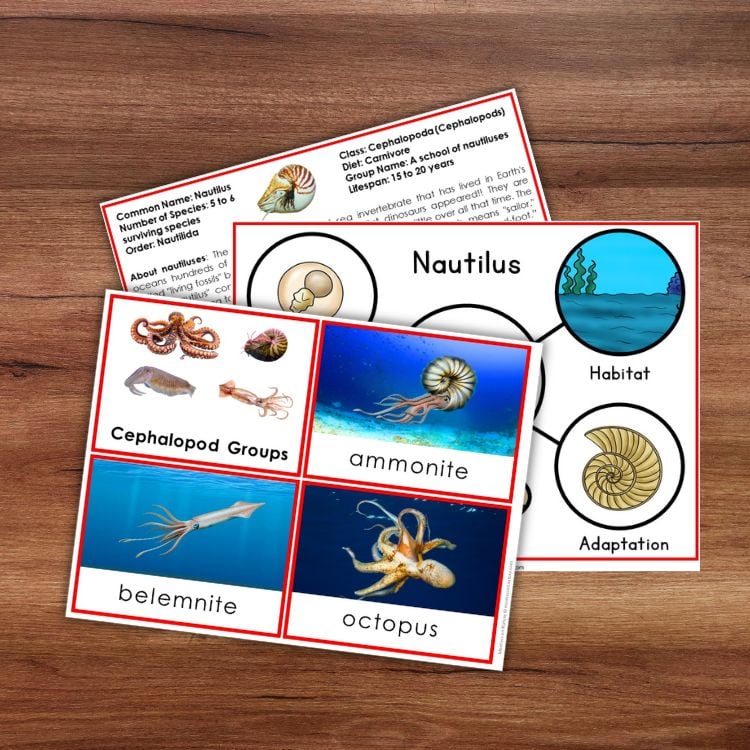
- Groups of Cephalopods – 3-part cards and information cards for living and extinct groups
- Characteristics and General Information – Color posters, blackline masters, and a student reader
- Extended Activities – Anatomy adjective activity and prey vs. predators sorting cards
The materials are designed for children ages 5 to 9. Younger children can match picture cards and trace labels. Older children can read information cards, complete fill-in-the-blank activities, and write their own booklets. Every activity is self-paced and child-led, perfect for Montessori shelf work, learning centers, or homeschool study.
There is something magical about the nautilus. Maybe it’s the perfect spiral of its shell, the 90 tentacles that ripple through the water, or the fact that this ancient creature has been swimming in our oceans for 500 million years. For children, the nautilus is a living window into deep time—a creature that has witnessed the rise and fall of dinosaurs and the slow dance of continents.

If you are planning an ocean unit, exploring marine biology, or preparing for the Second Great Lesson: The Coming of Life, the nautilus is an extraordinary guide. This resource brings the wonder of these living fossils into your classroom with hands-on, Montessori-inspired materials that children will love to explore.
Suitable for Kindergarten and Grades 1-3, this Nautilus Learning Pack offers Montessori-inspired activities for shelf work, centers, or small group lessons.
About Nautilus
The Second Great Lesson tells the story of life on Earth—how it began, how it evolved, and how all living things are connected. The nautilus is a perfect introduction to this story. It has survived virtually unchanged for half a billion years, making it one of the oldest living creatures on our planet.
The nautilus was there when the first fish appeared, when plants colonized the land, when dinosaurs roamed, and when mammals began their rise. It outlived the ammonites, its extinct relatives, and continues to thrive in the deep waters of the Pacific and Indian Oceans. For children, this is a tangible connection to the big picture of Cosmic Education—a way to understand that all life is interconnected and that every creature, no matter how small, has a role to play.
What Makes the Nautilus So Amazing?
Let me share a few facts that never fail to captivate children.
It’s a Living Fossil
The nautilus has remained virtually unchanged for 500 million years. Its beautiful, spiraled shell is divided into over 30 chambers, which the animal uses to control its buoyancy like a tiny submarine.
It Has Over 90 Tentacles
Unlike its cousins, the octopus and squid, a nautilus has up to 90 tentacles! However, these tentacles have no suckers—instead, they have ridged surfaces that grip prey.
It’s a Jet-Powered Swimmer
Nautiluses move by using a powerful water jet, squirting water out of their bodies to push themselves backward. They can point their funnel in any direction to move forward, backward, or sideways.
It Has an Incredible Sense of Smell
Nautilus eyes are simple, like pinhole cameras. They rely more on their sense of smell, and can detect food from up to 33 feet away.
Activities for Your Montessori Classroom
- The Spiral Shell: A Math and Nature Connection
Use the nautilus shell to explore the concept of spirals in nature. The shell follows a logarithmic spiral, a beautiful pattern found in hurricanes, galaxies, and even pinecones. Children can trace the spiral, draw their own, or arrange shells by size. - Life Cycle Sequencing
Using the Nautilus Life Cycle cards, children can sequence the stages from egg to adult. The life cycle is slow—it takes 10 to 17 years for a nautilus to reach adulthood—making it a powerful lesson in patience and growth. - Parts of a Nautilus Labeling
With the Parts of a Nautilus diagram, children can learn words like “shell chambers,” “funnel,” “hood,” and “siphuncle.” Matching picture cards to labels builds vocabulary and understanding of how this animal is built. - Groups of Cephalopods Sorting
The nautilus belongs to a group called cephalopods, which also includes octopuses, squids, and cuttlefish. Extinct groups like ammonites and belemnites also belong to this group. Children can use the Group of Cephalopods cards to sort living and extinct cephalopods. - Prey and Predators Sorting
Children can sort cards of what nautiluses eat (shrimp, small fish, crabs) and what eats them (octopuses, large fish, sharks). This activity helps children understand the nautilus’s place in the food chain.
The Nautilus in the Ecosystem
Nautiluses play an important role in their deep-sea habitat. As active predators and scavengers, they help maintain balance in the ecosystem. They feed on small fish, shrimp, crabs, and carrion, and are themselves preyed upon by octopuses, sharks, and larger fish.
Maria Montessori emphasized the importance of understanding the cosmic work of living creatures—how each being contributes to the whole. The nautilus, with its ancient lineage and specialized adaptations, is a wonderful example of this. It shows children that even the most seemingly simple creatures have a place in the web of life, and that the stories of the past are written in the shells we find today.
The nautilus reminds us that the Earth is ancient, that life is resilient, and that even the smallest creatures have extraordinary stories to tell. When we bring the nautilus into the classroom, we invite children to wonder about deep time, to appreciate the diversity of life, and to understand that they too are part of this great cosmic story. So this season, let the nautilus be your guide—a gentle, spiral-shaped reminder of the wonders hidden in the deep blue sea.
This printable is also available on TPT
You Might Also Enjoy
-
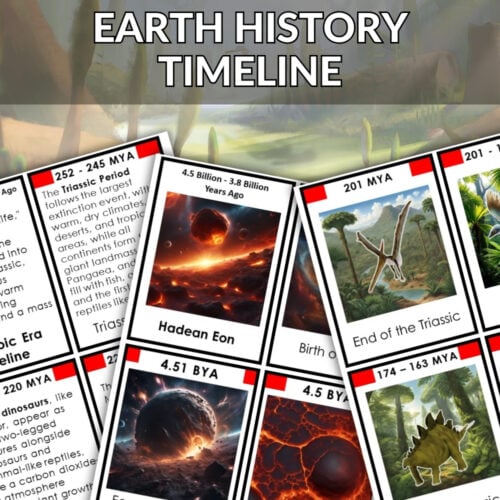
 Earth History Timeline Bundle
 -
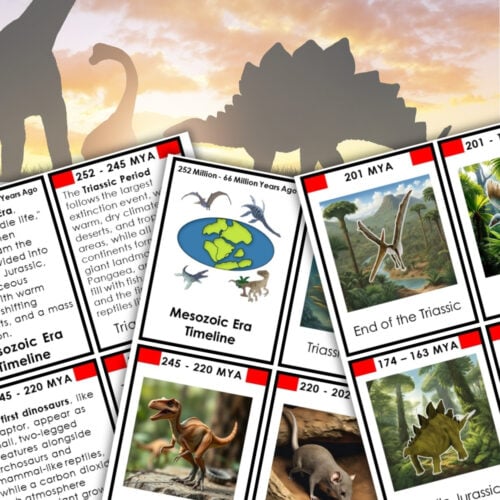
Mesozoic Era Timeline Second Great Lesson Earth History 5 Part Cards$5.30
-
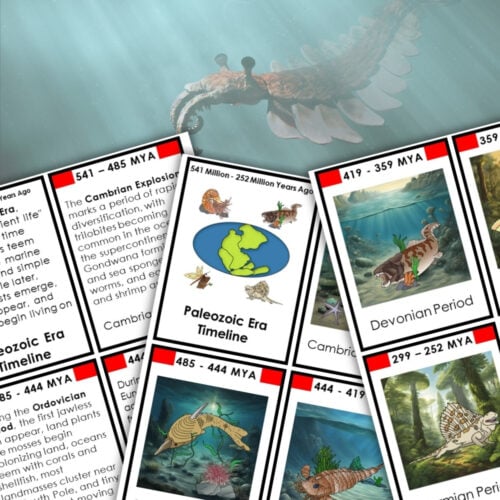
Paleozoic Era Timeline Second Great Lesson Earth History 5 Part Cards$4.95
-
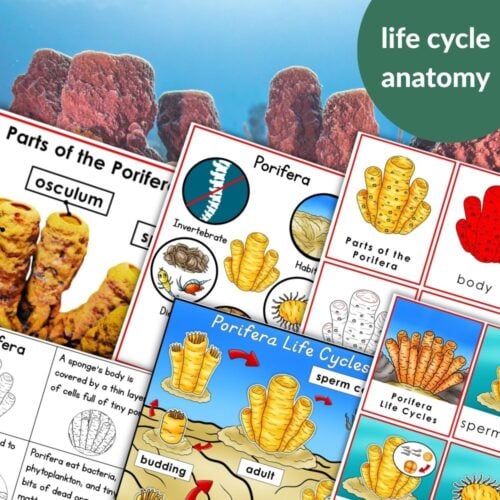
Parts of the Porifera Sponge Life Cycle Activities$7.60
-
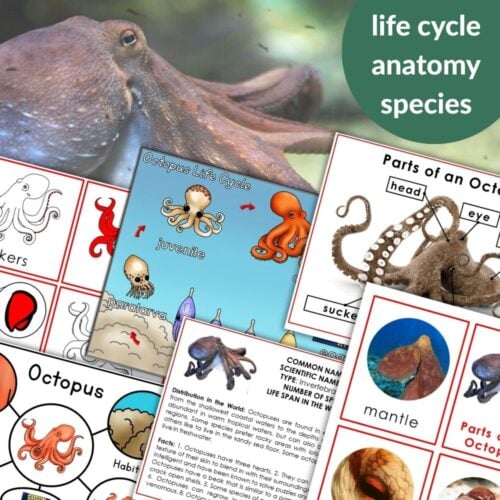
Parts of an Octopus Life Cycle Activities$8.30
-
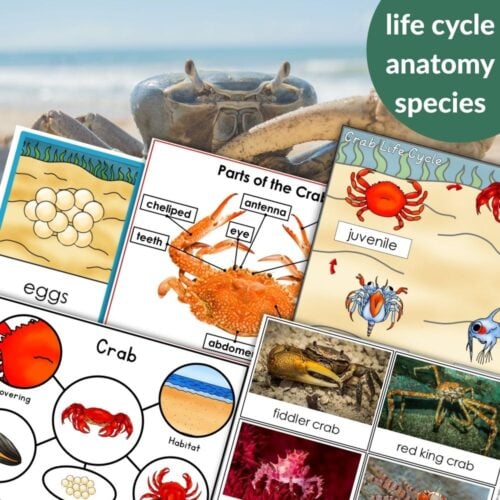
Parts of a Crab Life Cycle Activities$7.30
About Anastasia | Anastasia is an early childhood teacher with over twenty years of experience in Montessori classrooms and homeschooling. With a Master’s in Information Science, she blends education and information design to create clear, organized, research-backed resources. As founder of Montessori Nature, she develops evidence-based, nature-inspired printables that support holistic child development and foster curiosity, independence, and a love of learning. Explore more in her shop and Teachers Pay Teachers store.