


✨ What’s Included:
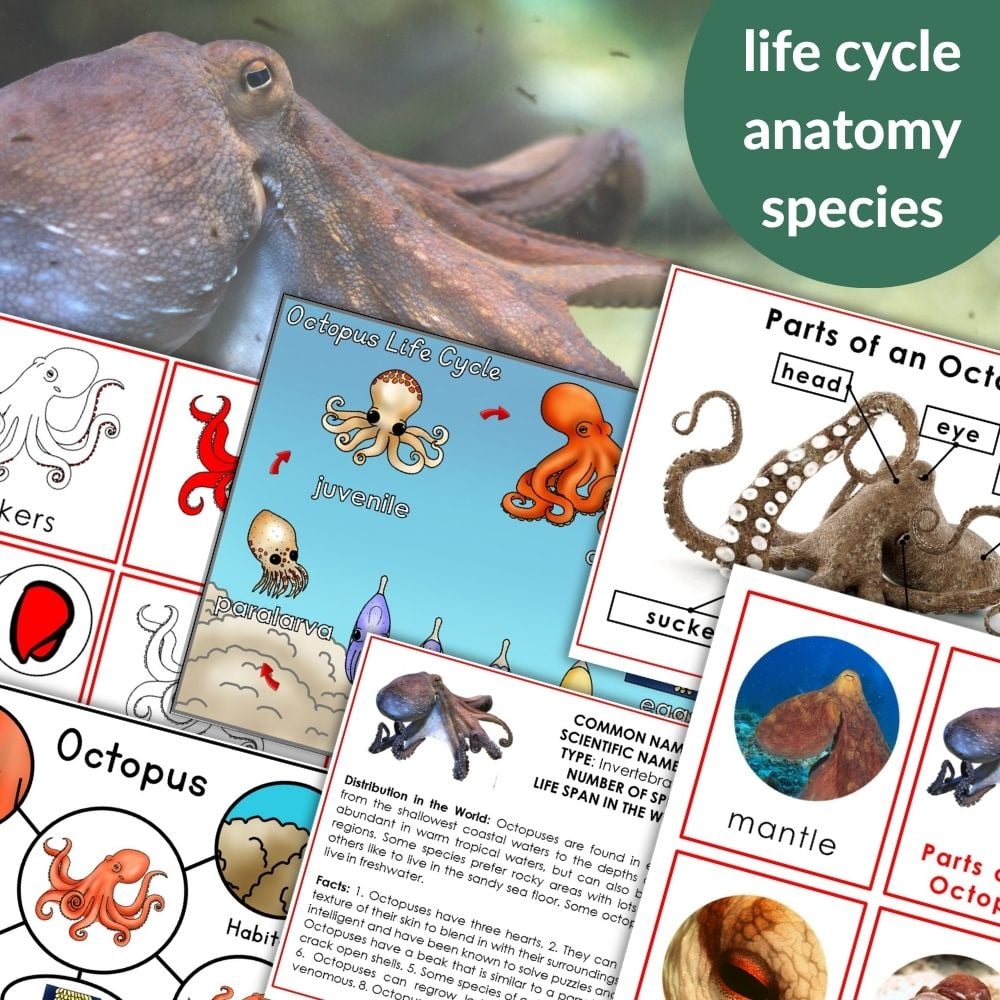
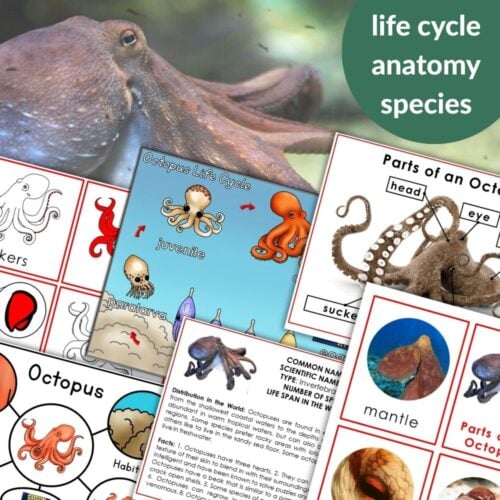
Octopus life cycle diagram
Octopus life cycle 3 part cards
Octopus life cycle coloring, cutting, and pasting worksheet (color and blackline)
Octopus life cycle tracing strips
Octopus life cycle information cards
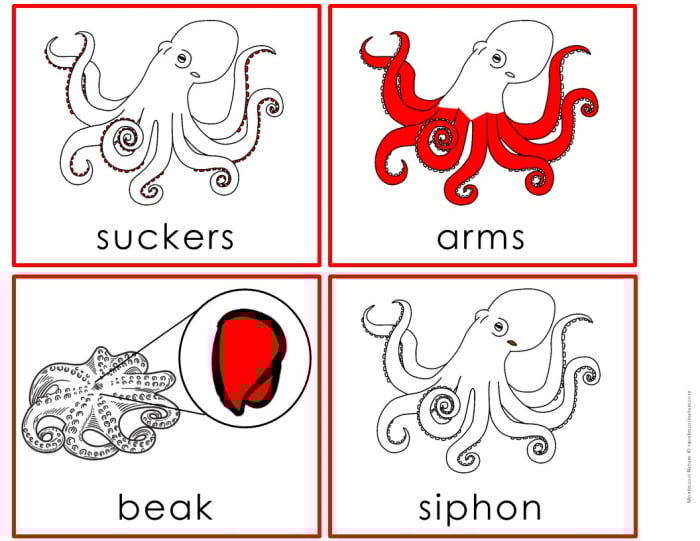
Parts of an Octopus diagram
Parts of an Octopus diagram minus labels
Parts of an Octopus labels
Parts of an Octopus information cards
Parts of an Octopus tracing & independent writing worksheet
Parts of an Octopus student booklet (independent writing)
Types of Octopuses 3 part cards
Types of Octopuses information cards
Octopus characteristics color poster
Octopus characteristics black line poster
Octopus characteristics mat
Octopus characteristics color cards
Octopus characteristics tracing & coloring student booklet
Octopus characteristics student booklet
Octopus information poster
My Book of Octopuses
Octopus Food vs Predators sorting cards
Octopus anatomy diagram adjective activity
Learning Objectives
Identify and sequence the stages of an octopus’s life cycle.
Learn the key characteristics and parts of an octopus.
Differentiate between various types of octopuses.
Develop fine motor skills through hands-on activities.
Enhance vocabulary related to marine biology.
How to Use This Resource:
Introduce the life cycle with the diagram and 3-part cards.
Use worksheets for independent practice or small group activities.
Engage students with the sorting cards and student booklet for a fun review.
Display posters to create an engaging classroom learning environment.
Incorporate the resource into a larger ocean unit or project-based learning.
✅ Perfect For…
Kindergarten, 1st, 2nd, and 3rd Grade Science Lessons
Ocean Life Units
Marine Biology Curriculum Supplements
Summer Enrichment Activities
Hands-on Science Centers
Differentiated Instruction
Early Finisher Activities
The Pedagogy: Why It Works
This resource leverages the power of inquiry-based learning by encouraging students to actively explore the fascinating world of octopuses. The use of clear diagrams and visuals, combined with hands-on activities, caters to diverse learning styles. The project-based learning approach fosters deeper understanding and allows students to apply their knowledge creatively.




Florence L. (verified owner) –
We have a lot of children interested in sea creatures at the moment and finding resources made about octopuses was great. The pack is very comprehensive and I really like the real photos. As always, easy to purchase online and well presented so , easy to cut and laminate! Thanks