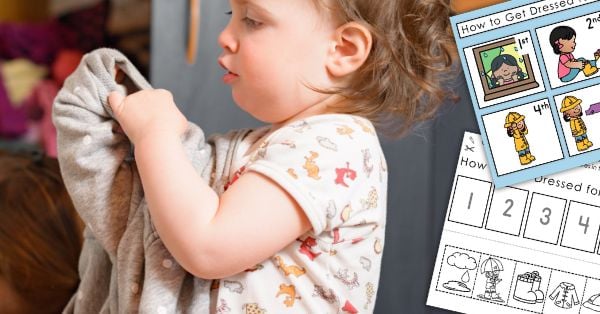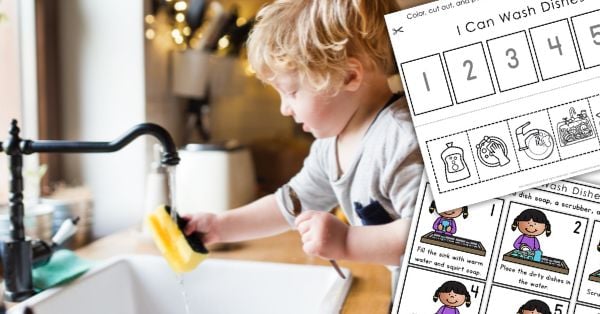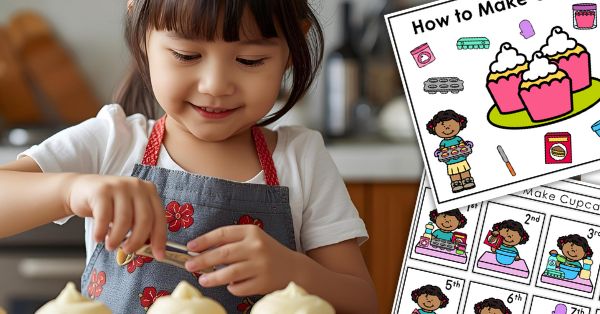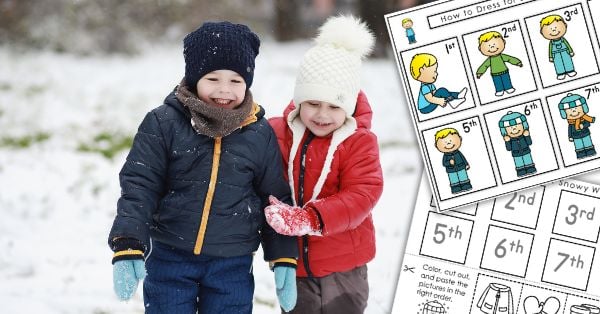
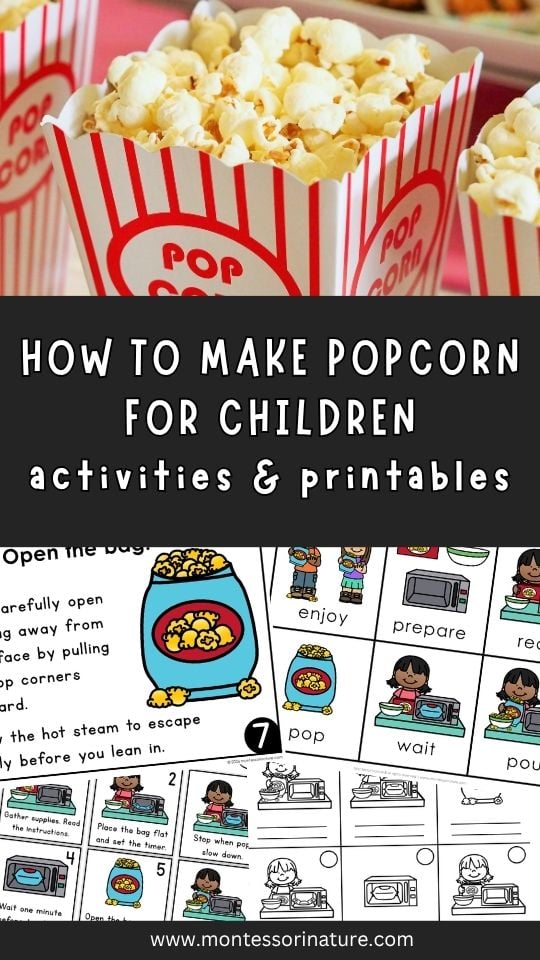
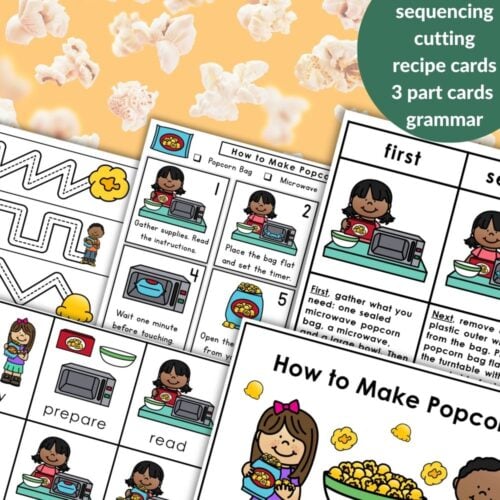
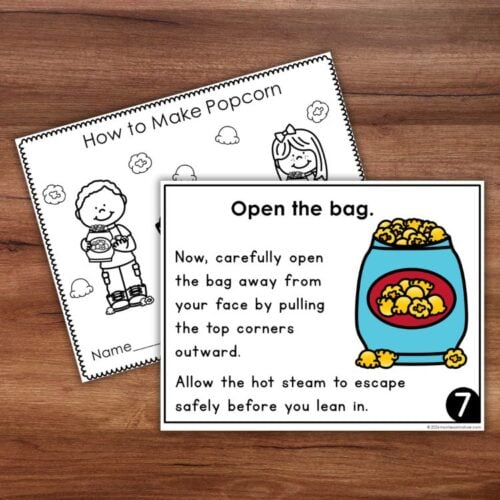
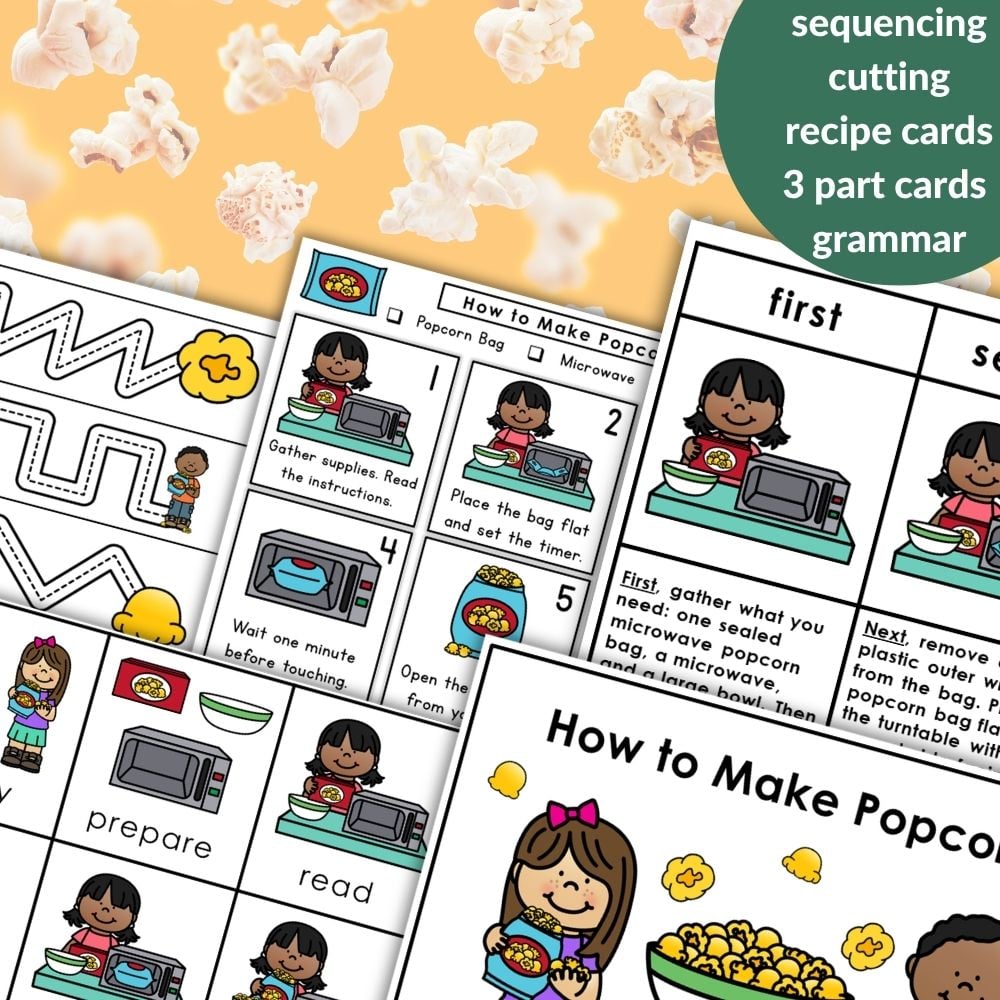
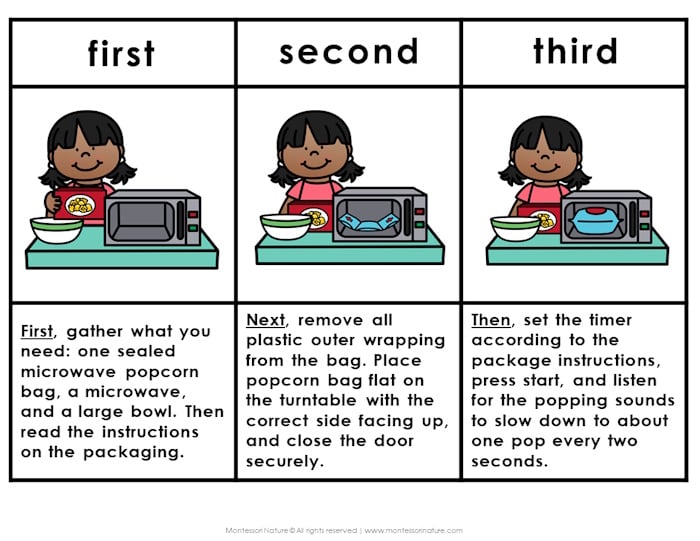
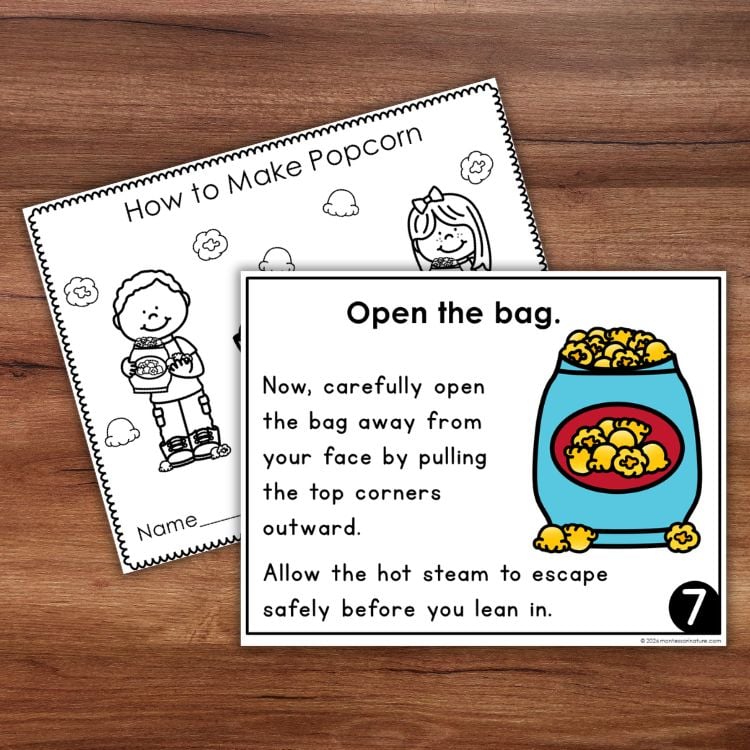
For families and classrooms that want to extend the popcorn experience beyond the kitchen, a structured visual guide can help a child internalize the sequence and build related skills. This How to Make Popcorn printable breaks down the process into clear, illustrated steps that a child can follow with growing independence.
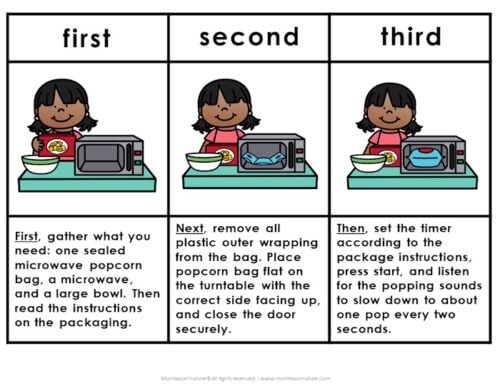
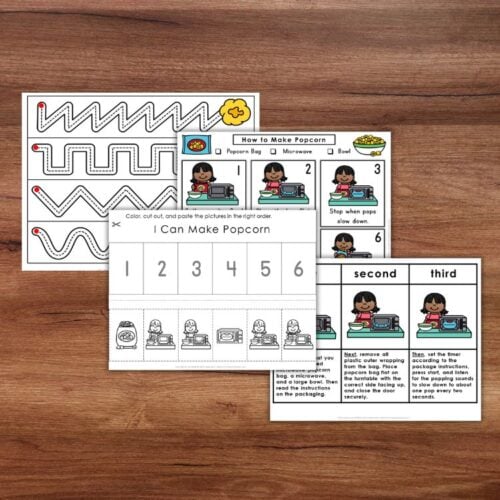
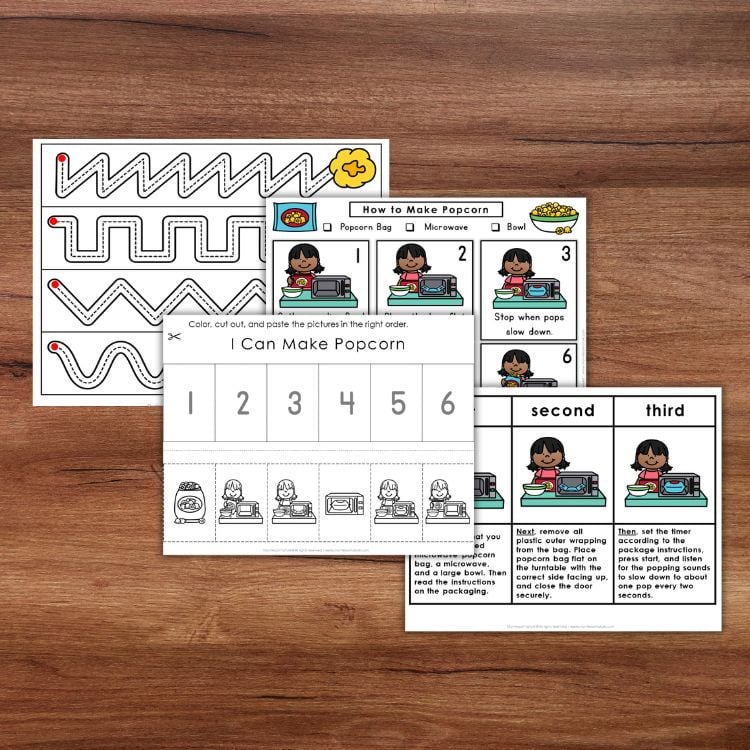
The sequence cards show each stage of popcorn making, from adding the oil to pouring the finished snack. A child can arrange the cards in order, talking through what comes first, next, and last. This simple activity builds procedural thinking that helps with reading comprehension, math problem solving, and planning any multi-step task.
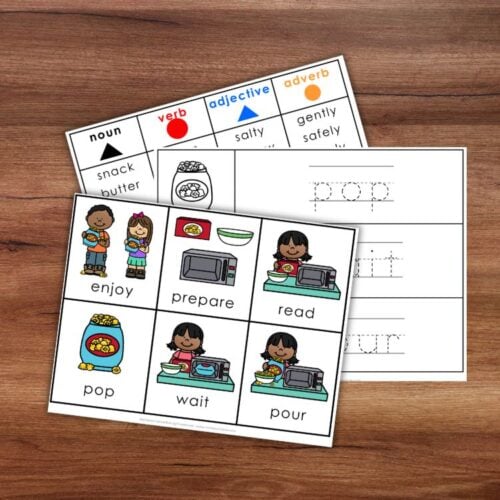
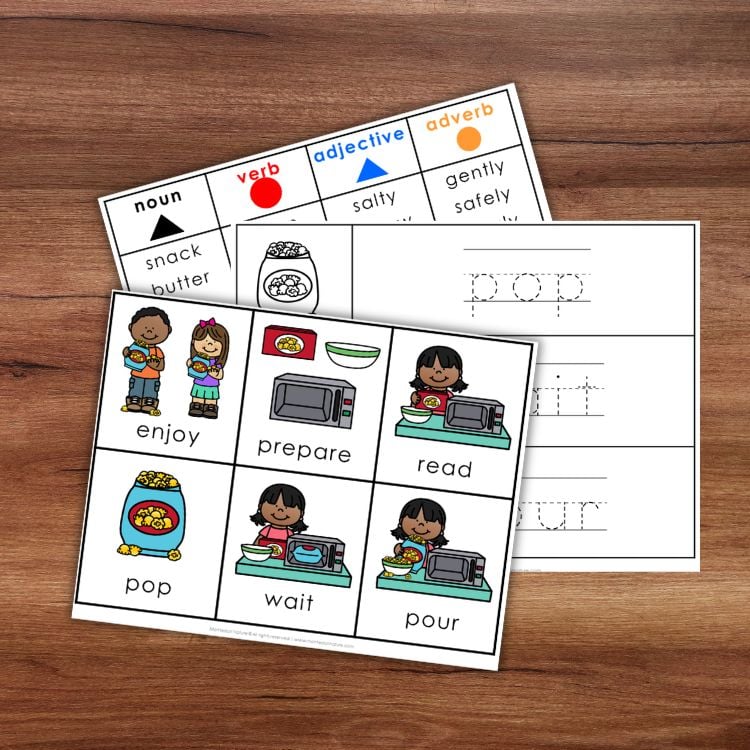
The vocabulary cards introduce words through picture matching. A child learns the names of the tools they hold, building precise language that supports confident communication in the kitchen and beyond.
The cutting and tracing strips develop fine motor control. The hands that learn to cut along a curved line and trace the word “pop” are the same hands that will learn to write clearly.
The parts of speech sorting activity invites older children to categorize popcorn words into nouns, verbs, adverbs and adjectives. This connects a practical cooking activity to grammar learning in a way that feels natural rather than forced.

Blackline versions let a child color and personalize their own materials, creating a sense of ownership over the learning. The self-checking poster allows them to verify their sequencing work independently, building the quiet confidence that comes from knowing they are right.
Why Popcorn Belongs in Your Kitchen with a Child
There is a sound that stops children in their tracks. It is not a bell or a whistle or a song. It is the muffled thumping of kernels against a metal lid, building from a few scattered taps to a furious drumroll, then a final rush of warmth and steam. Popcorn is the only snack that announces itself. For parents looking for a How to Make Popcorn printable to pair with a cozy afternoon activity, or educators needing sequencing activities for a cooking unit or practical life lesson, this simple kitchen project delivers more than a bowl of something delicious. It delivers observation skills, patience, and the kind of focus that makes a child forget to ask for a screen.
Popcorn is one of the few foods that feels like magic even when you know exactly how it works. A child can hold a single kernel in their palm, hard and small and unremarkable, and then watch it transform into a white, fluffy cloud in a matter of minutes. This transformation offers a perfect chance to talk about heat, moisture, and the science of change.
Following a sequence from start to finish builds executive functioning skills—the ability to plan, hold information in mind, and shift attention as needed. The steps are simple enough for small hands to manage, but layered enough to require genuine focus.
The Story of an Ancient Grain
There is a small, hard, unassuming object that has captivated children for generations. It fits in the palm of a hand, feels satisfyingly smooth, and has the potential to transform into something light, fluffy, and delicious. Before the butter and the salt, before the movie theater or the microwave, popcorn begins as a kernel with a fascinating story. For parents seeking Montessori-inspired activities that focus on the senses and practical life, and for educators looking for hands-on science units that connect history, culture, and observation, a simple jar of popcorn kernels opens up a world of discovery.
Long before popcorn was a movie theater staple, it was a discovery. Corn, the plant from which popcorn comes, was first grown thousands of years ago by Indigenous people in Mexico and Central America. But the corn they grew looked very different from what we see today. It was called teosinte, a type of grass with small kernels and thick husks that were difficult to eat.
Ancient people learned that by applying heat, they could pop open these hard shells, making the kernels edible for the first time. Scientists believe this was the very first way humans ate corn. Archaeologists have even found popcorn cobs in Peru that are more than 6,700 years old! For a classroom, this history is a perfect entry point. Children can hold a kernel in their hand and imagine it being discovered by someone thousands of years ago. It connects them to a deep human history of observation and ingenuity.
A Kernel in the Classroom
The simple popcorn kernel is a remarkable tool for Montessori-inspired work. Because it is small, non-toxic, and interesting to look at, it can be used in a variety of practical life and sensorial activities. These activities allow children to develop concentration, coordination, and independence without the pressure of a finished product.
Sensorial Exploration: The Five Senses
One of the most authentic ways to introduce popcorn kernels to young children is through a sensorial lesson.
A simple, effective activity involves placing a bowl of popcorn kernels on a tray. Invite a child to handle the kernels and observe. What do they see? The kernels are small, yellow, and smooth. What do they feel? They are hard, cool, and make a light rustling sound when moved. What do they smell? The dry, slightly earthy scent of raw grain.
This type of exploration encourages children to become aware of their unconscious impressions and bring them into conscious awareness. For many educators, popcorn is a multi-sensory snack that incorporates all five senses. As one teacher explains, “We begin by discussing our five senses and how we use different body parts to learn about things in our environment. For example, our noses are for smelling, ears are for listening, eyes are for seeing, hands are for touching, and our tongues are for tasting. We learned that sometimes, we use more than one sense at a time” .
Practical Life: Transfer Activities
The preliminary exercise of transferring objects from one bowl to another is a cornerstone of Montessori Practical Life. Popcorn kernels are an ideal material for this work. The activity strengthens fine motor skills, concentration, and hand-eye coordination.
A classic exercise is spooning popcorn kernels. Place a tray with two identical bowls and a spoon. One bowl is filled with kernels, and the other is empty. The child picks up the spoon, scoops the kernels, and carefully transfers them to the other bowl, repeating the process until the transfer is complete. This activity can be extended with tweezers, which require even more precise control. A child can use tweezers to pick up individual kernels one at a time, moving them from a small dish to a line or a pattern on a tray.
These simple, repetitive movements are deeply calming and allow a child to practice the grace and precision of controlled hand movements, which build the neural pathways for later writing and complex tasks.
A Miniature Ecosystem: Sprouting Corn
For a more extended scientific exploration, children can sprout flint corn or even popcorn kernels. Fill a clear glass jar with damp paper towels and place a few kernels between the towel and the glass. Over the following days, children can observe the first white roots emerging and the tiny green sprout pushing upward. This simple experiment brings the life cycle of corn to life. It also connects the dry, hard object they were handling to its living potential as a plant. Watching the corn sprout teaches patience and the importance of care, as the kernels need to be kept moist to grow.
Physics in the Kitchen: The Dancing Kernel
A spectacular demonstration that always fascinates children is the “dancing popcorn kernel” experiment. It combines science and observation in an activity where children can predict, observe, and reflect.
In a tall glass, place some popcorn kernels and add water and vinegar. Then, add baking soda. A chemical reaction occurs, releasing carbon dioxide gas. Some of the gas bubbles will stick to the kernels, making them lighter than water and causing them to rise to the surface. When the bubbles burst, the kernel sinks again, creating a continuous “dancing” motion. The child who watches this experiment, wondering why the kernels dance, is practicing the art of scientific observation.
The Magic of Corn on the Cob
Beyond kernels, an ear of flint corn provides an even richer sensorial experience. Inviting a child to hold an ear of corn is an invitation to use their hands and eyes. They can feel the husk, hear the dry rustle, and see the beautiful gradient of colors. One Montessori approach uses an ear of flint corn to demonstrate a three-period lesson: presenting the corn, having the child identify it, and then recalling its name. For even more hands-on work, an ear of flint corn can be placed in a tray with a small brush. The child can scrub the ear gently, polishing the kernels and discovering the intricate patterns and colors beneath the husk.
A History and a Future
Popcorn’s journey from ancient fields to movie theater and kitchen is a testament to human curiosity. The first popcorn machines, invented by Charles Cretors in the 1890s, made popcorn a popular street food. Later, during the 1920s and 1930s, movie theaters began selling it to boost ticket sales, cementing popcorn’s place in American culture. Today, children can learn that this humble snack is a part of a global tradition that includes Mexican street vendors serving popcorn with salt and chili powder.
These activities—handling, transferring, scrubbing, and observing—prepare a child for more complex tasks. They build patience, attention, and the joy of discovery. When a child holds a single hard kernel and observes it with all their senses, they are not just looking at a seed. They are connecting with a story. They are discovering the potential contained within something small. And when a child learns to care for and explore the materials in their environment, they are building the foundation of a life-long love of learning, all from one small, humble, perfect kernel.
You Might Also Enjoy


About Anastasia | Anastasia is an early childhood teacher with over twenty years of experience in Montessori classrooms and homeschooling. With a Master’s in Information Science, she blends education and information design to create clear, organized, research-backed resources. As founder of Montessori Nature, she develops evidence-based, nature-inspired printables that support holistic child development and foster curiosity, independence, and a love of learning. Explore more in her shop and Teachers Pay Teachers store.