
What’s Inside
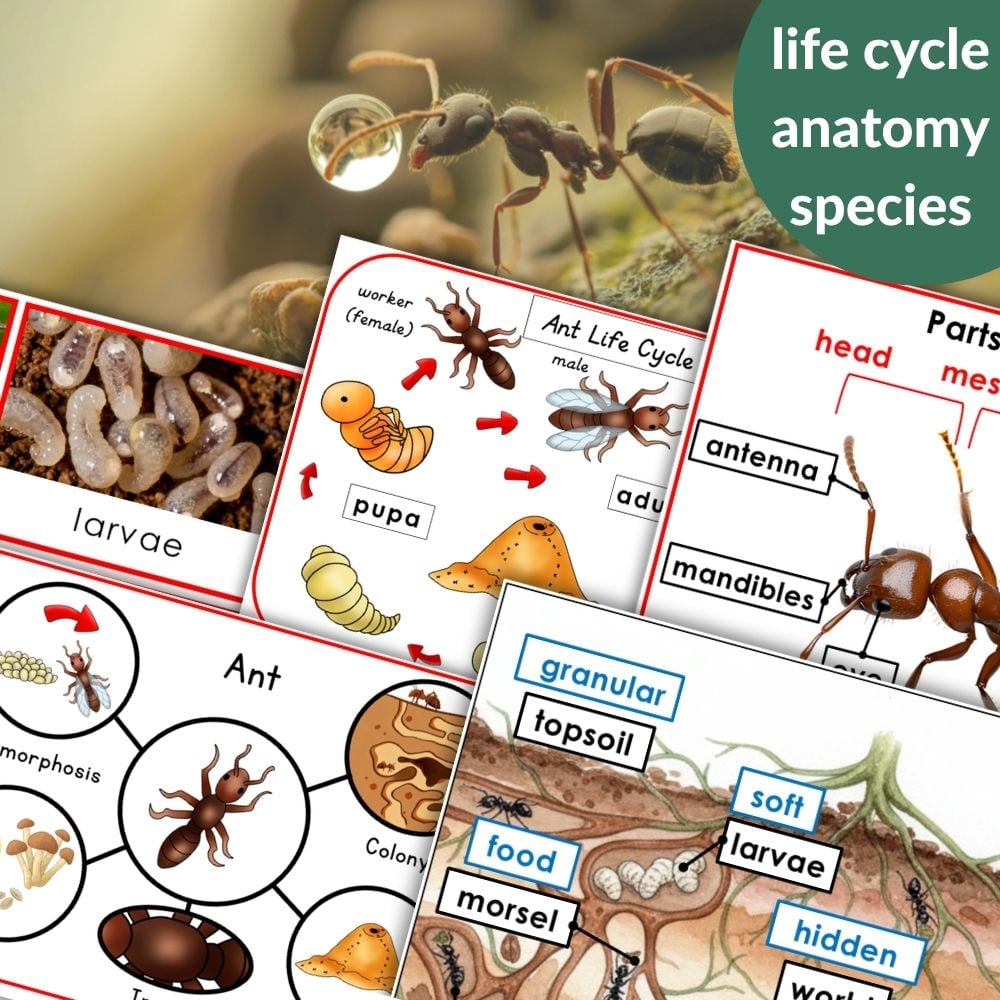
This 60+ page printable resource includes everything you need for a thorough, child-led study of ants.
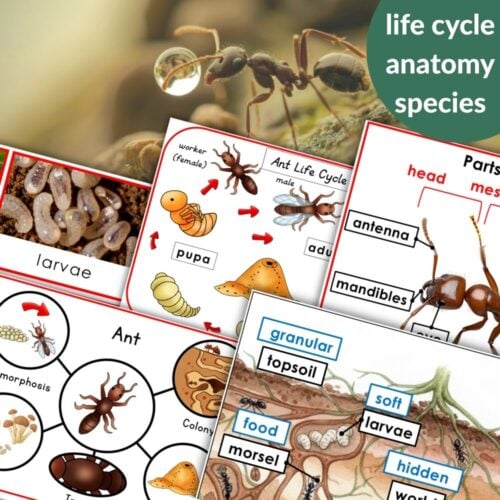
Ant Anatomy & Parts
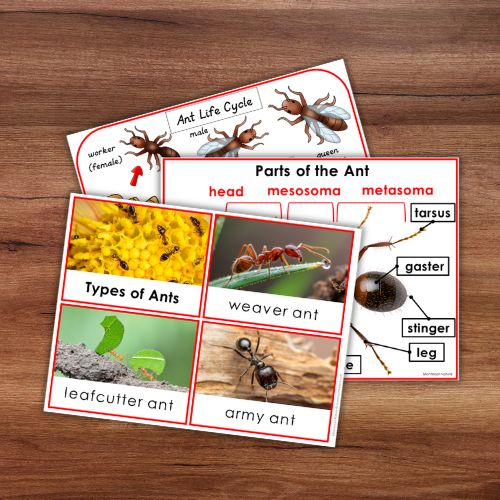
Parts of an Ant Diagram
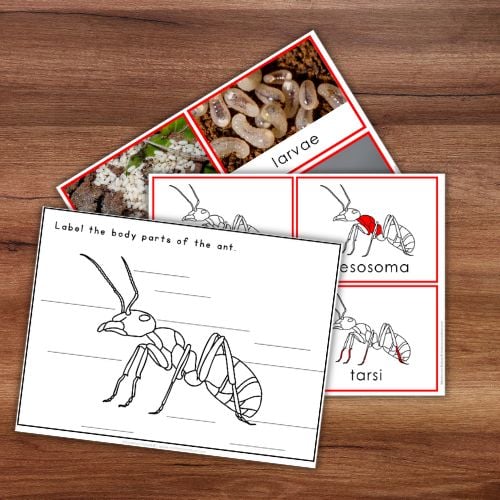
Parts of an Ant Tracing & Independent Writing Worksheet
Parts of an Ant 3-Part Cards
Parts of an Ant Information Cards (with Fill-in-the-Blank options)
Parts of an Ant Student Booklet (Independent Writing)
Ant Life Cycle
Ant Life Cycle Diagram
Ant Life Cycle 3-Part Cards
Ant Life Cycle Information Cards (with Fill-in-the-Blank options)
Ant Life Cycle Cut and Paste Activity (Color and Blackline)
Ant Life Cycle Tracing Strips
Types of Ants
Types of Ants 3-Part Cards (Weaver, Leafcutter, Army, Trap-Jaw, Honey Pot, Carpenter, Fire, Acrobat, Argentine, Pavement)
Types of Ants Information Cards (with Fill-in-the-Blank options)
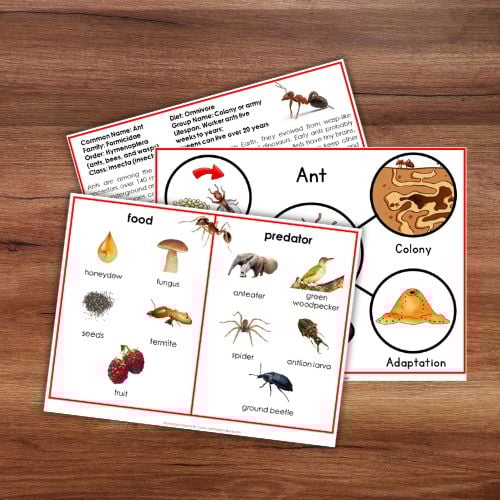
Characteristics & General Information
Ant Characteristics Color Poster and Blackline Masters
Ant Information Poster (Habitat, Diet, Adaptations)
“My Book About Ants” Student Reader and Coloring Book
Extended Language & Science Activities
Ant Anatomy Diagram Adjective Activity
Why Teachers Love This Resource
Montessori Design
Each activity follows Montessori principles: beautiful, accurate illustrations; isolated concepts; self-correcting elements; and opportunities for independent, hands-on learning.
Cross-Curricular Connections
This ant study naturally integrates biology, language arts, and even social studies. Children learn about insect anatomy while building vocabulary, practice sequencing with life cycle cards, compare ant species, and discover how ants communicate, build homes, and work together in complex societies.
Flexible for Mixed Ages
Whether you teach preschool, kindergarten, or Grades 1–3, these materials adapt to your students’ needs. Younger children match picture cards and trace labels; older children read information cards, complete fill-in-the-blank activities, and write their own booklets.
Perfect for Multiple Units
Use this pack for:
Spring Unit – Ants emerge as weather warms
Bug and Insect Study – Classic zoology topic
Second Great Lesson follow-up – Evolution of social insects
Summer Science – Easy outdoor observation opportunities
Year-Round Animal Studies – Ants live indoors and out
Ideas for Use in Your Classroom or Homeschool
Individual Shelf Work
Place 3-part cards in a basket with a magnifying glass. Children match pictures and labels, then check their work with the control card. The tracing strips and student booklet invite independent writing practice.
Learning Centers
Set up a science center with the life cycle diagram, information cards, and cut-and-paste worksheet. Add a small dish of real (dried) seeds or an ant farm observation station for a complete sensory experience.
Small Group Lessons
Use the large diagram poster to introduce ant anatomy. Gather a small group to label parts together. Then let each child complete their own worksheet. The information cards work beautifully for reading circles.
Follow-Up to the Second Great Lesson
After presenting the Coming of Life, invite children to explore ants as examples of early social insects. The evolution of ant colonies from wasp-like ancestors (over 140 million years ago) connects directly to the story of life on Earth.
Outdoor Extension
Take the learning outside! Children can observe real ants, draw what they see, and compare their observations with the printable materials back in the classroom.
Perfect for: Montessori classrooms, homeschool environments, nature study groups, and traditional preschool or kindergarten settings.
Recommended age: Preschool through Grade 3 (ages 3–9)



Reviews
There are no reviews yet