Each printable features realistic photographs and scientifically accurate illustrations to foster concrete understanding, vocabulary enrichment, and a deep connection to the natural world. This bundle is a great tool for implementing seasonal, child-led learning through engaging shelf work, small group lessons, and thematic unit studies on spring metamorphosis, life cycles, weather phenomena, and cultural celebrations.
🌿 BOTANY & PLANT LIFE STUDIES
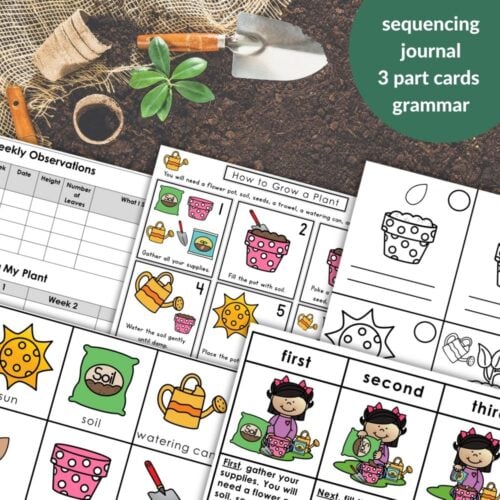
Plant Life Cycle & Anatomy: A complete botany starter kit featuring 3-part cards (Nomenclature Cards), sequencing mats, and a full-color life cycle poster. Includes “Parts of the Seed” and “Needs of a Plant” flashcards to prepare students for gardening practical life activities like seed sowing and plant care.
Montessori Connection: Directly supports the core Montessori Biology curriculum. Materials are ideal for object-to-picture matching, vocabulary building, and introducing key botany concepts before conducting real plant experiments.
🐾 ZOOLOGY: COMPARATIVE LIFE CYCLES & ANATOMY
Frog Unit Study: An in-depth exploration of Anura (amphibians). Includes life cycle spinning wheel, parts of a frog 3-part cards, and characteristic cards. Perfect for units on wetland biomes, hibernation, metamorphosis, and the food chain.
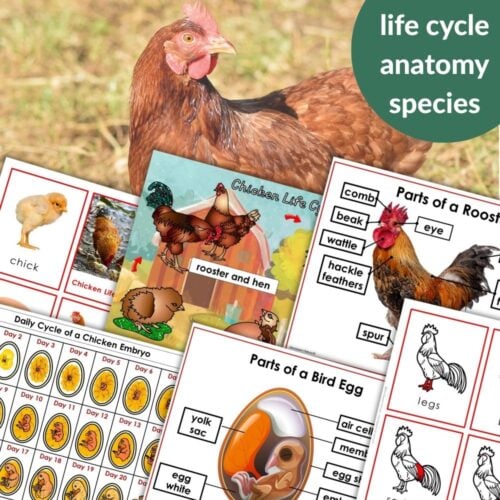
Chicken Embryology Pack: A scientifically sequenced resource to accompany a classroom incubator project. Features daily embryo development cards and hatching chick care guides, transforming a classroom event into a profound biology lesson.
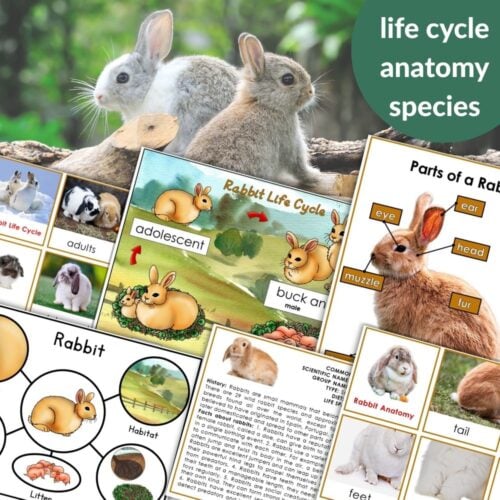
Rabbit & Bird Studies: “Parts of a Rabbit” nomenclature cards and “Birds & Their Eggs” matching set (36 three-part card sets). Encourages comparative zoology—children can contrast mammalian and avian life cycles, fostering higher-order classification skills.
🌎 GEOGRAPHY & CULTURAL STUDIES
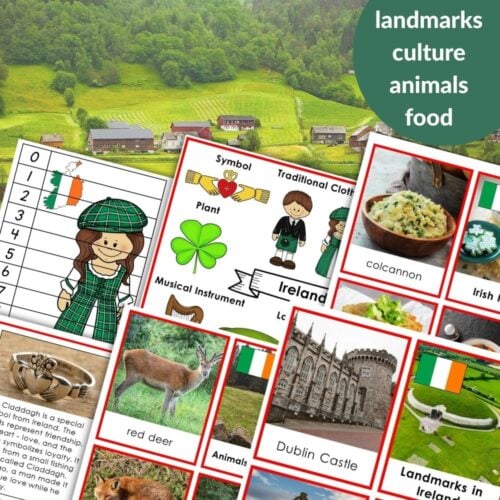
Ireland Country Study Pack: A multidisciplinary exploration for Continent Boxes (Europe). Includes flag matching, landmark 3-part cards, maps, and cultural symbol activities. Provides historical context for St. Patrick’s Day.
St. Patrick’s Day History Cards: Simple, factual text and imagery explaining the holiday’s origins and traditions, designed for differentiated reading in multi-age classrooms (ages 3-9).
🔬 EARTH SCIENCE & METEOROLOGY
Cloud Identification & Weather Resource: A photograph-based cloud key with cumulus, stratus, cirrus, and nimbus families. Includes description cards linking cloud types to weather prediction, plus a student-made weather observation journal template for daily nature recording.
🎯 SEASONAL & HOLISTIC ACTIVITY SETS
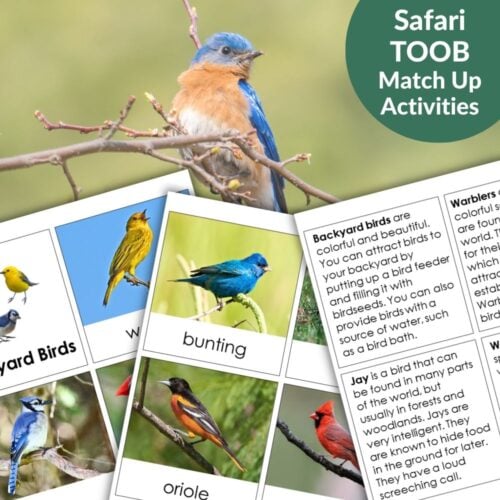
Backyard Birds Matching Set: Focused 7-card set for common North American birds. Ideal for beginner ornithologists, promoting local wildlife observation and habitat awareness.
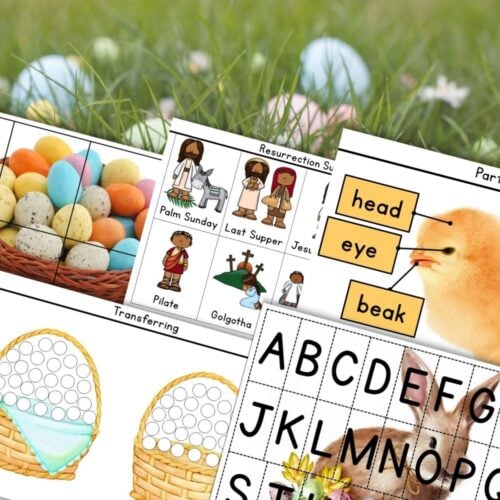
Easter-Themed Skills Pack: spring-based activities targeting pre-literacy, fine motor (pincer grip, tracing), early math (patterning, counting), and sensorial sorting. Aligns with Montessori practical life and pre-language work.
Key Learning Outcomes & Skills Development
This bundle systematically builds critical early childhood competencies:
Cognitive & Scientific Reasoning: Develops observation, prediction, sequencing, and classification skills through structured life cycle and anatomy work.
Language & Vocabulary: Expands specific scientific nomenclature (e.g., tadpole, embryo, cirrus, cotyledon) and descriptive language via 3-part cards and definition booklets.
Fine Motor & Executive Function: Strengthens pincer grip, hand-eye coordination, and left-to-right sequence through cutting, pin-punching, sorting, and card matching activities.
Cultural & Global Awareness: Builds geographical knowledge and appreciation for cultural diversity through focused country and holiday studies.
Implementation Guide for the Educator
Shelf Organization: Create dedicated Botany, Zoology, and Geography trays using materials from this bundle. Rotate materials bi-weekly to maintain interest.
Lesson Sequencing:
Introduce with realia (e.g., actual seeds, feathers, a cloud observation walk).
Present the 3-part cards and matching activities.
Extend with art (life cycle drawings), writing (definition booklets), or outdoor research.
Differentiation Tips: Simplify tasks with object-to-picture matching for younger students. For advanced learners, introduce research projects using the information cards as a starting point or comparative charts (e.g., bird egg vs. chicken egg).


Reviews
There are no reviews yet